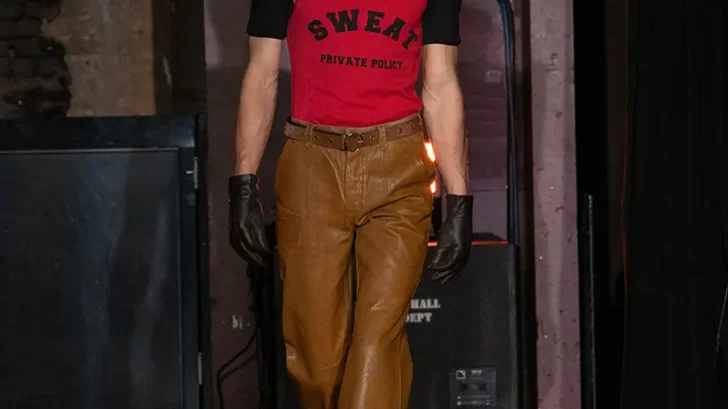
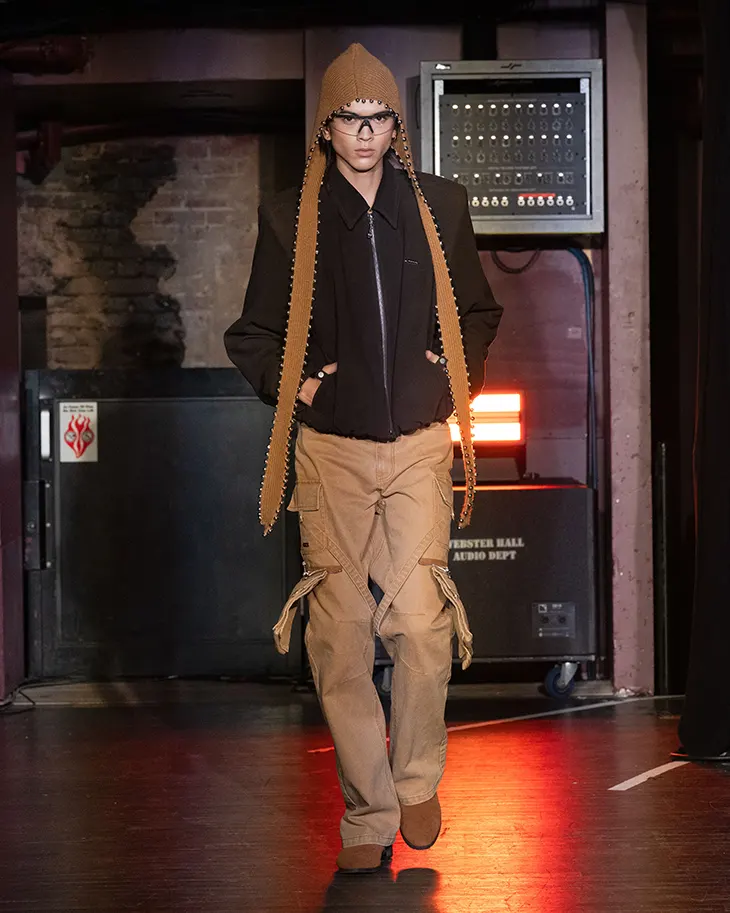
Presented at Webster Hall, Private Policy Fall/Winter 2026 arrived around Lunar New Year, positioning the collection within a moment of renewal and generational reflection. The brand turns its focus toward the histories of Asian labor in America and examines how those histories continue to structure contemporary experience. The runway establishes a dialogue between past and present, grounding fashion in social memory.
FALL WINTER 2026.27
The collection begins with the first generation of Chinese laborers who built the transcontinental railroads in the nineteenth century. Their work shaped the physical infrastructure of the American West, yet historical narratives frequently minimized their role. Private Policy treats this omission as an active condition, not a distant fact. The garments move forward from that point, connecting railroad labor to the intellectual, emotional, and cultural labor that defines many Asian American lives today.
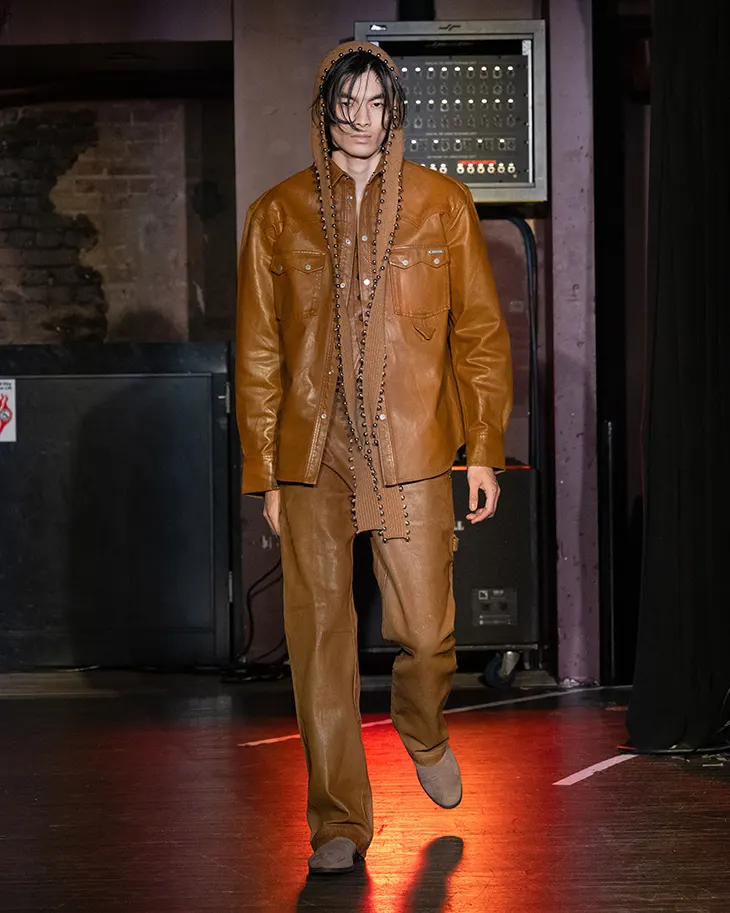
Workwear silhouettes anchor the lineup. Reinforced seams, durable fabrics, and multi-pocket constructions reference garments built for endurance. These pieces carry structural clarity and functional intent. On the runway, they speak to physical strain while expanding the idea of labor beyond manual work. The collection recognizes the invisible labor required to navigate institutions, adapt to expectations, and sustain community across generations.
A second historical reference emerges from the 1980s, when Asian Americans gained greater access to corporate and professional environments and Asian designers found increased visibility within Western fashion. Private Policy channels that era through power shoulders, sharp tailoring, and pencil skirts. The silhouettes reflect office dress codes that shaped public presence. They also capture the discipline and self-awareness demanded by systems that rewarded conformity while scrutinizing difference.
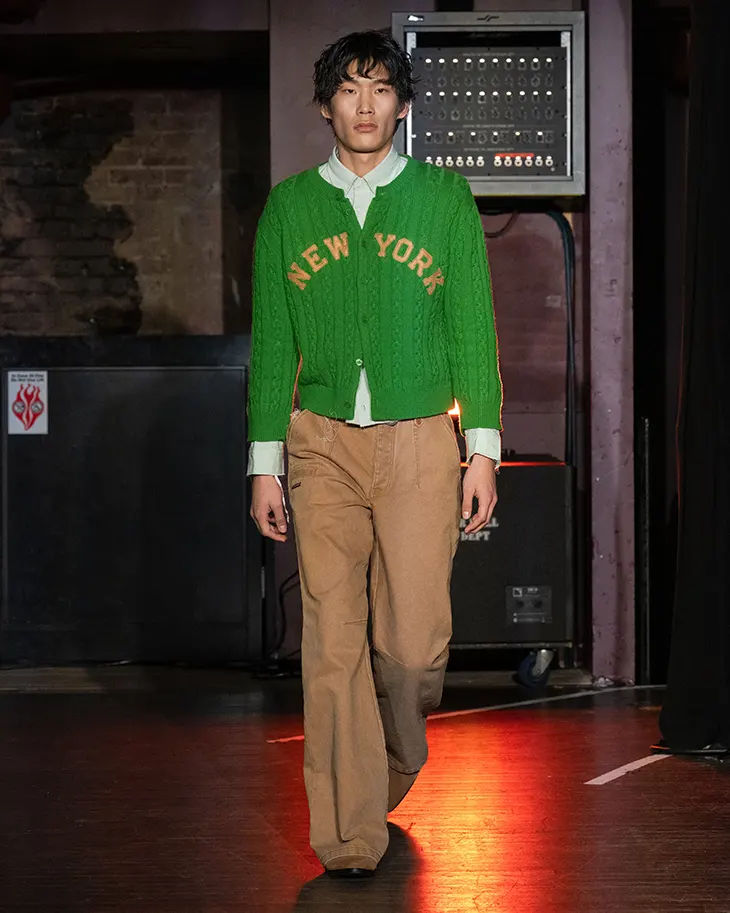
Material choices sharpen the narrative. Designers rework utilitarian structures in silk-finished and high-sheen fabrics, introducing luminosity to forms associated with survival and physical endurance. Earth tones, rusted reds, and office blues anchor the palette, while distressed surfaces preserve traces of time and use. These textures function as visual records, allowing labor to remain visible instead of erased.
By placing nineteenth-century railroad workwear alongside 1980s professional tailoring, Private Policy charts a trajectory from physical infrastructure to cultural production. Fall Winter 2026 refuses to treat labor as a relic. The collection frames it as continuous and evolving, insisting on recognition and presence within contemporary fashion discourse.