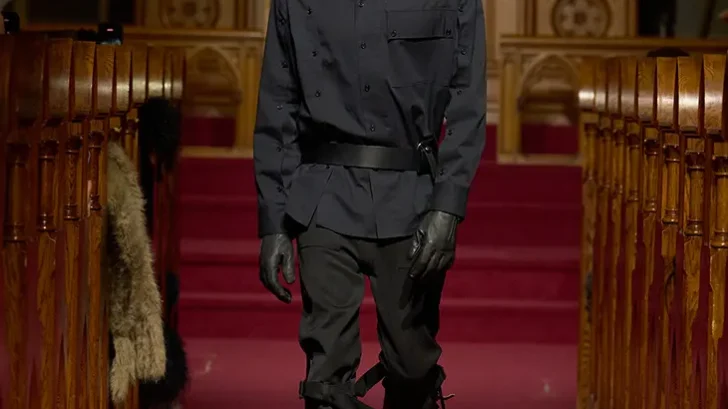
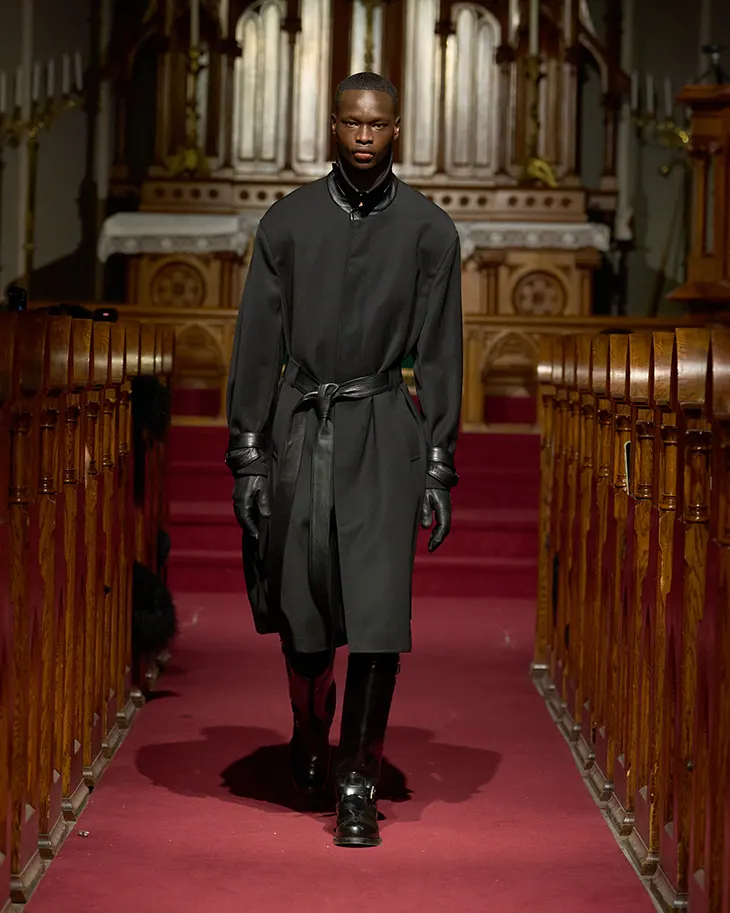
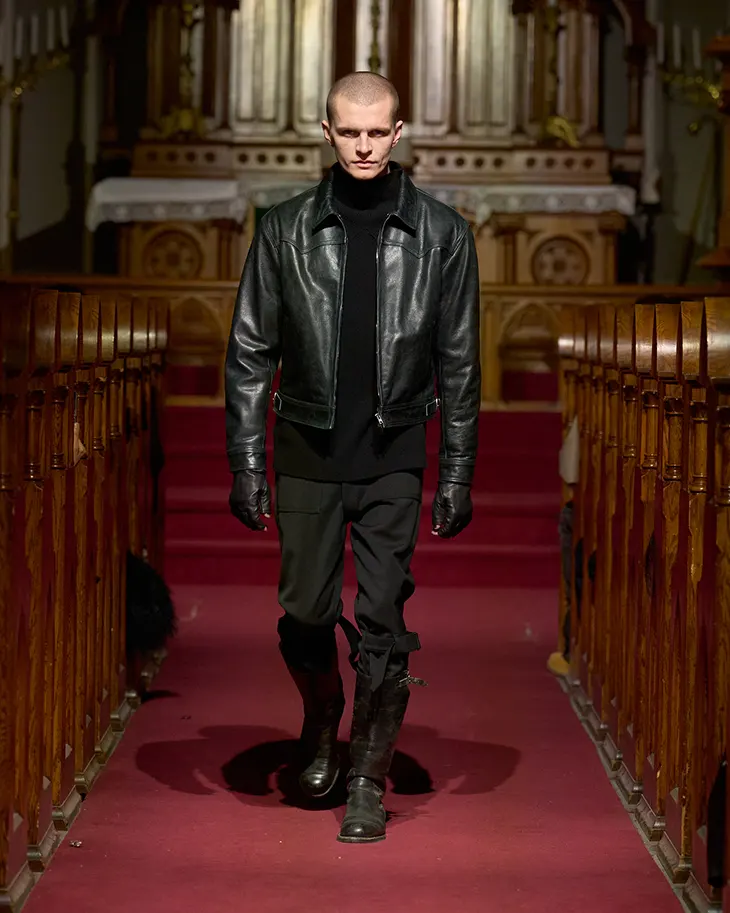
Boy London America marked its 50th anniversary at New York Fashion Week with Guillotine, a Fall Winter 2026 collection that sharpened the brand’s punk vocabulary through structure and control. Staged on February 13 at 9 PM inside St. Paul’s German Evangelical Lutheran Church, the show framed rebellion within the architecture of tradition. The setting reinforced the collection’s central tension: authority confronted by resistance, history recut for the present.
FALL WINTER 2026.27
Creative Director Can Tran led the vision with womenswear by Donna Kang and menswear by Shaun Samson. Together, they revisited archival BOY LONDON codes and filtered them through medieval references and classic menswear foundations. The collection proposed a modern formalism where discipline shapes dissent. Tailoring anchored the lineup, delivering elongated silhouettes that balanced deconstruction with precision. The designers avoided chaos and instead imposed clarity, refining punk gestures into controlled statements.
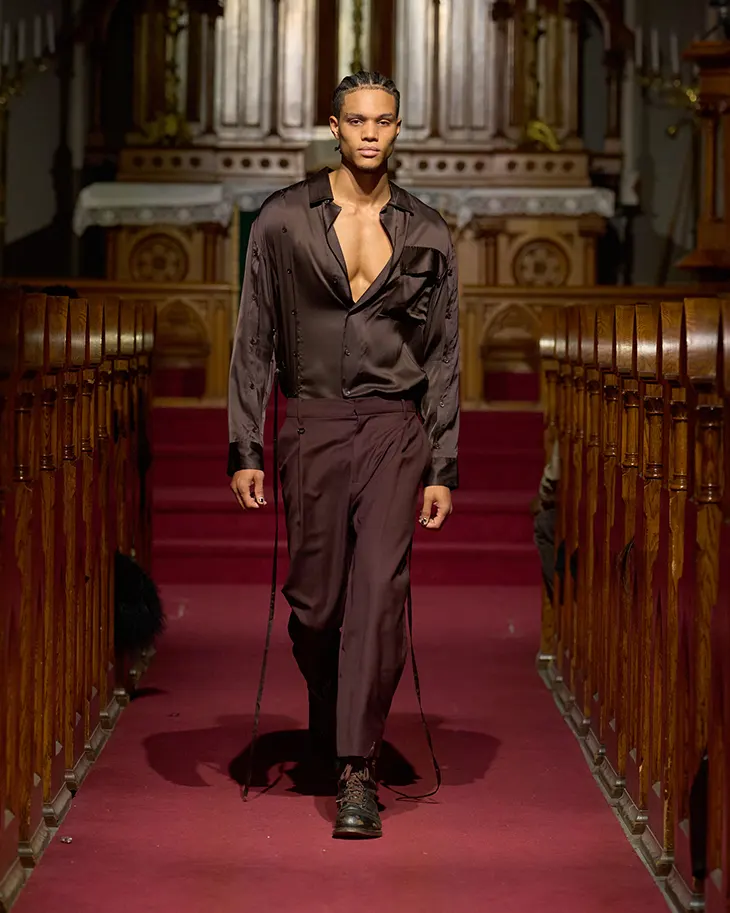
Harnessed structures and engineered closures introduced a sense of restraint. Graphics appeared with intention, avoiding excess while maintaining graphic tension. Dress-driven looks moved alongside casual silhouettes, each treated with the same measured rigor. Elongated coats and sharply defined forms established verticality, reinforcing the idea of a blade-like silhouette, direct and decisive. The collection carried its title not as spectacle but as metaphor, signaling a break with silence and complacency.
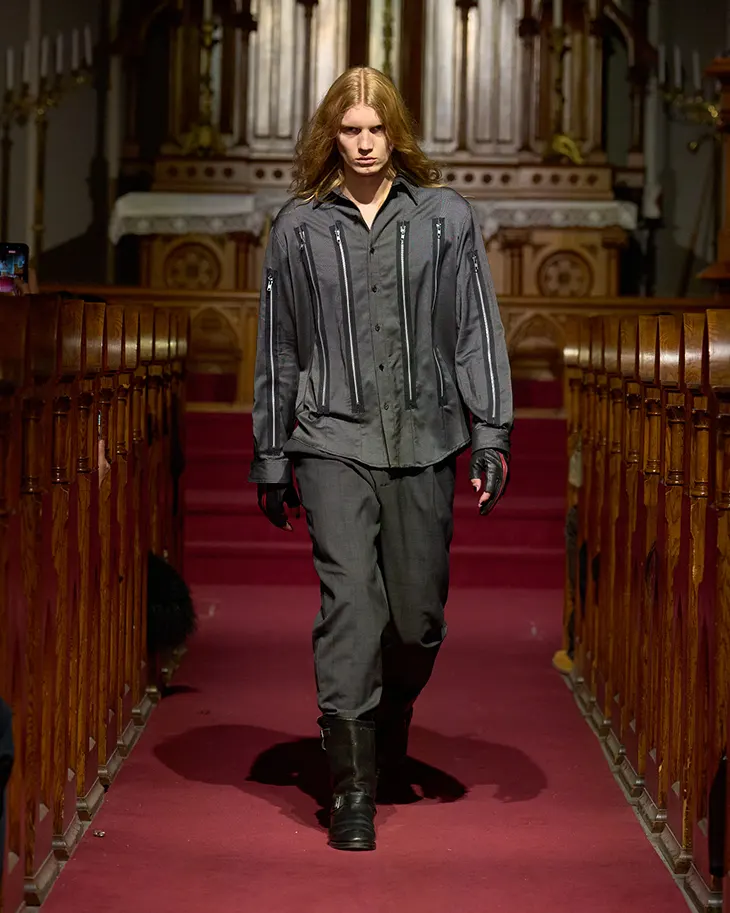
Medieval cues surfaced in proportion and detail, while classic menswear references grounded the narrative. The interplay between historical codes and contemporary construction defined the rhythm of the show. Boy London America cut into its own past and extracted elements that still resonate, reframing them through disciplined design. The result presented rebellion as deliberate, shaped through tailoring instead of distortion.
Boy London America used its anniversary to clarify its position. Guillotine proposed a future cut from history, where archival rebellion evolves into disciplined construction.