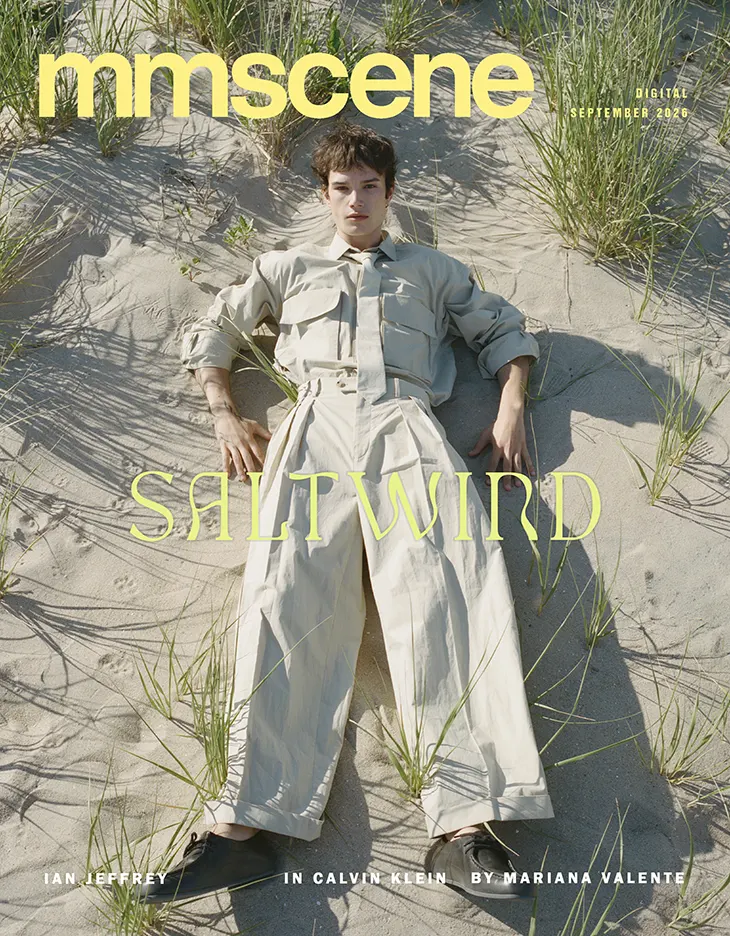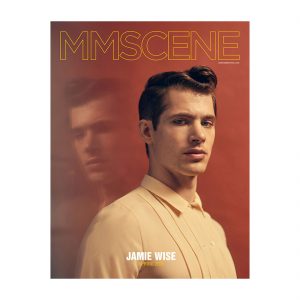
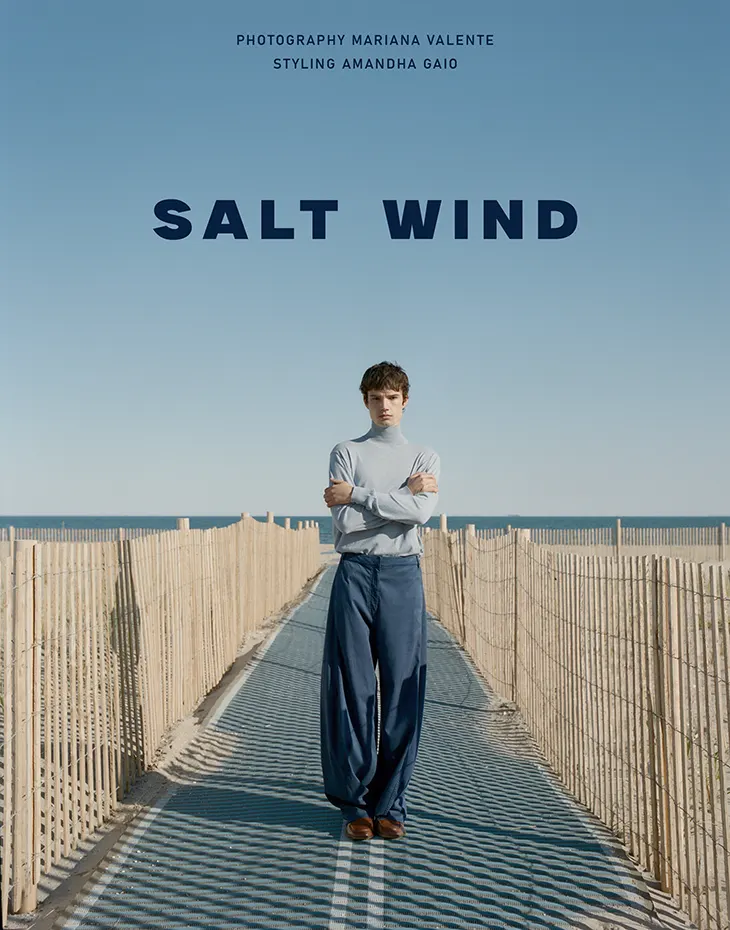
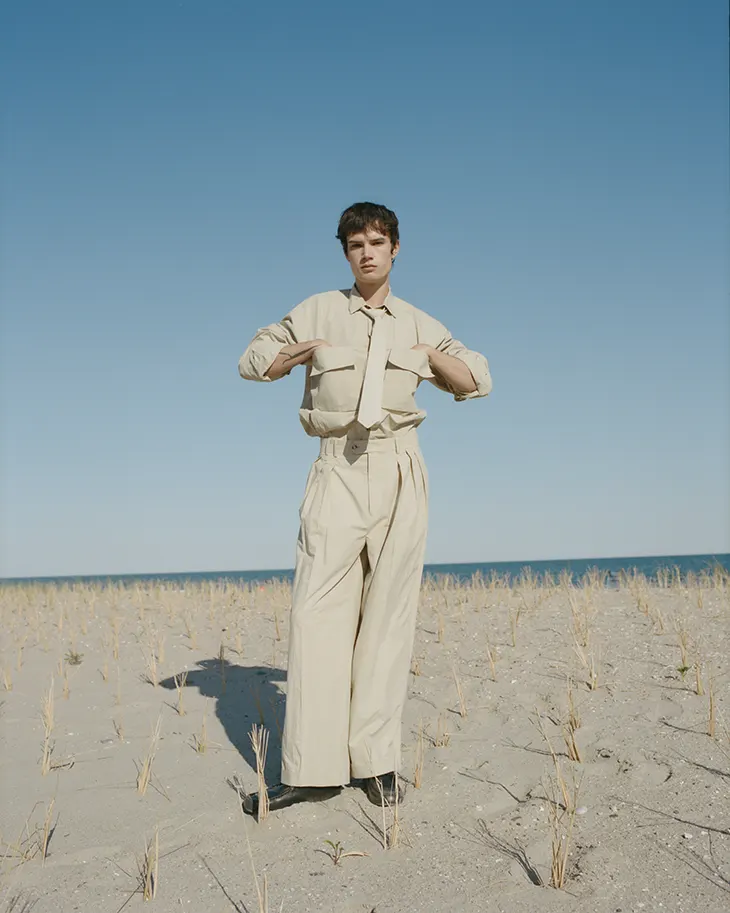
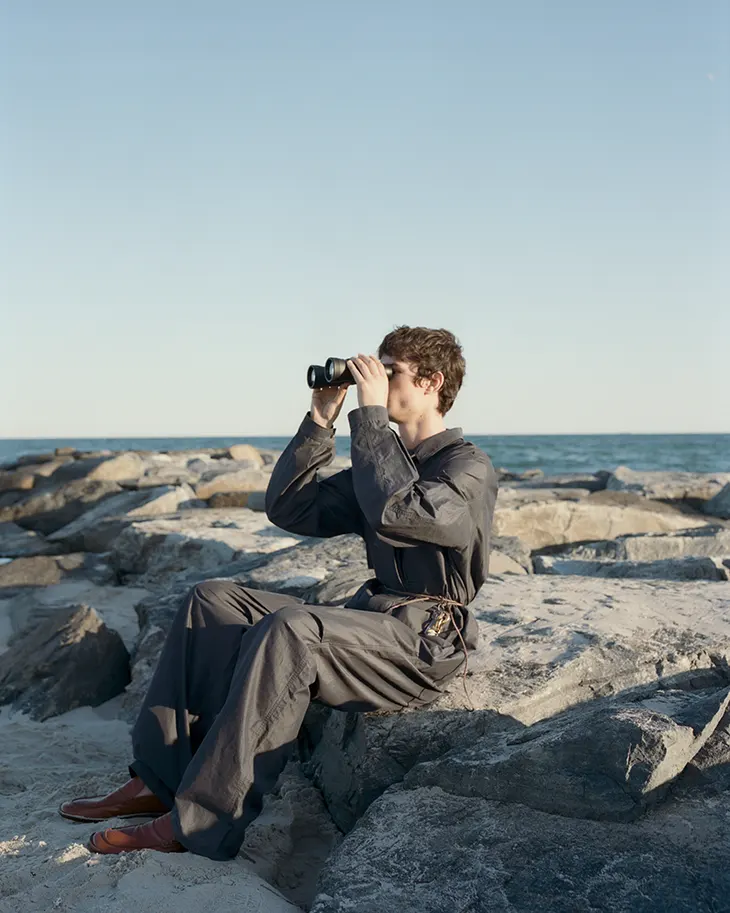
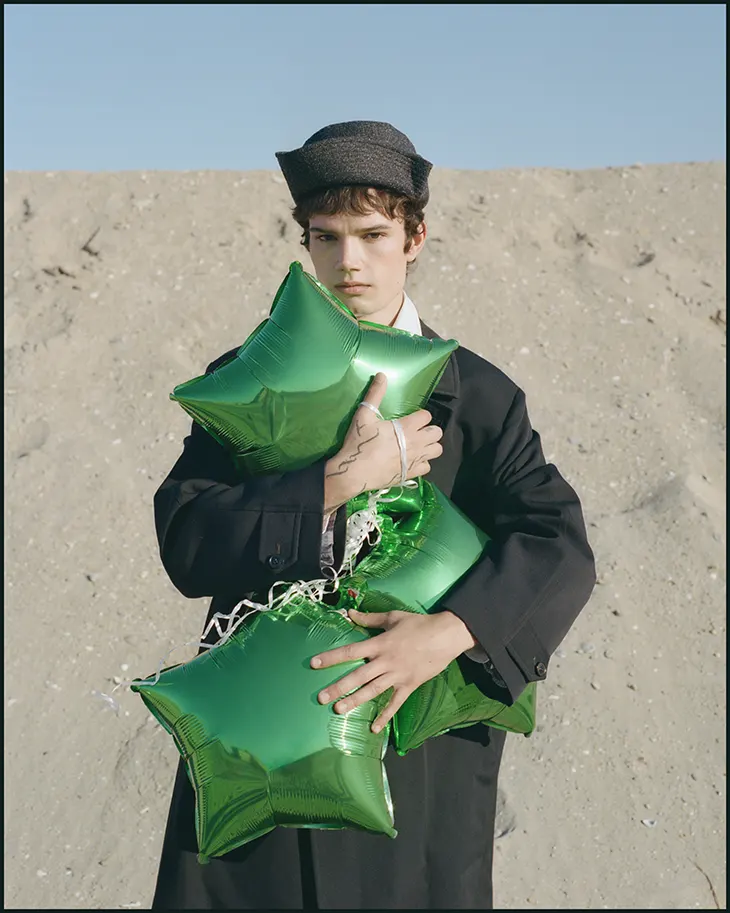
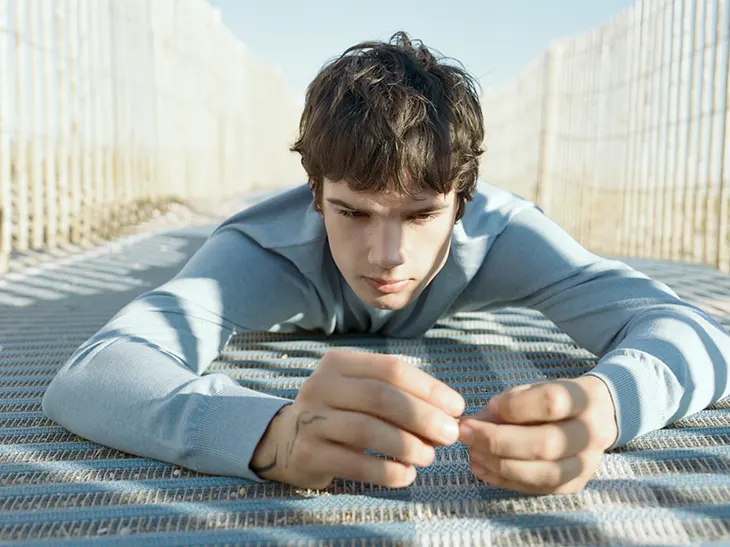
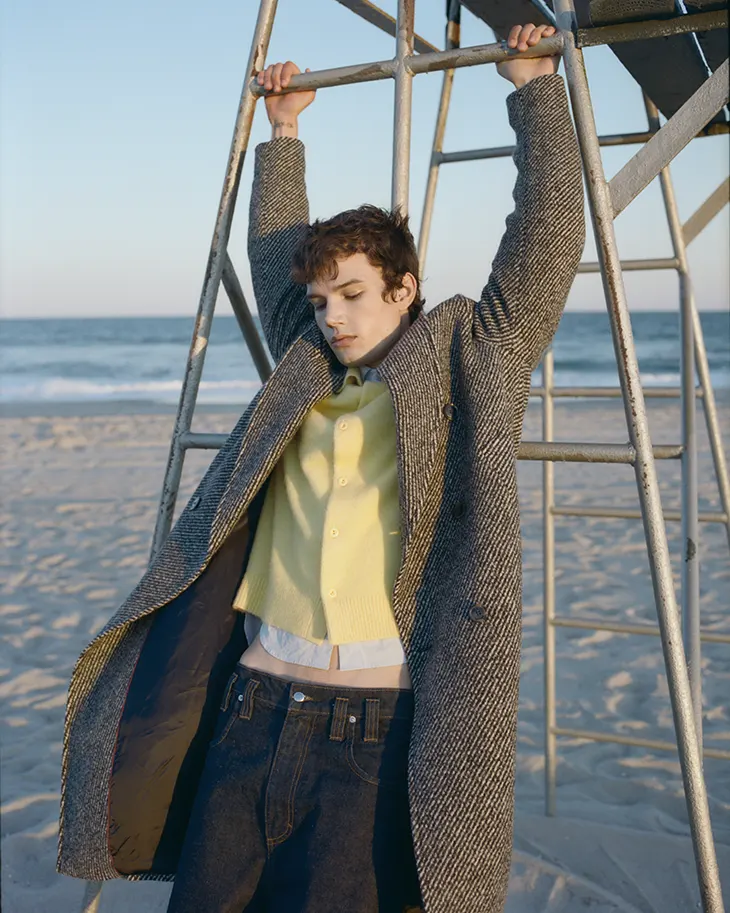
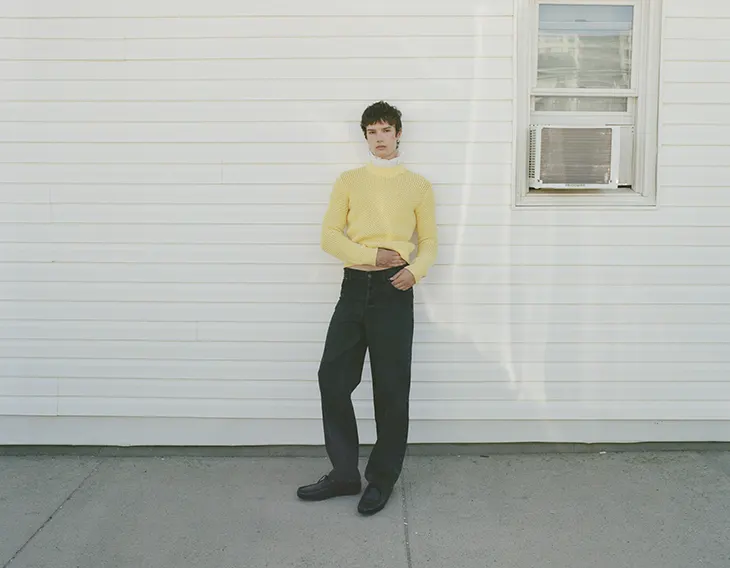
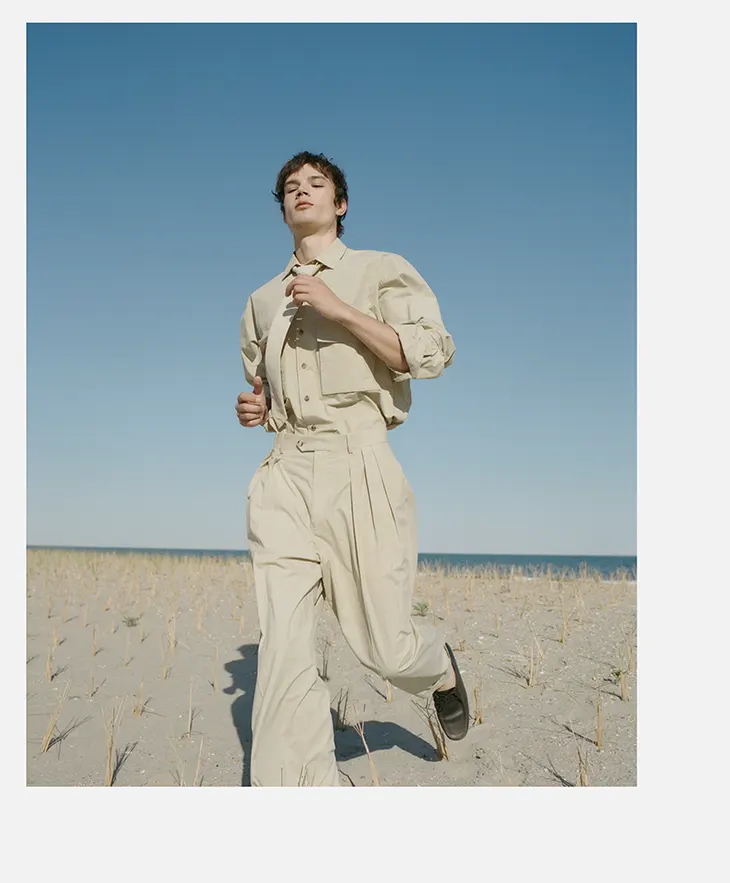
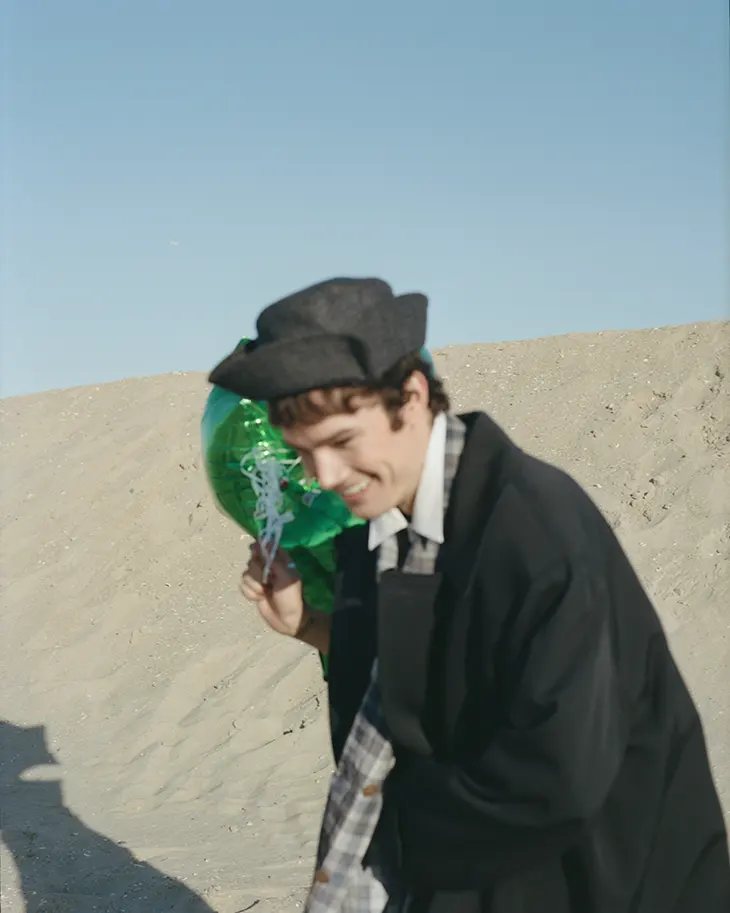
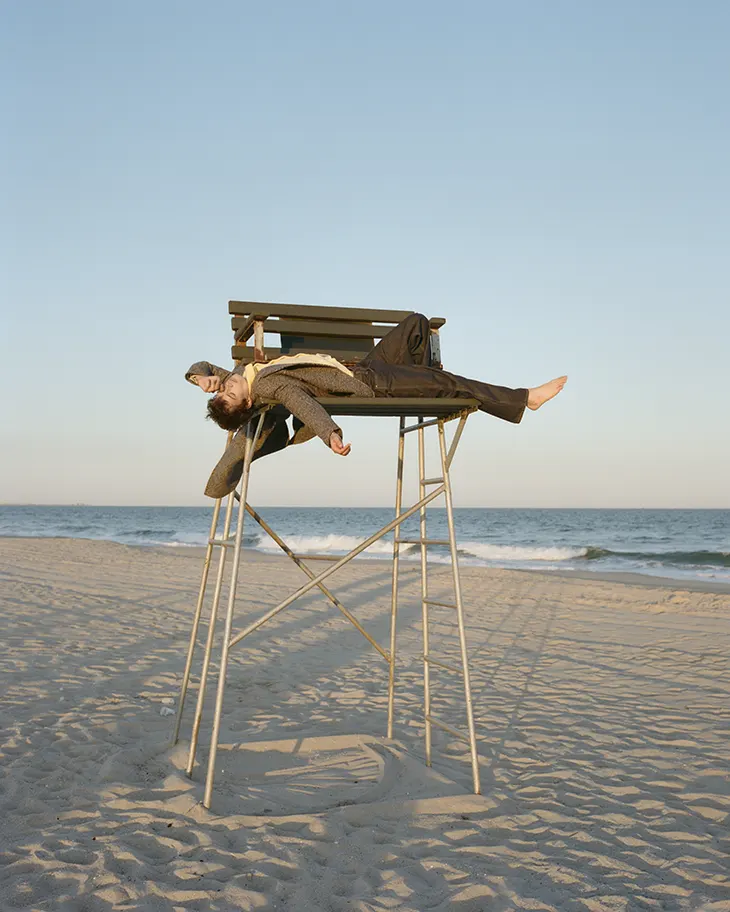
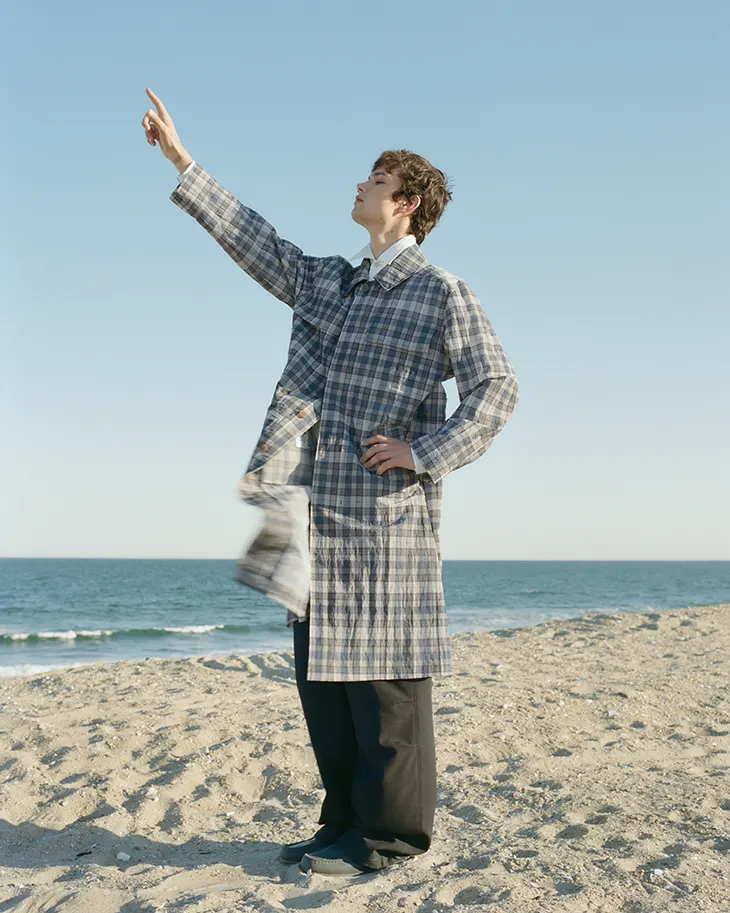
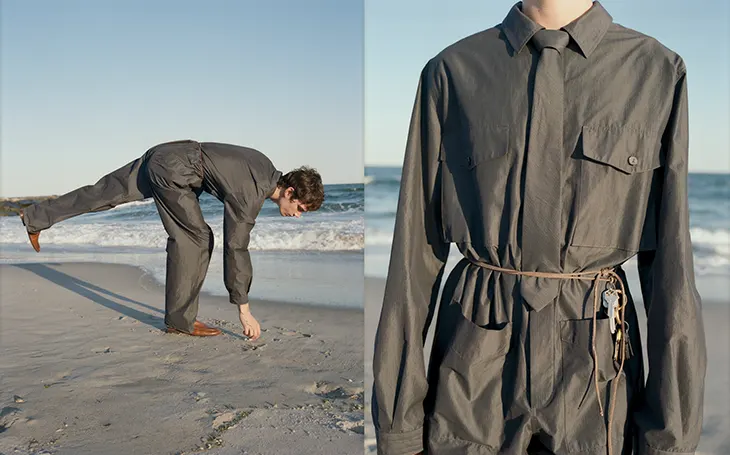
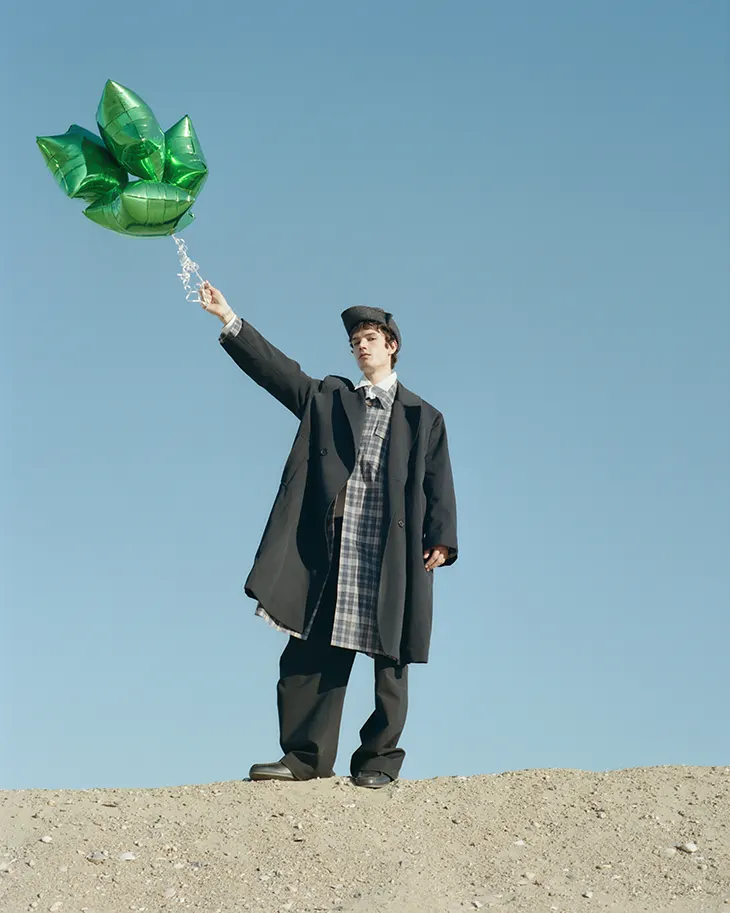
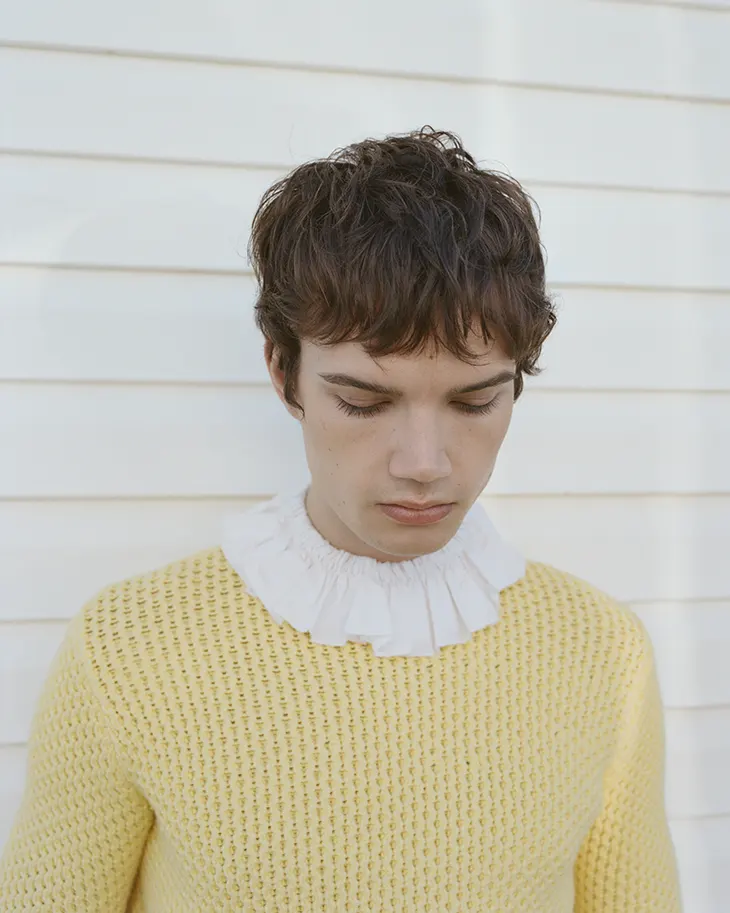
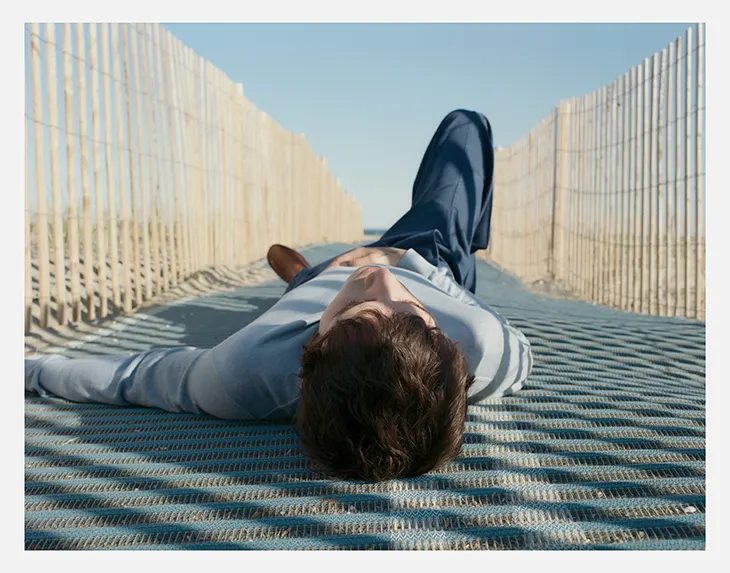
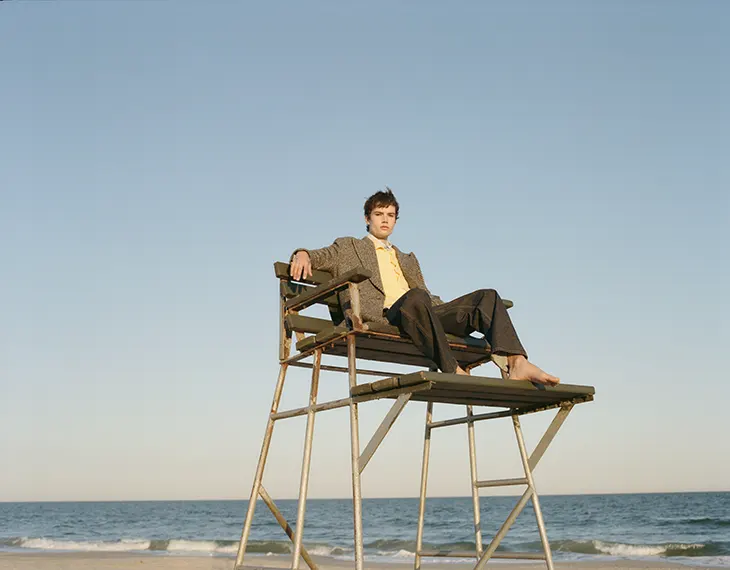
For MMSCENE Magazine’s September cover story, “Salt Wind,” Ian Jeffrey steps in front of the camera of Mariana Valente, with styling by Amandha Gaio and assistance from Giulia Schrappe. Beauty is by makeup artist Seiya and hairstylist Chika F.K, while Andre Deko captures the story on video. The wardrobe features Tibi, Calvin Klein, Eckhaus Latta, Sandro, Tommy Hilfiger, Paul Smith, Jil Sander and Aknvas.
MMSCENE EXCLUSIVES
In the accompanying interview with MMSCENE Editor-in-Chief Zarko Davinic, Jeffrey reflects on leaving behind the social media identity that first brought him attention and building a modeling career in New York. He discusses his preference for editorial work, the influence of vintage clothing on his style, and Dusted, the private vintage studio he operates in Brooklyn. The conversation also touches on masculinity, fashion week, creative visibility, and his long-term interest in design.
Continue reading Ian Jeffrey’s full interview with Zarko Davinic, alongside the complete “Salt Wind” story.
View this post on Instagram
You made a conscious decision to leave YouTube and your influencer status behind at 16. What was the breaking point, and how did you know modeling in New York was the right answer?
I don’t think there was one specific moment where I woke up and decided to leave everything behind. It happened gradually. Social media became my life at such a young age, and I’m incredibly grateful for what it gave me, but eventually I realized I was living for an algorithm instead of for myself. I started asking myself whether I was making things because I genuinely enjoyed them or because people expected them from me.
Fashion gave me something completely different. It wasn’t about numbers or engagement anymore. It was about history, craftsmanship, culture, and collaboration. Moving to New York felt like pressing a reset button. Nobody cared how many followers I had. They cared if I was professional, if I was curious, and if I brought something to the table creatively. That was the environment I had been looking for.
You operate Dusted, a private vintage studio in Brooklyn, alongside your modeling career. How does curation and vintage collecting inform your approach to fashion and personal style?
Vintage has completely changed the way I understand clothing. The more time you spend handling garments from different decades, the more you start noticing details that most people overlook. Construction, proportions, fabrics, stitching, even how something has aged over time. Every piece has a story.
Running Dusted has made me much more intentional. I don’t really chase trends because I’m surrounded by clothing that’s survived fifty or sixty years already. That puts everything into perspective. I think my personal style has become less about making a statement and more about wearing pieces that feel authentic to me.
When you moved to New York, you cited that LA “wasn’t the place to be” for fashion. What did you find in New York that LA didn’t offer, and how has that environment shaped your career trajectory?
New York has an honesty that I connected with immediately. In LA, I felt like so much of the conversation revolved around visibility and influence. In New York, people were talking about designers, books, architecture, photography, music, vintage stores, and making things. It felt like everyone was here because they genuinely cared about their craft.
That mindset rubbed off on me. It pushed me to slow down, learn more, and take fashion seriously as an industry instead of just something that looked good online. I think New York gave me permission to become a student again.
Beyond modeling, you’ve mentioned wanting to become a fashion designer. How are you building toward that goal now, and what does the designer version of Ian Jeffrey look like?
I’m in no rush because I think the best designers spend years developing their point of view. Right now I’m learning through observation. I’m collecting vintage, studying garments, experimenting with reconstruction, and paying attention to why certain pieces have lasted for decades while others disappear after one season.
If I ever put my name on a collection, I want it to have substance. I don’t want to make clothes just because I have an audience. I want to create pieces that feel timeless and become part of someone’s wardrobe for years. That’s much more interesting to me than making something that’s only relevant for one season.
You’ve been featured in publications like Numéro, L’Officiel, and worked across editorial, runway, and campaigns. Which type of work excites you most, and why?
Editorial has always been my favorite because it feels the most collaborative. Everyone involved is contributing to a single image, and there’s room to experiment. Some of my favorite shoots have felt less like work and more like a group of creative people trying to make something beautiful together.
Runway has an energy that’s impossible to replicate, and campaigns are exciting because of their reach, but editorial is where I feel the most creatively fulfilled.
Looking back at your journey from social media to where you are now, what would you tell young people who feel trapped by the version of themselves they’ve built online?
I think a lot of people become afraid of disappointing an audience they’ve never actually met. The internet rewards consistency, but real life rewards growth.
You’re allowed to change. You’re allowed to become interested in different things. The people who genuinely support you will follow that journey, and the people who don’t probably weren’t there for you in the first place.
What does masculinity mean to you, and how do you express that through fashion and modeling?
To me, masculinity has very little to do with what you’re wearing. It’s about character. It’s about being dependable, treating people well, staying curious, and being confident enough to express yourself without worrying about someone else’s definition of what a man should look like.
Fashion has always been a form of communication. Sometimes that means wearing a perfectly tailored suit, and sometimes it means wearing a faded military jacket that’s older than I am. Neither makes someone more or less masculine. They’re just different ways of telling a story.
You walk in fashion weeks across Europe and New York Fashion Week. What’s your take on the current state of fashion week culture? Is it still a meaningful space for discovery and craftsmanship, or has it become something else entirely?
I think both things can exist at the same time. Fashion Week is definitely more commercial than it used to be because social media has changed the way brands communicate. There are more cameras backstage than ever before, and every show is expected to create a viral moment.
But once you’re behind the scenes watching hundreds of people work toward one collection, you realize the craftsmanship hasn’t disappeared. There are still incredible designers, pattern makers, ateliers, and artisans doing remarkable work. Sometimes that part just gets overshadowed by everything happening online.
We’ve seen several major fashion brands use casting and runway decisions as a way to generate controversy or headlines. As someone working inside the system, what’s your perspective on that approach to visibility versus genuine creative vision?
I think fashion has always challenged people, and that’s part of what makes it interesting. But there’s a difference between creating conversation because the work is genuinely innovative and creating conversation simply because it’s controversial.
The collections that stay with people aren’t the loudest ones. They’re the ones that shift the way we think about design, proportion, craftsmanship, or culture. That’s the kind of work I admire the most.
What are your plans for next year this time?
I’d love to keep expanding Dusted into something that’s bigger than retail. I want it to become a space where people come not just to buy clothing, but to learn about it, discover it, and connect over a shared appreciation for fashion history.
Personally, I hope I’m still modeling, continuing to work with creatives I’ve looked up to for years, while quietly laying the foundation for my own design work. My goal has never been to simply exist within fashion. I want to contribute something meaningful to it.
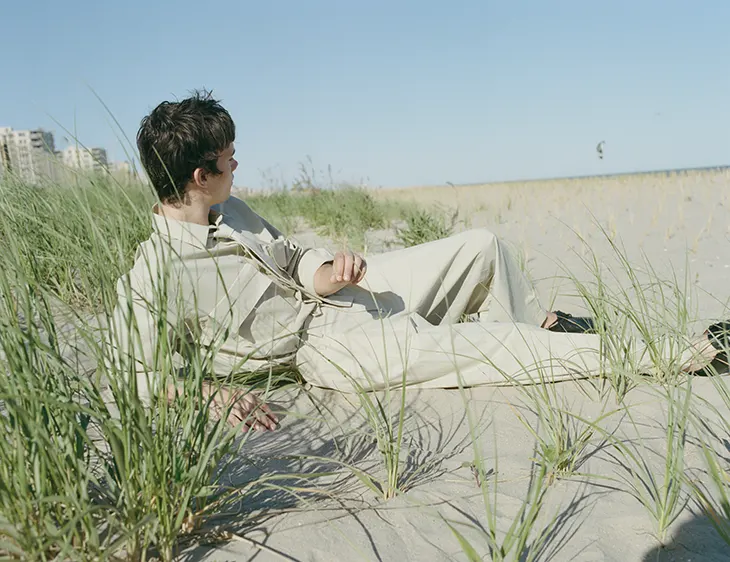
Talent: Ian Jeffrey
Photo: Mariana Valente
Styling: Amandha Gaio
Assistant: Giulia Schrappe
Makeup: Seiya
Hair: Chika F.K
Video: Andre Deko