
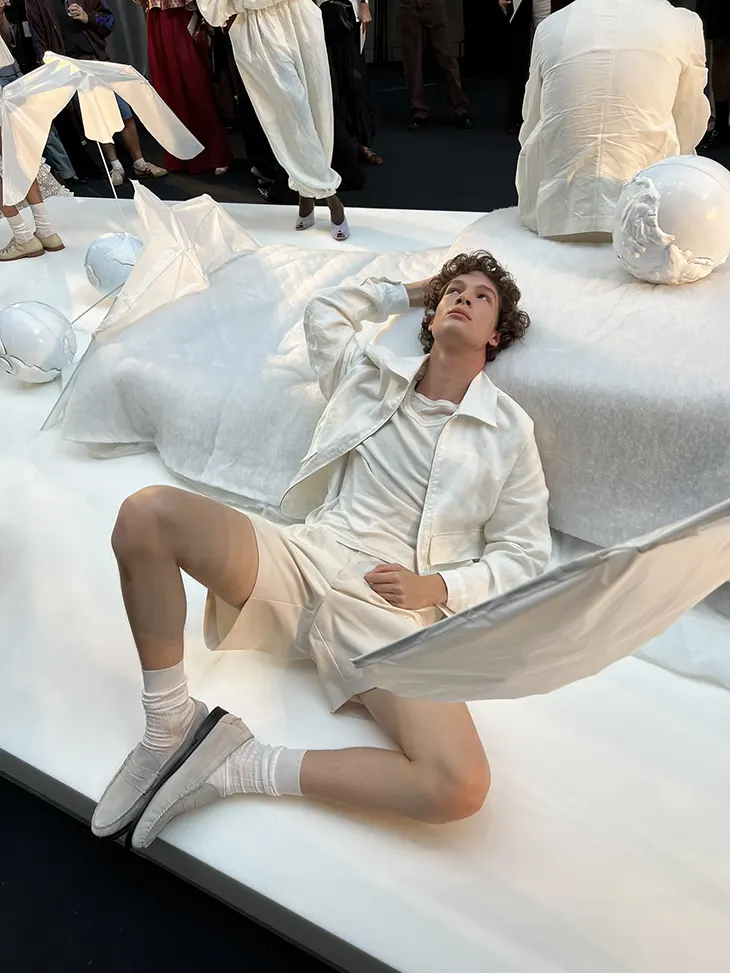
For years, the question in men’s footwear was where a shoe should be made. The answer used to be Italy, sometimes Spain, and rarely anywhere else for brands that wanted to be taken seriously. That map is changing. At the Spring Summer 2027 presentation in Lisbon, the Portuguese footwear industry made a clear case that it is no longer a supplier waiting for orders. Portuguese Shoes by APICCAPAS with two decades behind them have made Portugal a destination.
MMSCENE team had a chance to visit Portugal for a tour of factories around Porto and later on Lisbon Fashion Week.
Quiet Industry with Loud Numbers
The scale of the sector explains part of the shift. In 2025, Portugal produced 80 million pairs of shoes and exported 68 million of them, worth €1.718 billion. The industry sells more than 90 percent of its output abroad, and its products reach more than 170 countries across five continents. Germany is the largest market, taking 24 percent of exports, followed by France at 20 percent. The United States, at about €84 million in 2025, is now one of the sector’s strategic priorities for the next decade.
Those numbers hold up better than many expected. In the first half of 2026, national exports fell 2.1 percent, a smaller decline than in Italy and Spain, which recorded losses of 4.3 and 7.3 percent. Portugal is also now the second-largest footwear producer in Europe, widening the gap with Spain.
What makes these figures matter for menswear is what sits behind them. The Portuguese industry does not compete on volume. Its own leadership is explicit about this. Paulo Gonçalves, Executive Director of APICCAPS, put it plainly: “Portugal cannot compete with the large Asian producers on volume, so it competes on value, quality, service, design, innovation and responsiveness. For a menswear buyer, that is the language of small runs, fast turnarounds and craft”.
Investing in the Factory Floor
Over the past three years, the sector has completed what it calls the largest investment cycle in its history. More than €100 million went into two programmes, BioShoes4All and FAIST, covering sustainability, new materials, automation, robotics, digitalisation and artificial intelligence. BioShoes4All brought together 69 organisations over four years and produced 46 new footwear and leather goods products, most with a lower environmental footprint. Researchers developed biomaterials from pine bark, olive leaves, coffee grounds, chestnut shells and olive stones, and reduced water use by 20 percent in some leather processes.
FAIST, with about €50 million behind it, is working on highly automated production lines and software for planning, waste reduction and faster decision-making. Luís Onofre, President of APICCAPS, describes the aim as combining what has always set Portuguese footwear apart, namely talent, quality, flexibility, creativity and responsiveness, with a new generation of technology. For a factory that has built shoes for generations, that is a significant claim, and the investment is the evidence behind it.
From Heritage Brands to Luxury Partners
The most visible sign of the change is who is now producing in Portugal. Established names and legacy houses have long relied on Portuguese workshops for the handwork and finishing that define their product. What is new is the scale and range of the partners. Brands that once sourced quietly are now putting their Portuguese production on show.
Luís Onofre’s business offers a useful case study. Alongside his own multi-generational shoe brand, his factory now produces for some of the most prominent names in fashion. That combination matters. A factory that works only for other labels can disappear into the background. A factory that also runs its own brand understands the product from both sides, the commercial pressure of a large order and the detail of a shoe that has to carry a name. It is a model that allows a heritage manufacturer to grow without losing its identity.
Major international labels are also choosing Portugal for limited editions. Working with Portuguese manufacturers allows these brands to make smaller, more specific runs, with shorter lead times and direct access to craftsmanship. For menswear, where the difference between a good shoe and a great one often lives in the last-making, the stitching and the leather choice, that access is valuable.
New Generation of Labels
Portugal’s appeal is not limited to established houses. Some of the most interesting menswear and footwear names in the current cycle are building their collections around Portuguese production from the start.
The clearest example from the presentation is the debut of Alain Paul in Paris, which showed its first footwear collection developed with the Portuguese company PC Footwear. The partnership brings a young label into direct contact with factory expertise that would be hard to access on its own.
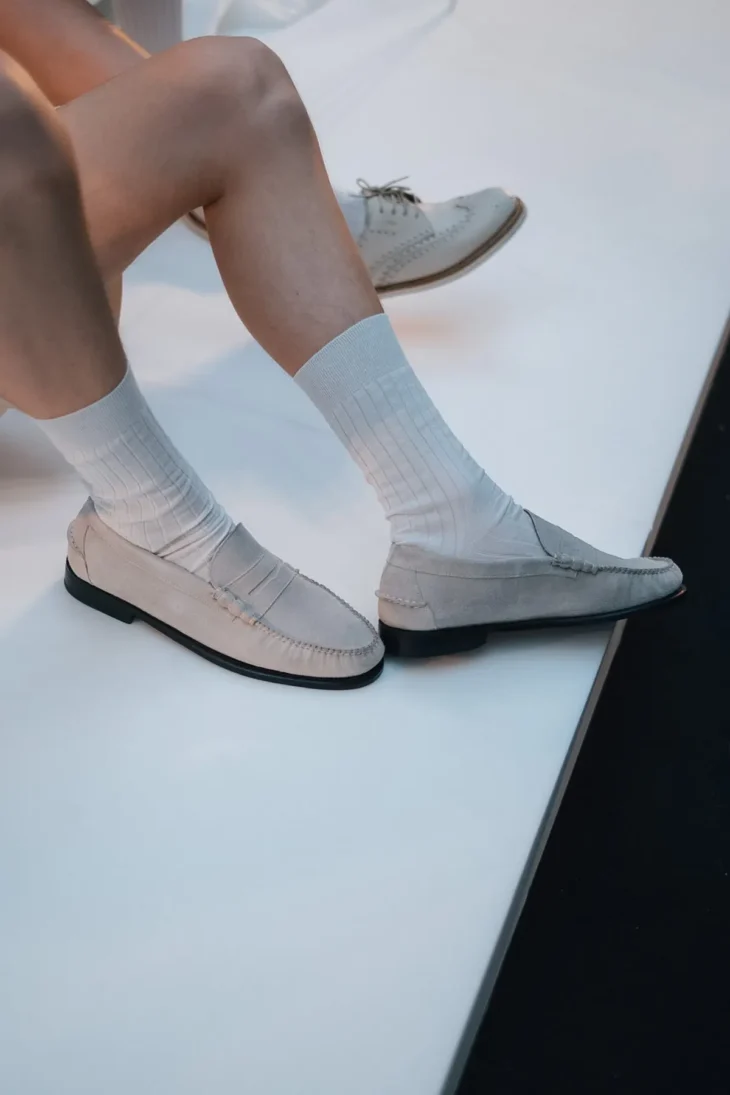

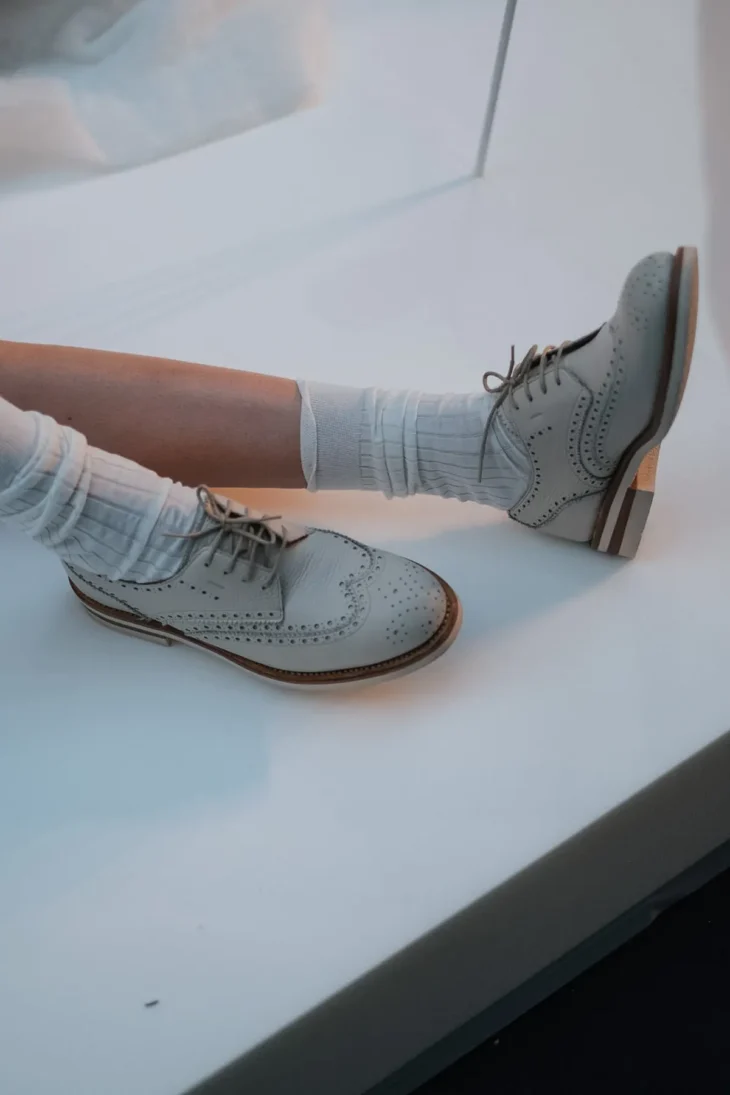
The Portuguese industry’s approach to these partnerships is deliberately collaborative. APICCAPS describes them as co-creation rather than sponsorship. The association brings designers and manufacturers together, offers technical resources and factory access, and leaves the creative vision with the designer. The stated goal is to move beyond the runway and build long-term commercial relationships between Portuguese companies and international designers.
The same logic runs through the designer programmes. London College of Fashion, part of the University of the Arts London, has partnered with APICCAPS to bring master’s students into Portuguese factories. The second Portuguese Footwear and Accessories Design Award went to Pranav Sudhir, who is now developing a collection with PC Footwear. Yevheniia Mizevych, who received an honourable mention, will work with JJ Heitor. For emerging menswear talent, this kind of access to a working factory is rare.
Saul Nash‘s footwear collaboration shows how this plays out on a runway. For his Spring Summer 2027 collection, STANCE, the London designer reinterpreted the classic boat shoe with TOWORKFOR, a Portuguese brand known for professional and safety footwear. The result, with mesh and suede uppers and a drawstring-inspired lacing system, was shown at Saul Nash Milan Fashion Week runway show. Nash said he was surprised to find that even shoes designed for work and safety feature hand-stitched uppers. That detail says a lot about the depth of skill in the country’s factories.
Why Menswear Should Pay Attention
The Portuguese footwear story has been told mostly in terms of exports and industrial strategy. For menswear, the more important point is the shift in how the industry sees itself when it come’s to the men’s shoes. The sector is making a deliberate choice to be the place where considered, durable footwear is made, and it is backing that choice with capital, research and international partnerships.
The “Kindness” campaign, unveiled at ModaLisboa, puts that choice into words. Its message centres on the idea that doing better means making more conscious choices and understanding that every gesture matters. For a category that often chases trend cycles, that emphasis on quality, authenticity and products made to last is a meaningful counterpoint. The campaign also positions Portugal as a benchmark for sustainability and innovation, not just for price-competitive production.
Discover more from the APICCAPS Lisbon presentation in our gallery:

Whether this becomes an even more in demand destination for men’s footwear will depend on the next few seasons. The numbers are encouraging, the factories are investing, and the partnerships are moving from runway to production despite the global crisis. For the men who buy the shoes, the question is simpler: which factory made this pair, and why does it matter? In Portugal, more brands are now willing to answer that question in public and as we have seen on our own there are no hidden doors in Portuguese shoe factories.
For more info visit www.portugueseshoes.pt.