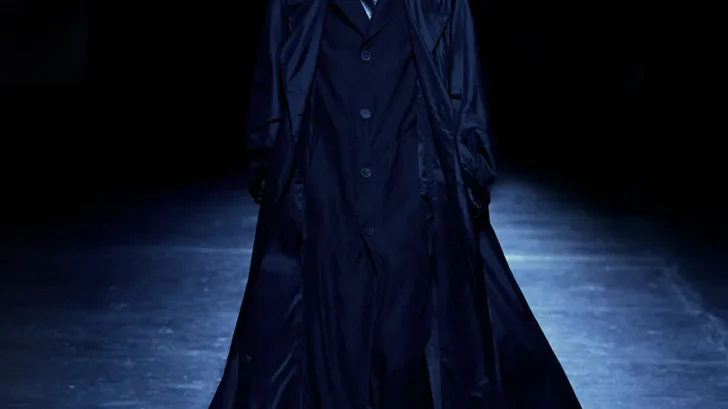
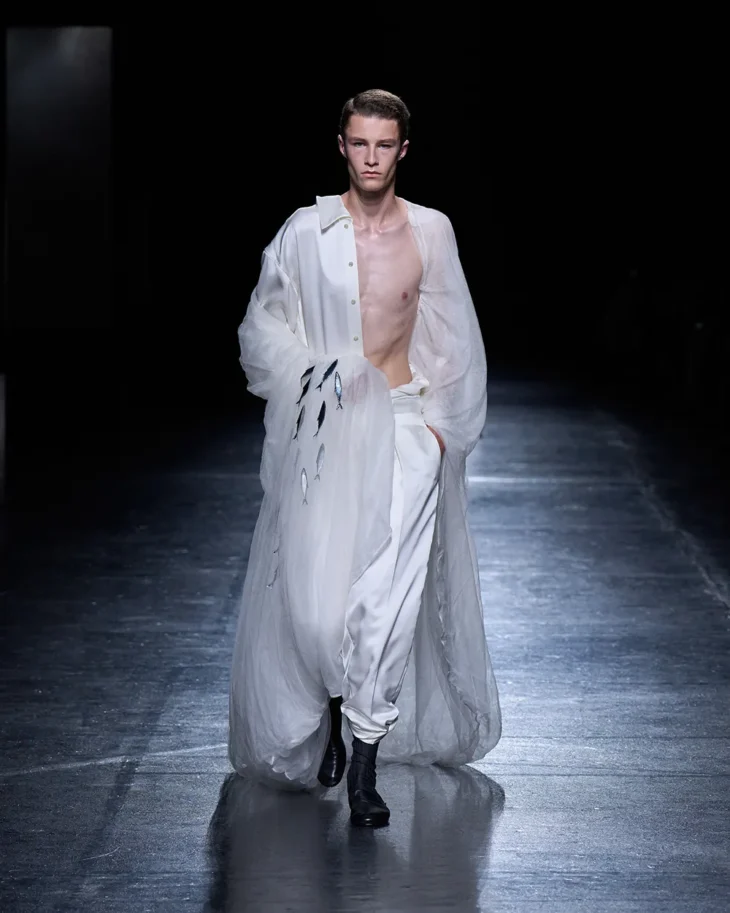
Olivier Theyskens introduces Boloria with Le Monde Flottant, a Spring Summer 2027 collection that gives the new house an identity rooted in movement, memory, and impermanence. The title, meaning “the floating world,” sets the tone for a debut that avoids fixed declarations. Instead, Boloria begins in suspension, where histories overlap, perspective collapses, and clothes appear as traces of lives already in motion.
SPRING SUMMER 2027
The name Boloria comes from a genus of butterfly, and that reference gives the collection its emotional center. The butterfly suggests presence and disappearance, beauty and fragility, a brief encounter that still leaves an image behind. Theyskens uses this idea to frame fashion as something transient yet deeply felt. The clothes exist in the present, but they carry the suggestion of a past, a memory, or a character moving through them.
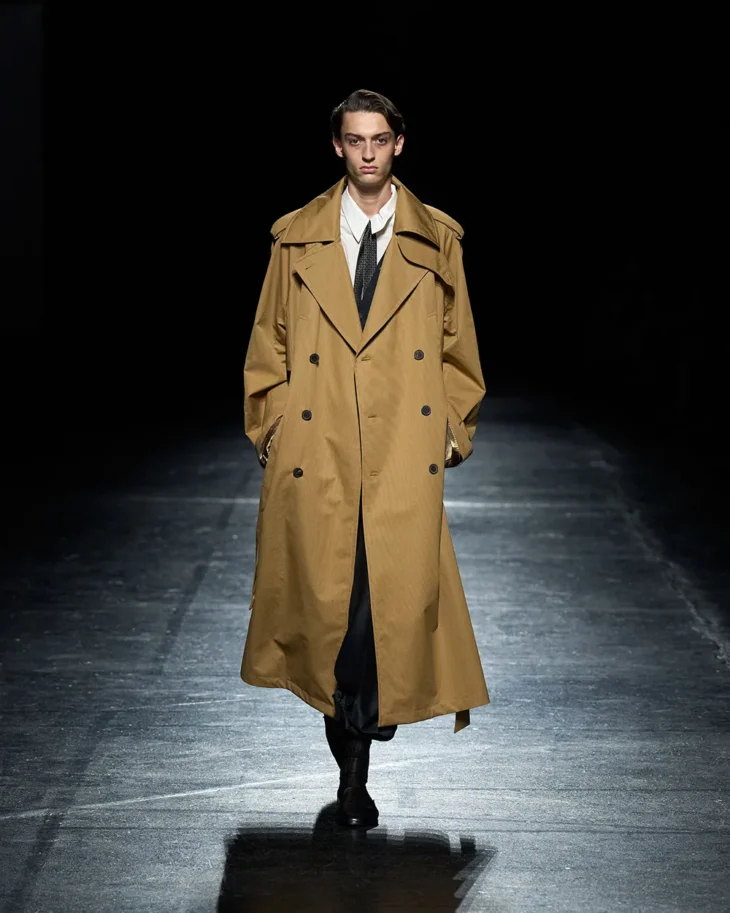
The collection builds silhouettes for all genders, proposing a wardrobe that feels both intimate and expansive. Theyskens works between the conscious and unconscious, allowing the garments to move between dream and reality. There is a narrative quality to the clothes, but it never becomes theatrical in an obvious way. Instead, the collection creates atmosphere through proportion, material, and construction.
A Belgian sensibility runs through the work. The muted palette recalls flatlands, soft light, and restrained landscapes. The colors do not shout. They seem remembered. Fine wool, cashmere, silk charmeuse, soft cotton, and silk lace create a material language that feels precious without becoming ornamental. Theyskens places value in texture and movement, letting fabric carry emotion.
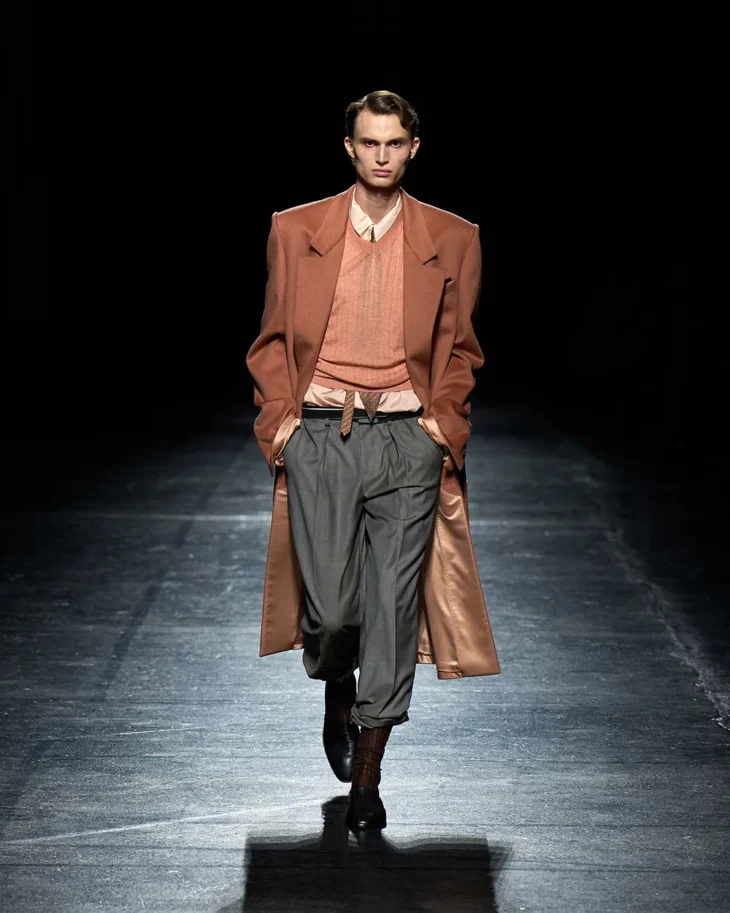
Construction becomes one of the collection’s strongest statements. Contemporary forms hold older methods: linings, tailoring details, reversible pieces, and careful gestures in cloth. The inside of a garment can become its outside, revealing a quieter kind of artisanship. These elements give the collection depth, suggesting that craft does not need spectacle to register. It can live in seams, weight, finish, and the way a piece turns around the body.
Proportions are elongated and attenuated, creating a sense of verticality and grace. Bias cutting shifts the architecture of both flou and tailoring, softening dresses, trousers, and jackets into languid forms. The clothes follow the body without closing around it too tightly. Their sensuality comes through drape, line, and the suggestion of movement. They seem to remember the body even after it has passed.
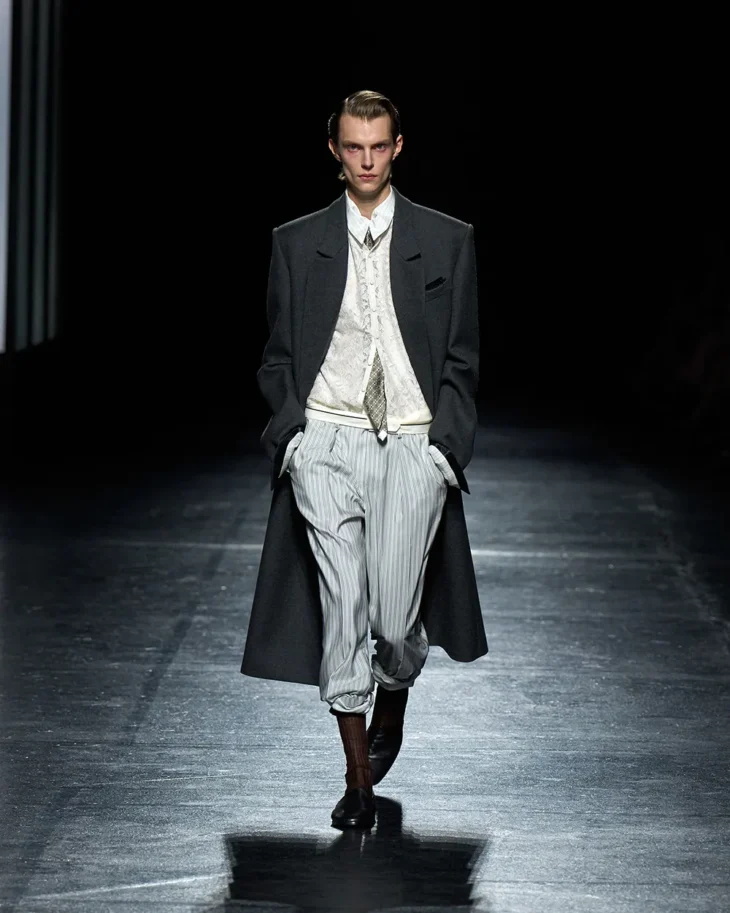
As a debut, Le Monde Flottant feels careful, atmospheric, and quietly assured. Theyskens does not use Boloria to stage a loud arrival. He establishes a world through restraint, material intelligence, and emotional ambiguity. The collection imagines a house built around permanence and disappearance at once: a wardrobe for people who understand that clothing can be both object and memory.
With Le Monde Flottant, Boloria begins as a floating world, but one with a clear point of view. It introduces a house concerned with craft, character, and the feeling clothes leave behind.