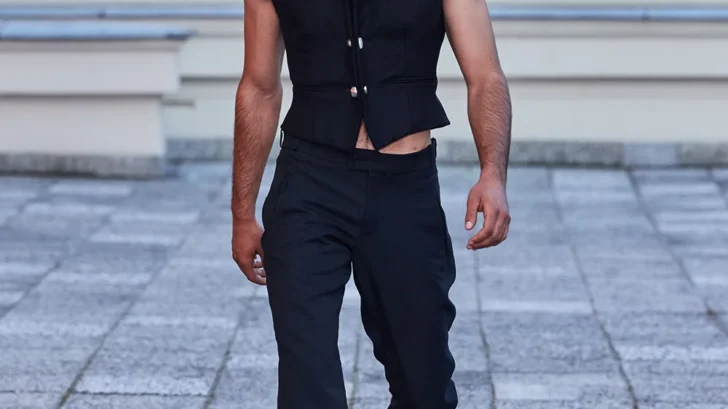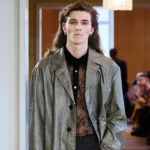
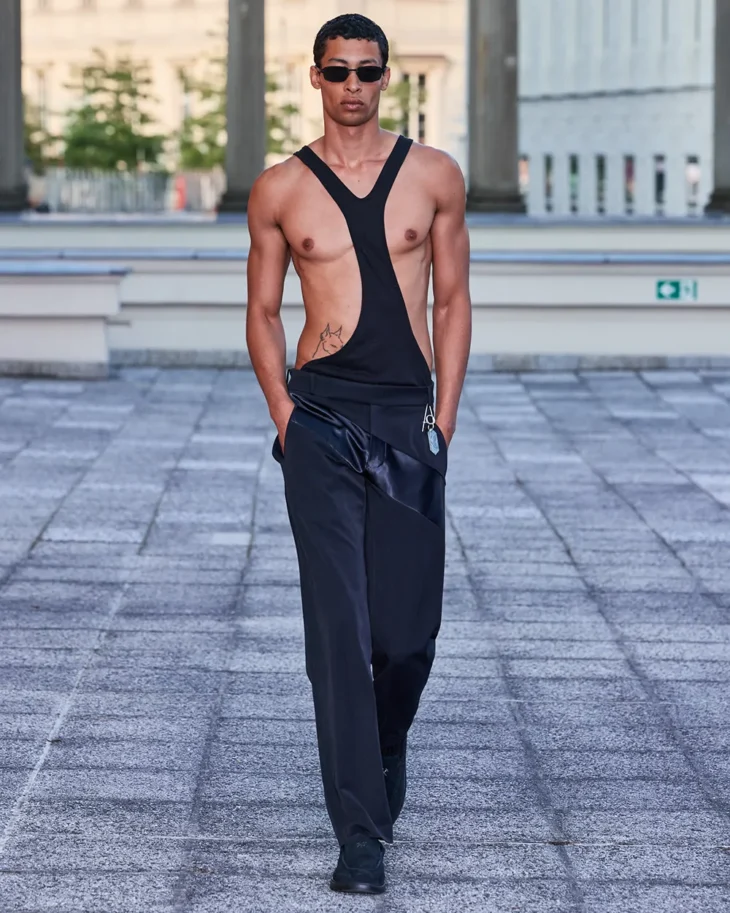
GmbH presented its Winter Spring 2027 collection, Intervention VI, during Berlin Fashion Week with a clear return to the city’s own fashion history. Marking ten years since the brand’s founding in 2016, Serhat Isik and Benjamin A. Huseby used the season to look at what first shaped GmbH: storytelling, community, identity, and resistance. This time, the story begins with Berlin itself.
SPRING SUMMER 2027
The collection revisits a largely forgotten chapter of the city’s fashion past. In the 1920s, Berlin supported a vibrant fashion scene, with couture houses, salons, tailors, designers, stores, and clients that rivaled other European capitals. That history was violently interrupted under the Nazi regime, which destroyed much of the city’s fashion community. Many of the designers, workers, business owners, and clients were Jewish. Their companies were seized, their lives were uprooted, and many were forced into exile or killed. The continuity of Berlin fashion was broken.
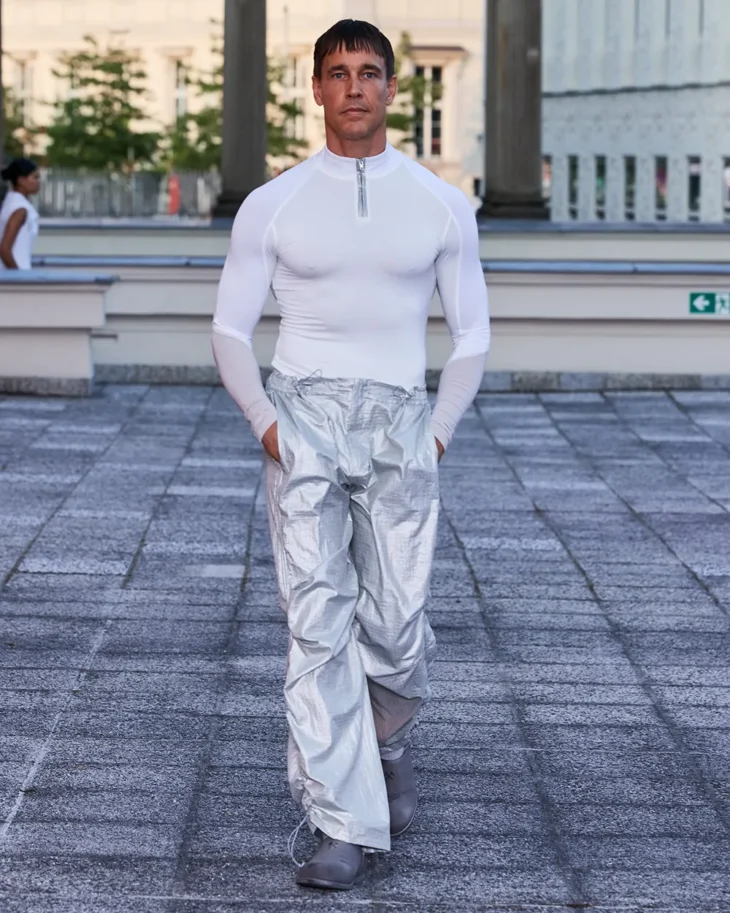
Rather than treating this history as a distant reference, GmbH places it directly inside the collection. The show begins with the brand’s familiar codes: sleek sportswear, sharp protective cuts, and garments that frame the body with precision. These pieces carry the tension that has long defined GmbH, sitting between armor, uniform, clubwear, and tailoring. For Winter Spring 2027, those signatures meet details drawn from Berlin’s couture past.
One key reference comes from a collar on a coat by Clara Böhm, whose house operated from 1912 to 1939 and appeared in Die Dame in 1934. This detail enters the collection as a bridge between the brand’s present language and a design lineage that history pushed aside. GmbH also incorporated select archive pieces from the 1910s through the 1960s by Berlin designers whose names remain largely absent from the dominant fashion narrative.
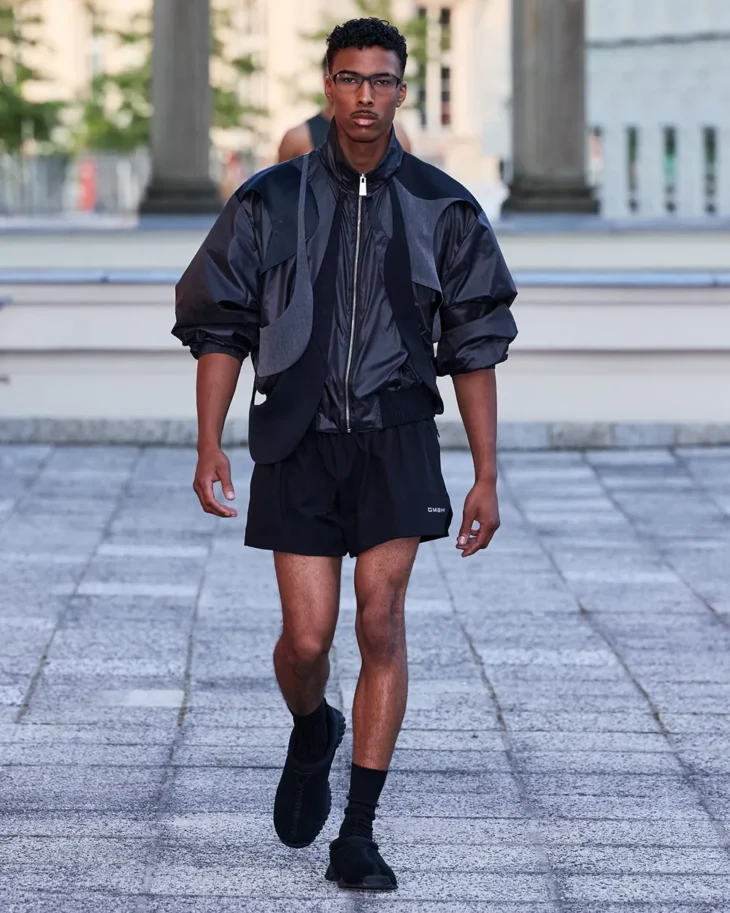
The research behind the collection included a visit to Julia Schwarz’s archive, where the designers encountered a century of fashion history through garments, construction, and memory. That encounter gives Intervention VI its emotional weight. The collection does not attempt to summarize a hundred years of design, nor does it turn archival material into nostalgia. It opens a conversation about what Berlin fashion once was, what was taken from it, and what it means to build from that absence today.
GmbH’s political position remains central. The brand has often faced questions about why its work addresses politics so directly, yet Intervention VI argues that fashion cannot separate itself from history or power. The erasure of Berlin’s fashion community proves that clothing, identity, labor, and politics have always been connected. In a moment of rising far-right visibility and increased pressure on minority communities, GmbH uses its anniversary to insist on resistance.
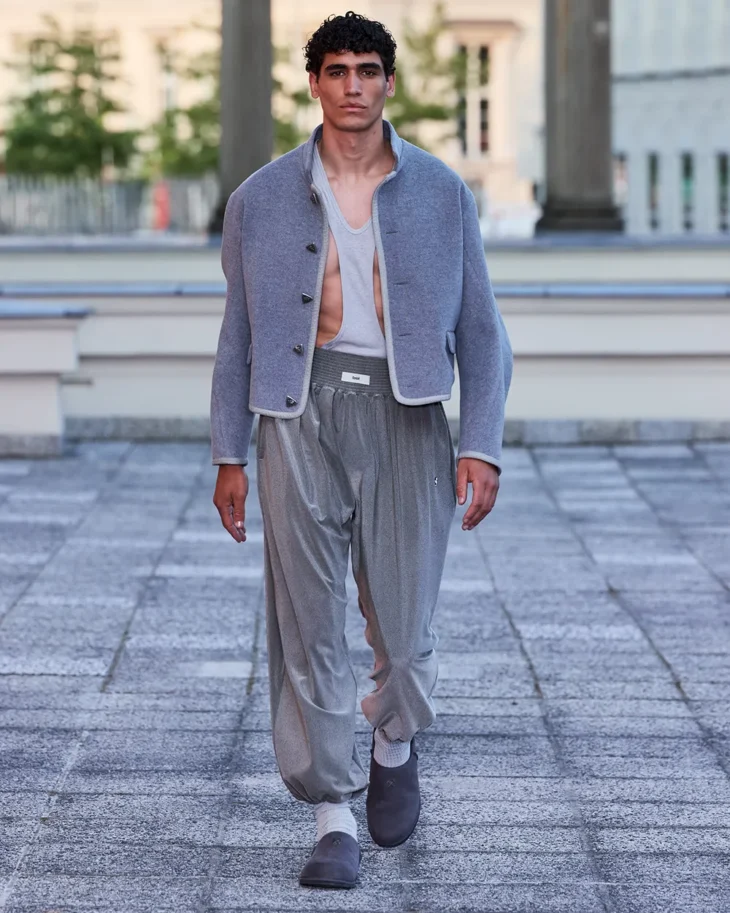
The strength of the collection lies in the way GmbH expands menswear beyond surface and silhouette. The clothes carry history, but they remain rooted in the body and the present. Tailoring meets sportswear. Protection meets elegance. Archive meets survival. Ten years in, GmbH does not look back for comfort. It looks back to recover what was lost and to claim space for what comes next.