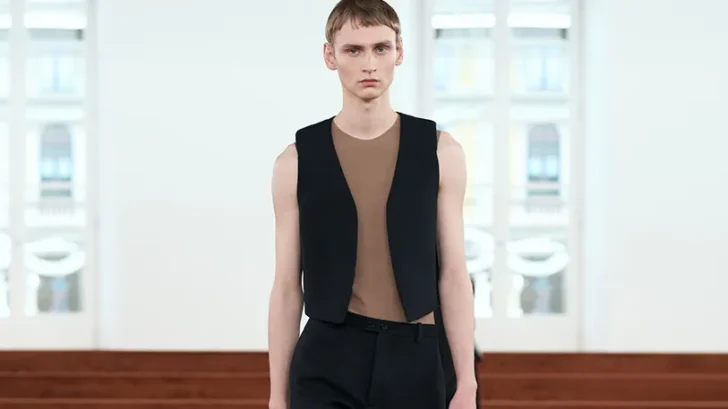
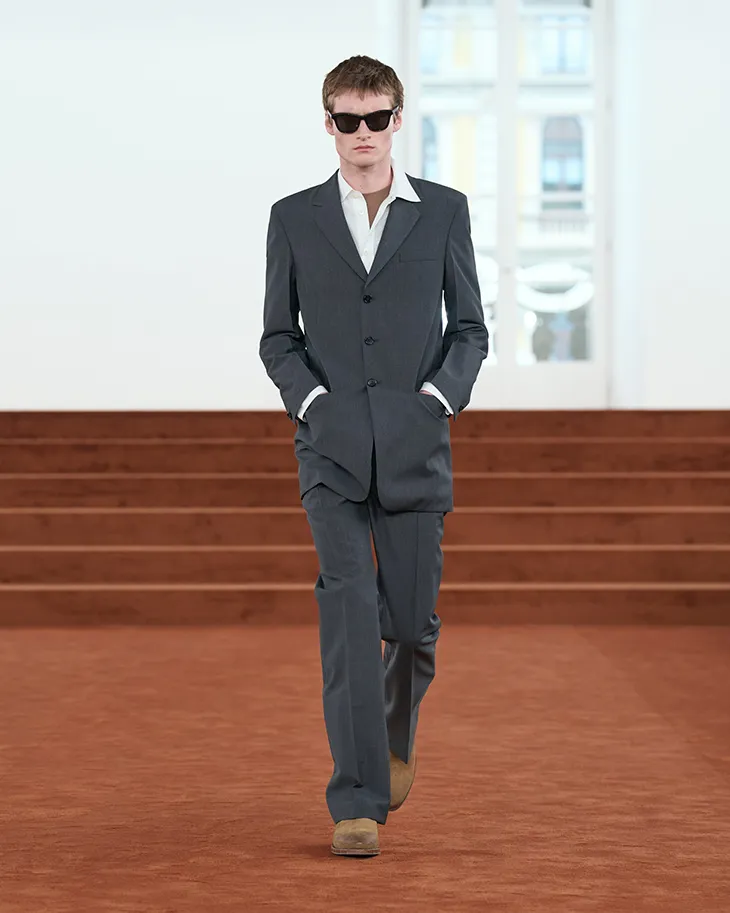
Jil Sander presented its Fall Winter 2026 collection, exploring the idea of the house as a home, on February 25 during the ongoing Milan Fashion Week. For his second season at Jil Sander, Simone Bellotti examined domestic space as a structural and emotional reference. He approached the house through interior elements, treating furniture, upholstery, and spatial arrangement as starting points for garment construction. This perspective connected personal memory with the brand’s established visual language, allowing Bellotti to reorganize familiar forms and rethink proportion.
FALL WINTER 2026.27 COLLECTIONS
Bellotti’s upbringing shaped this approach. His father worked as an upholsterer, which gave him direct experience with furniture textiles and construction techniques. He translated those material references into clothing, treating fabric as a surface that carries structure and volume. He reconsidered Jil Sander’s visual codes through this lens, adjusting silhouettes while preserving the house’s identity.
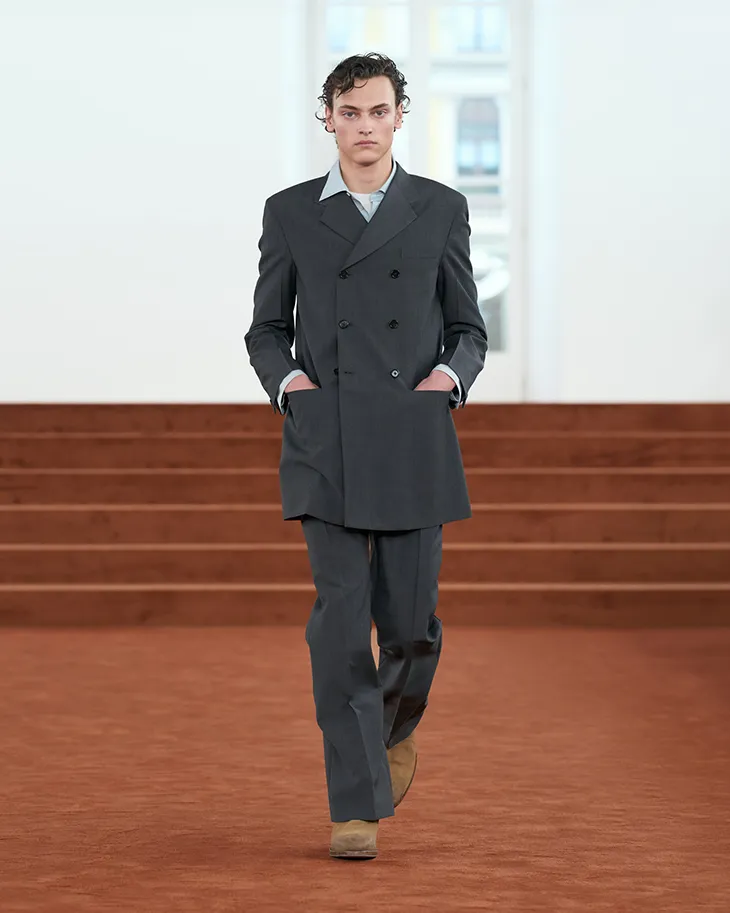
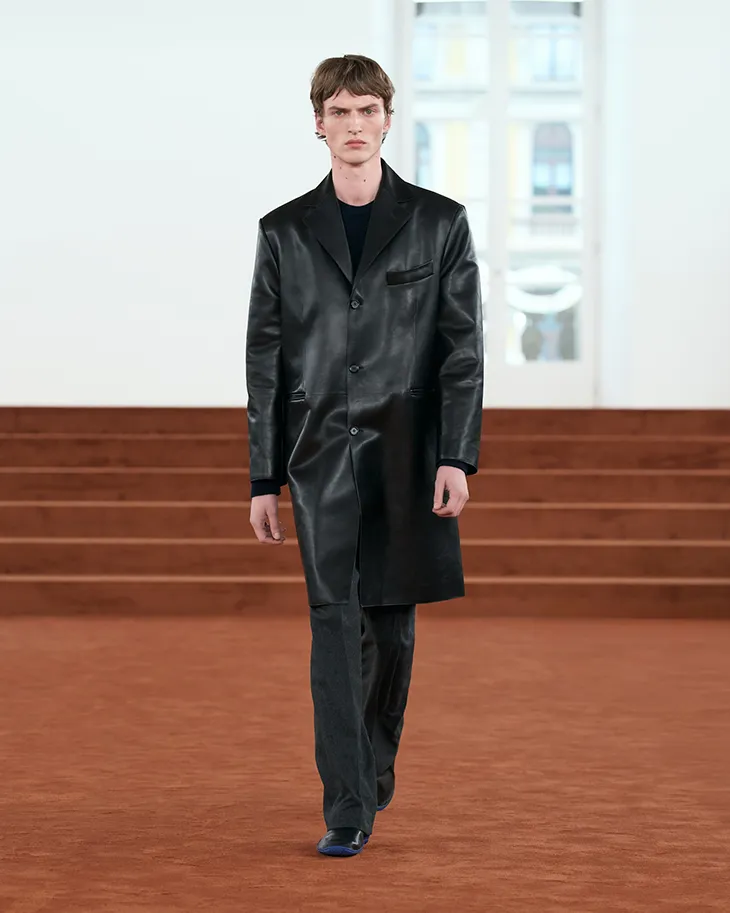
This season introduced expanded proportions and curved lines. Bellotti increased fabric allowance and reshaped tailoring to emphasize contour and volume. Fuller silhouettes replaced stricter linear construction. Additional material created folds, bends, and sculptural outlines that altered the relationship between garment and body. He approached expansion as a structural tool that redefined restraint through accumulation and adjustment.
The palette reinforced this domestic framework. Faded neutrals anchored the collection, accompanied by black, blue, and gray tones. These colors reflected interior surfaces and familiar surroundings. Garments responded to physical form through lifted shoulders, extended pockets, and collars that shifted away from the neckline. High closures emphasized vertical tailoring, while coats and blazers incorporated tall slits along the back. Bar tacks secured folds, reinforcing the construction while introducing new visual tension.
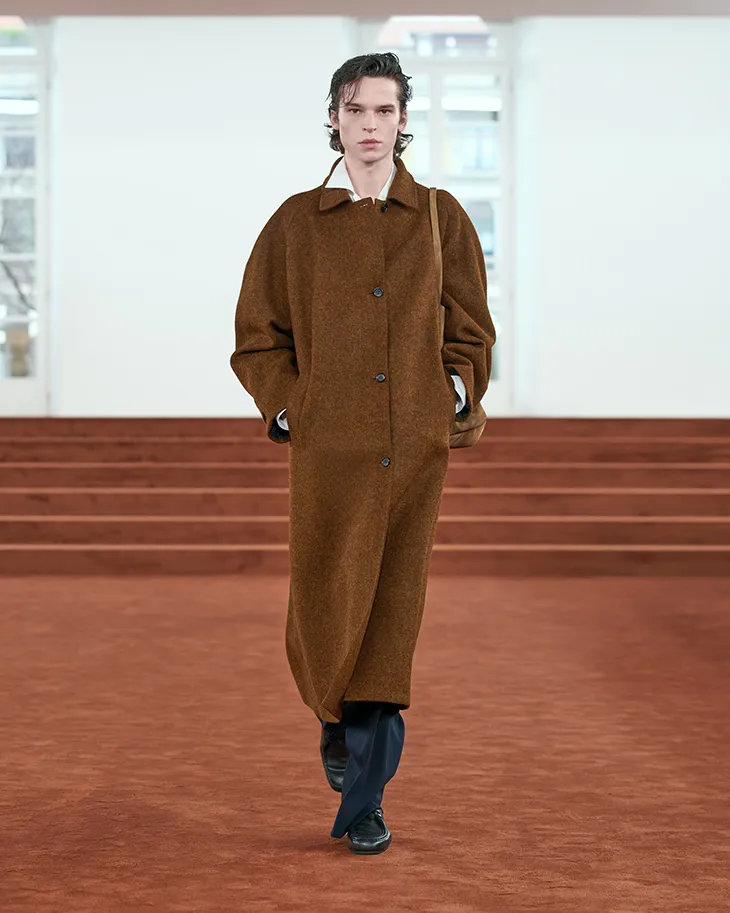
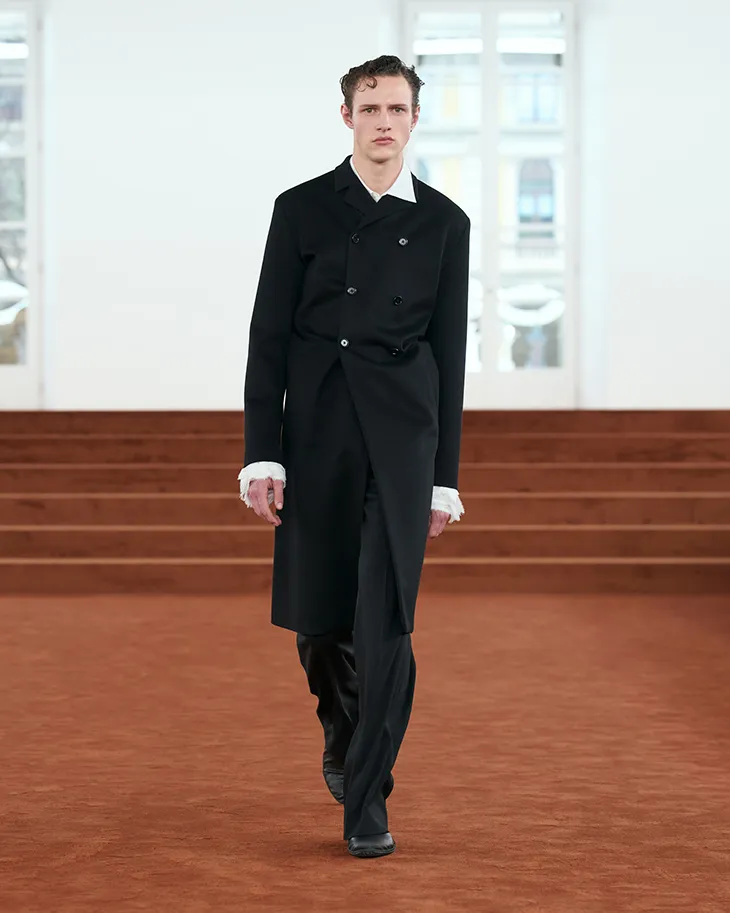
Upholstery fabrics played a visible role throughout the collection. Bellotti reshaped these materials into garments that emphasized sculptural softness. Tailored pieces incorporated folds and structural adjustments that altered traditional proportions. These interventions connected interior construction techniques with garment design.
Menswear and womenswear reflected shared construction and silhouette. Accessories extended these ideas. Footwear included exaggerated heels alongside unisex flats shaped close to the foot, square-toed lace-ups, and distressed suede boots. Bags introduced geometric structure paired with forms that referenced the body. Sunglasses previewed an upcoming collaboration with Oliver Peoples, introducing a new accessories direction connected to Bellotti’s evolving framework.