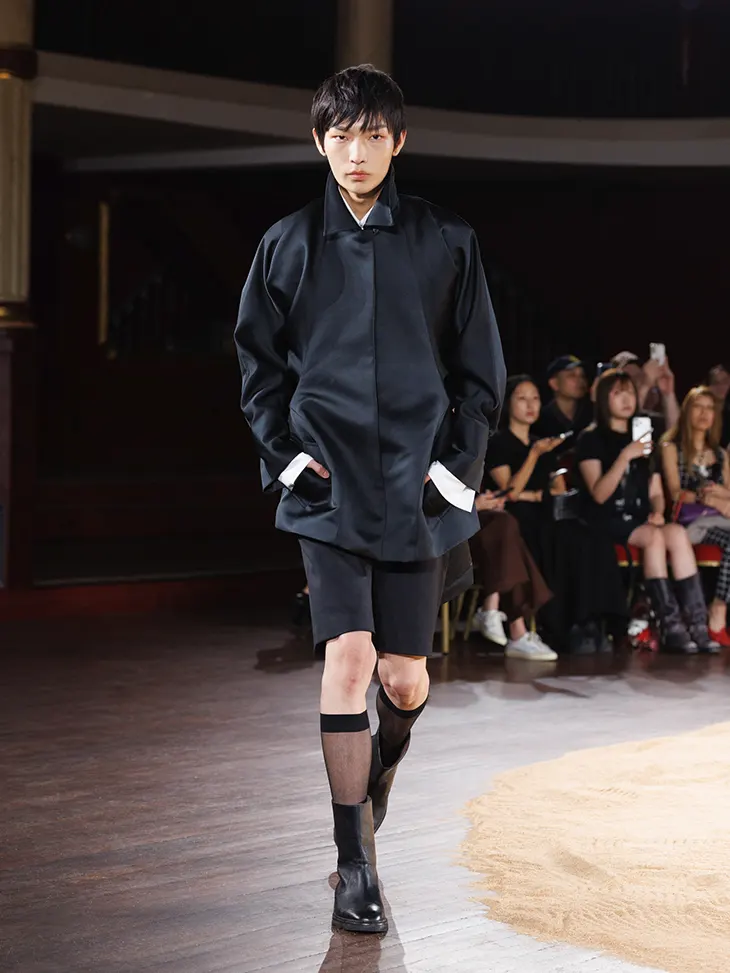
Torishéju approaches Spring Summer 2027 through the idea of spectacle and the ways attention can be directed, manipulated and consumed. The collection takes the title “Panem et Circenses” from the phrase written by Roman poet Juvenal in 100 AD, referring to a population kept occupied through food and entertainment.
SPRING SUMMER 2027
Rather than treating the circus as decoration, Torishéju uses it as a structure for examining how people perform for one another. The collection asks what audiences choose to watch, what remains concealed and how performance can shift attention away from what sits underneath.
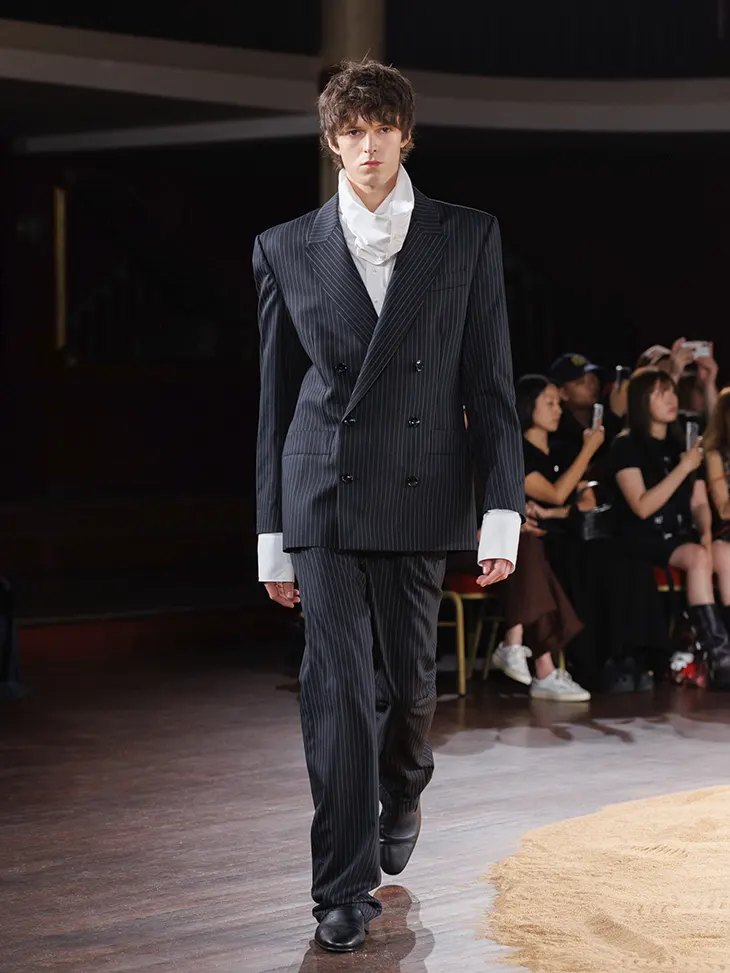
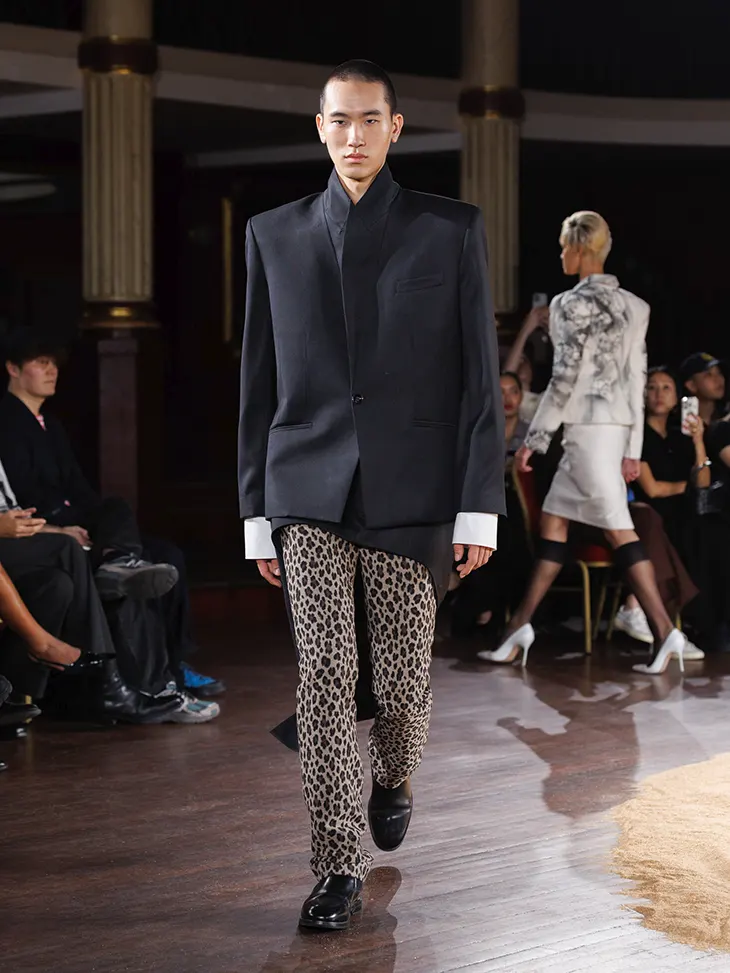
The people inside this circus become part of the act. Each look carries its own role, moving between performer, character and ringmaster. Clothing helps construct those identities, shaping the way a person enters a space and how others read them once they arrive.
Disguise sits close to that idea. Garments can protect, obscure or exaggerate, allowing the wearer to control which version of the self becomes visible. Torishéju treats clothing as something that can alter perception through proportion, surface and construction, while keeping parts of the body or identity deliberately unresolved.
As the collection develops, the image of the circus begins to lose its polish. The change introduces a sense of deterioration into the presentation, with garments moving away from controlled appearance toward something more exposed.
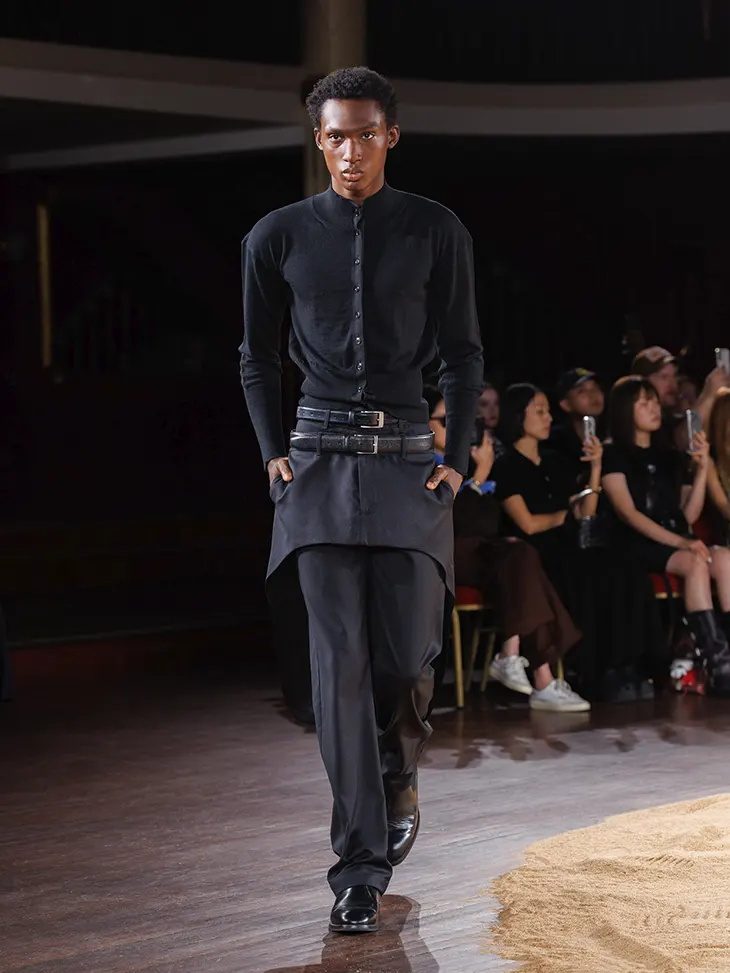
That gradual breakdown forms an important part of the collection’s logic. What initially appears ordered starts to reveal its construction. The spectacle loses some of its authority once its structure becomes visible, bringing the focus back to the mechanisms behind the performance.
Torishéju extends this idea through material reconstruction. The collection uses Nike deadstock, breaking existing garments and materials down before rebuilding them into new surfaces, fabrics and textures. The process gives familiar materials a different role and removes them from their original purpose.
The reconstructed pieces support the broader idea of unstable identity. Materials carry traces of what they were, yet their new form changes how they are read. Torishéju uses that process to connect physical reconstruction with the social act of presenting a version of oneself to others.
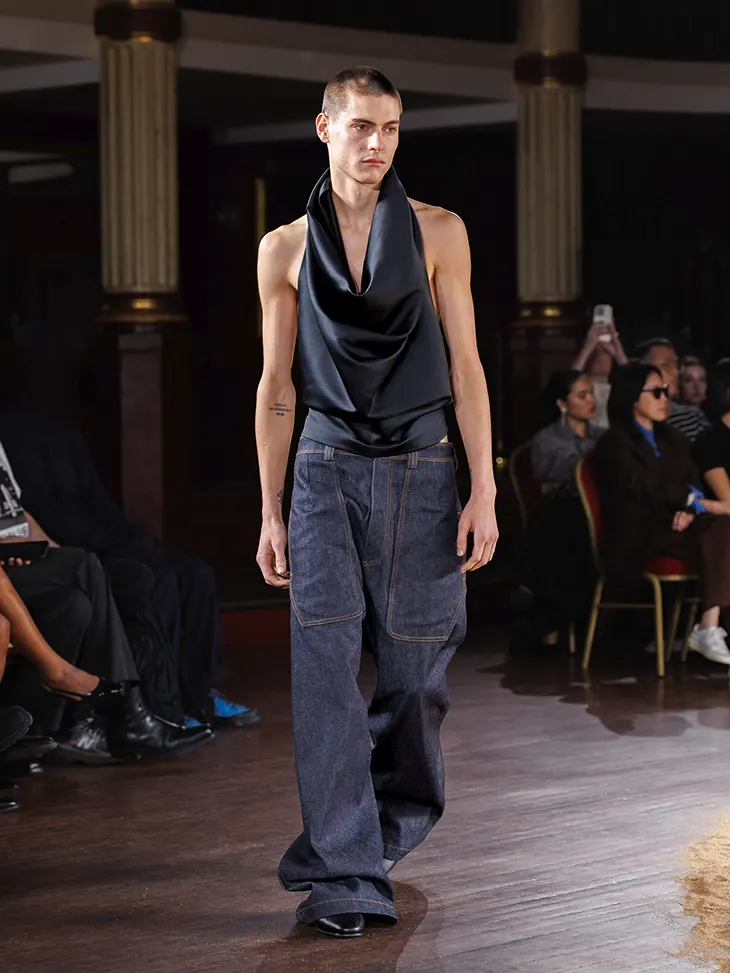
“Panem et Circenses” places attention on the gap between appearance and reality. The collection looks at how spectacle can distract, how clothing can help create a role and how easily identity can shift when the surface changes.
Discover Full Collection on DSCENE
By the end, the circus no longer functions as a source of entertainment alone. It becomes a device for questioning who performs, who watches and what remains once attention moves elsewhere. Spring Summer 2027 closes with that uncertainty intact, leaving the spectacle to dissolve after the lights go down.