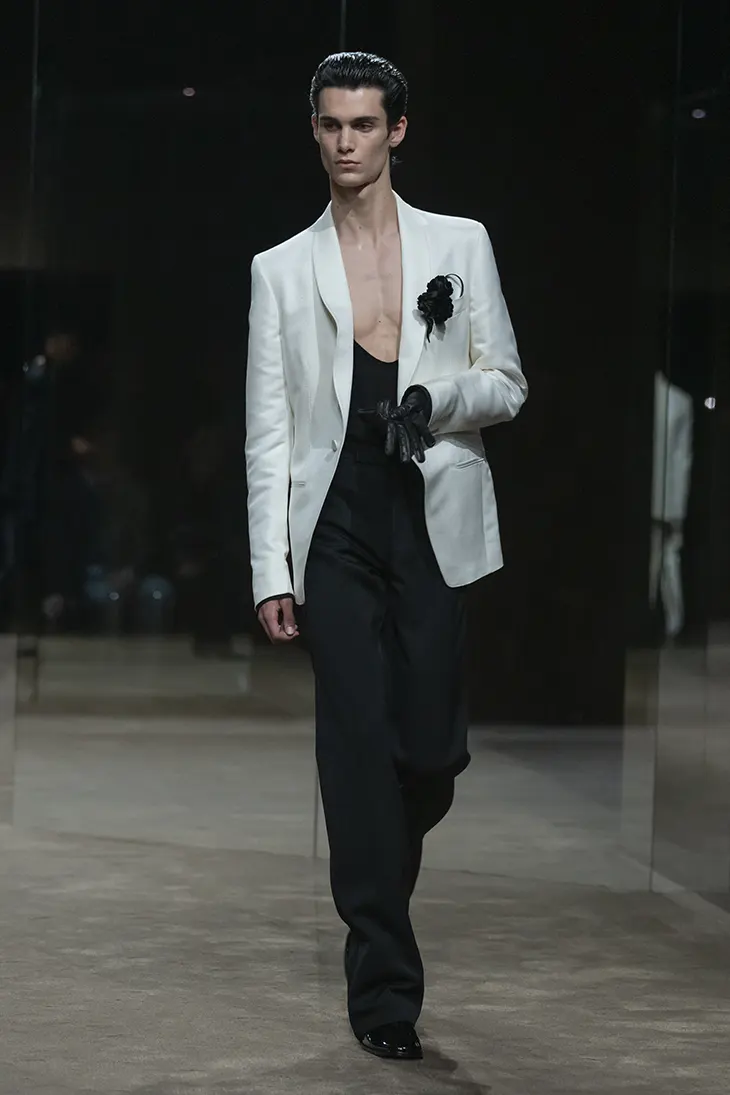
Tom Ford Spring Summer 2027 places desire, exposure and personal freedom at the center of Haider Ackermann’s latest collection for the house. Instead of treating seduction as a purely visual exercise, Ackermann approaches it through tension: the moment when being seen stops feeling passive and starts becoming an act of control.
SPRING SUMMER 2027
Mirrors shape much of that idea. Ackermann describes reflection as something unstable, a surface where an image appears and disappears. On the runway, glass panes extended that thought into the staging. Models paused in front of them, looked at themselves and watched others through the reflected space.
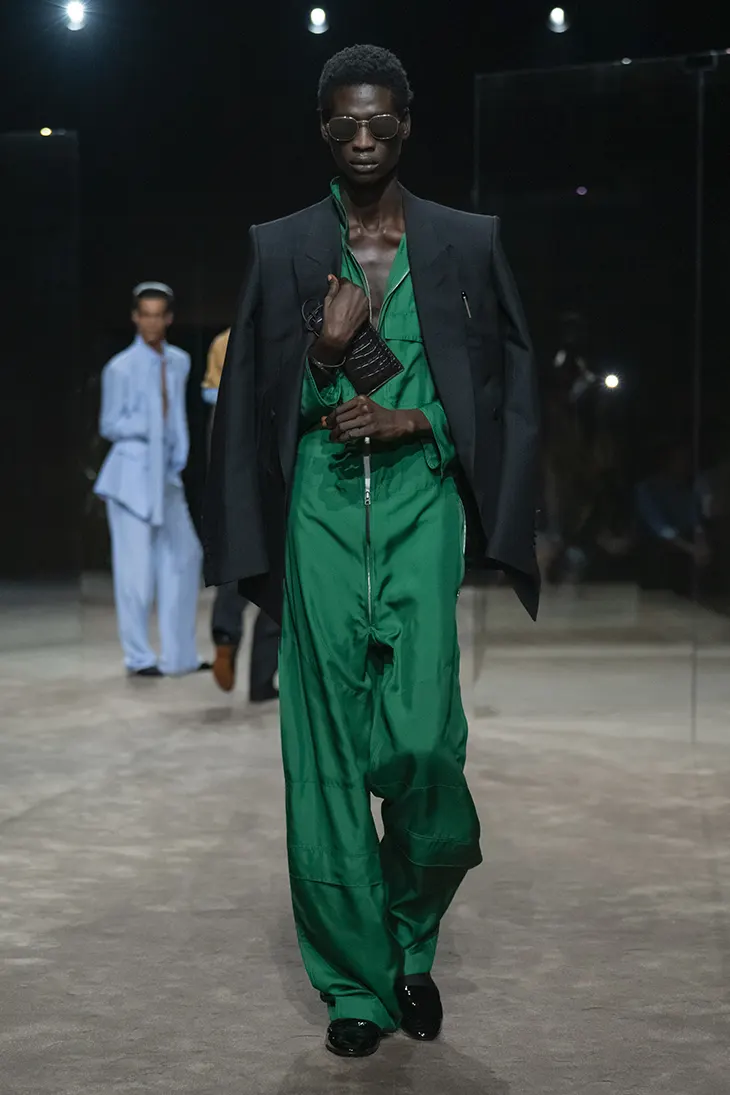
That exchange between observer and subject gives the collection much of its mood. Ackermann focuses on the possibility of revealing the body without surrendering control over it. Sexuality comes through posture, exposed skin and the way clothes sit around the body.
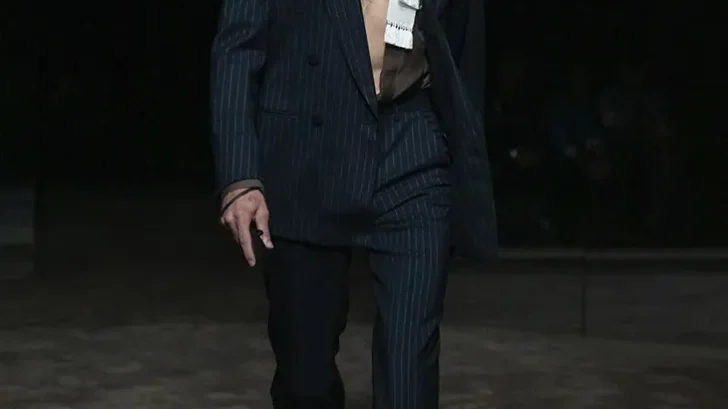
The menswear opened with tailored precision. Scott Barnhill appeared in a fitted pinstripe suit with an olive shirt worn open across the chest and a thin personalized scarf. The look established a tension that continued throughout the collection: formal clothing carried with a looser, more instinctive attitude.
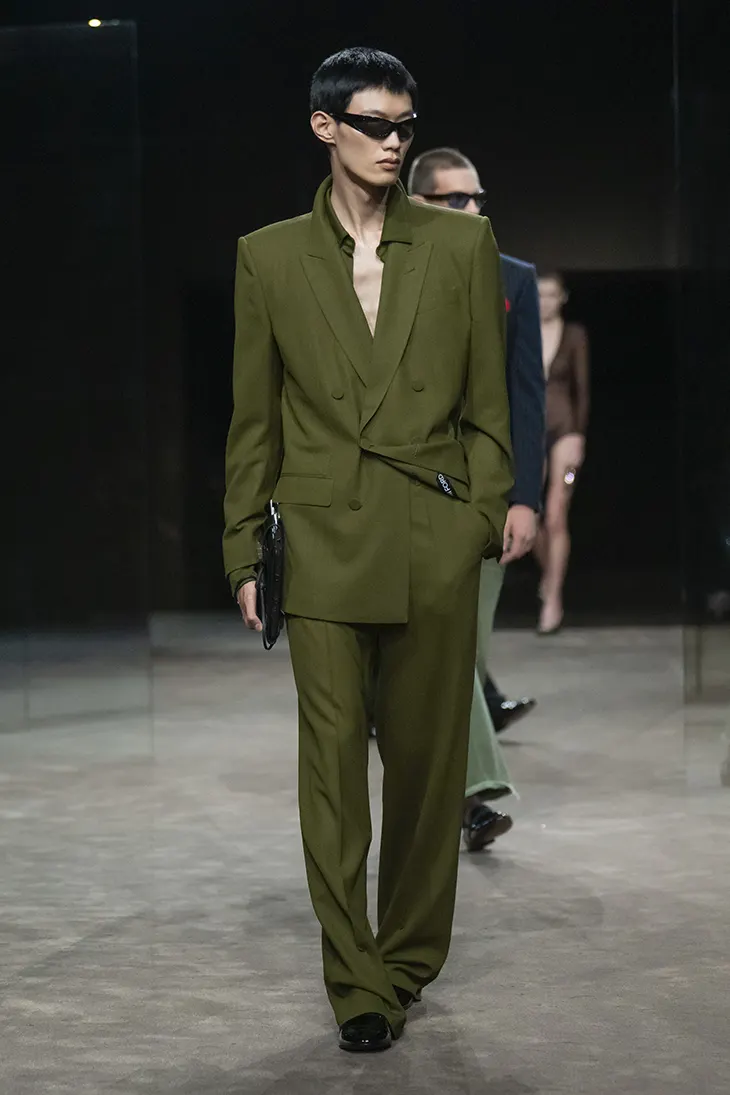
Tailoring remained one of the strongest elements of the season. Tuxedos appeared alongside low-cut tank tops, creating a sharper contrast between covered and exposed areas of the body. Ackermann used cut, proportion and styling to make the chest part of the silhouette rather than a secondary detail.
Leather introduced a harder surface into the collection. Military green also appeared through trench coats and flysuits, while faded denim and cargo trousers brought a more utilitarian direction into the lineup. Short shorts reduced the silhouette further, increasing the emphasis on the legs and the body itself.
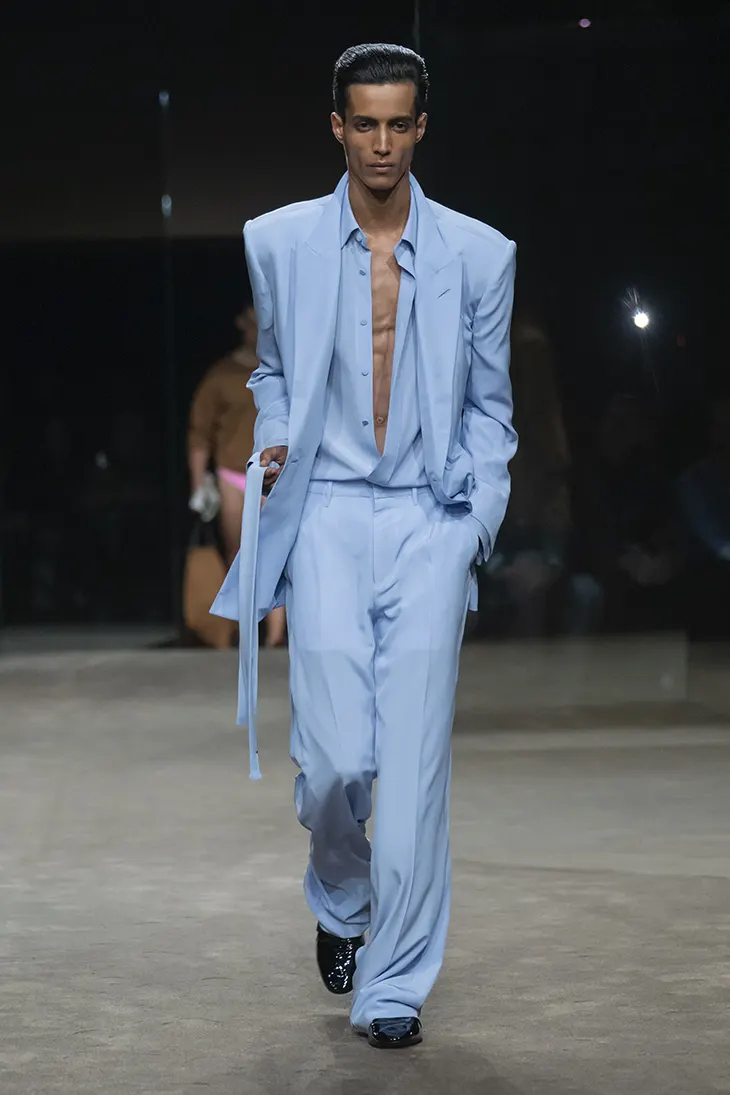
The collection gradually moved away from conventional ideas of formality. Evening pieces still relied on tailoring, yet Ackermann used exposure to interrupt that structure. Bare skin, open shirts and reduced layers gave familiar categories a different energy.
The final section pushed that reduction further through minimal black swimwear. These looks used very little fabric, placing the body almost entirely in view. Their impact came from restraint, with Ackermann allowing proportion and physical presence to carry the look.
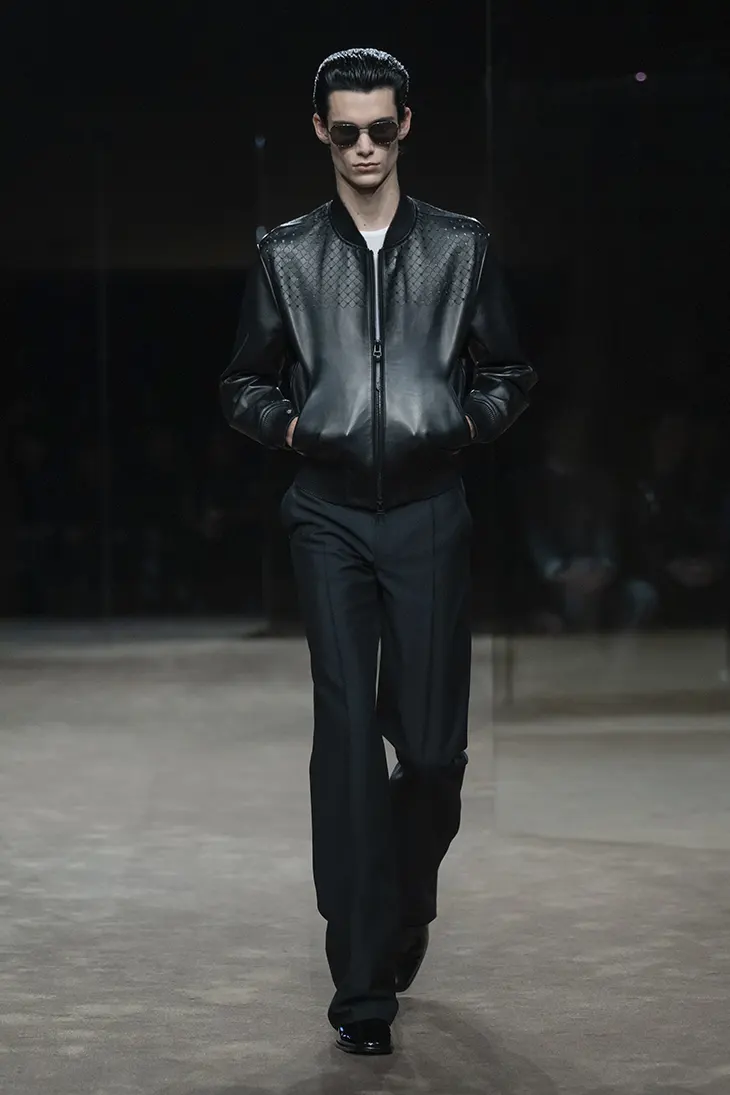
Vulnerability runs through the menswear alongside confidence. Ackermann treats fragility as something that can exist within strength, allowing the two to occupy the same look without forcing a clear separation between them.
Discover Full Collection on DSCENE
Freedom becomes the larger idea connecting these pieces. Ackermann describes it through risk, late nights, curiosity and the possibility of going too far. That sensibility gives the collection its tension: clothing becomes less about asking to be noticed and more about deciding how much of oneself to reveal.