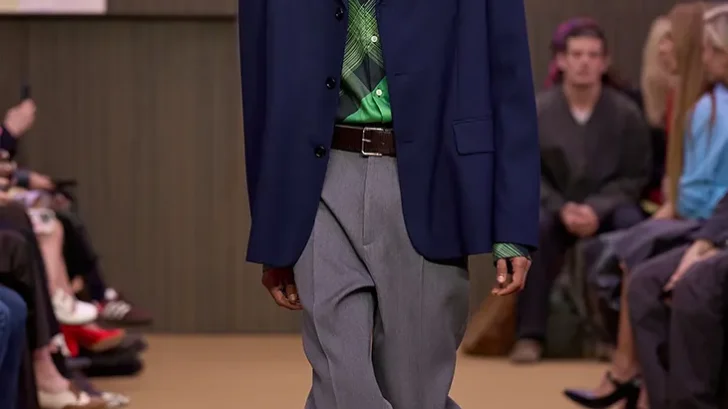
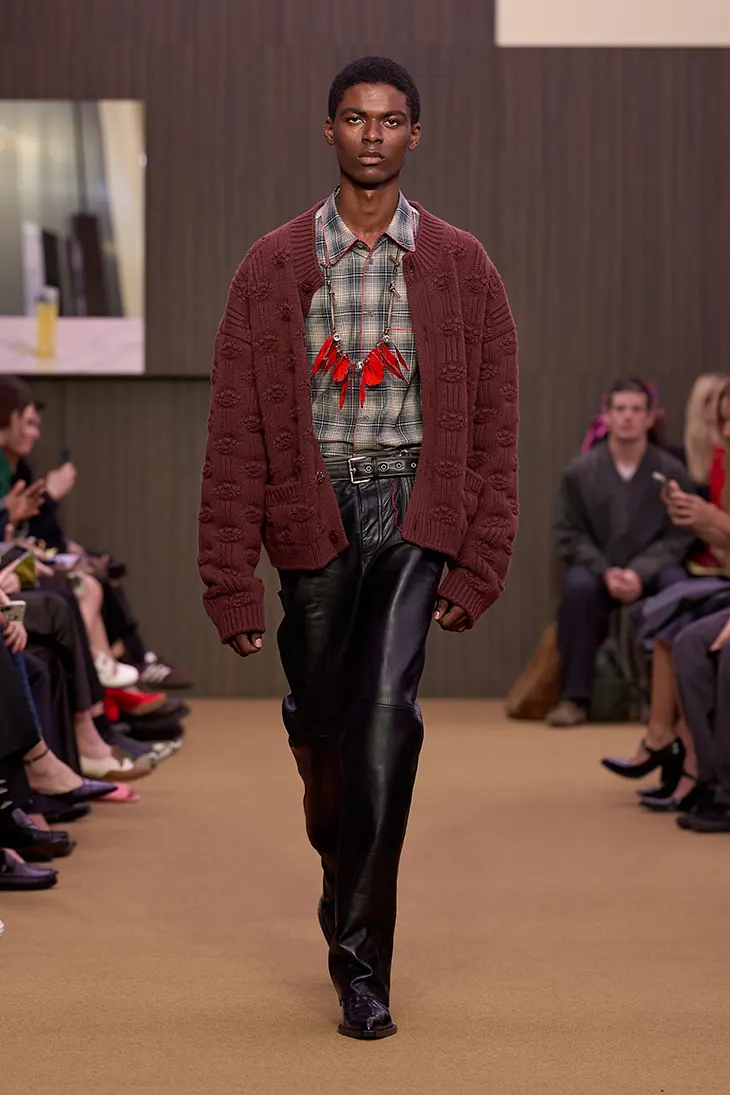
Meryll Rogge presented her first collection as Creative Director of Marni with a direct examination of the house’s defining elements. The Fall Winter 2026 show in Milan established her position through clarity and intent, focusing on recognition, memory, and reinterpretation. Rogge approached Marni through recollection, drawing from its visual codes and reshaping them through proportion, fabrication, and construction. She identified the signs that shaped the brand and repositioned them to define a new direction grounded in authenticity and material focus.
FALL WINTER 2026.27 COLLECTIONS
Pattern and surface played a central role. Rogge introduced gradient stripes, bias checks, and patchwork arrangements that referenced Marni’s archive while altering scale and placement. Broderie anglaise and polka dots returned with renewed emphasis, reinforcing continuity through repetition and adjustment. Bold stitching appeared across garments as a visible structural feature, shifting construction details into graphic elements. These interventions reinforced Rogge’s interest in making structure visible and allowing garments to communicate through their assembly.
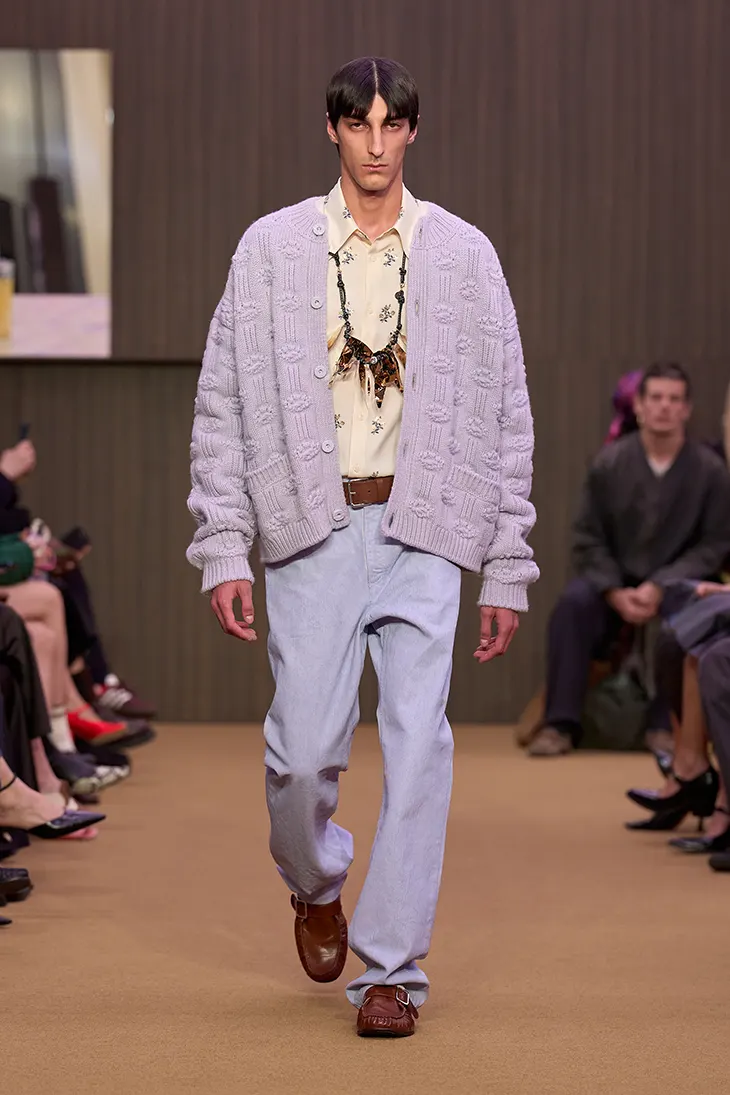
The Prealps bordering Milan informed a mountaineer perspective that guided material and silhouette decisions. Rogge combined technical fabrics associated with sportswear and outdoor function with tailored forms and formal surfaces. Industrial ciré appeared alongside organza and satin, while substantial leather introduced weight and physical presence. These material contrasts created tension within individual looks, allowing functional references to coexist with refined execution. Rogge grounded the collection in physical environments connected to Milan, reinforcing a sense of location within the garments themselves.
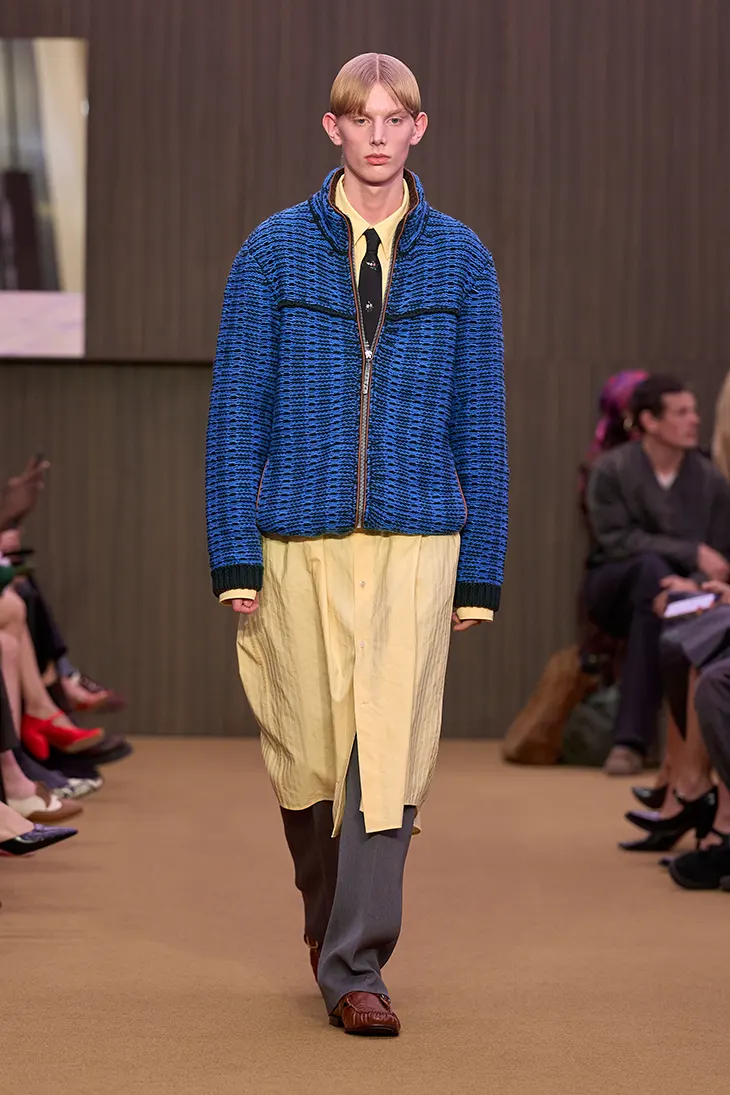
Established Marni accessories returned in revised form. The Fussbett sandal reappeared with structural adjustments that altered its visual impact while maintaining its recognizable identity. The Trunk bag also underwent reconsideration, with details reworked to align with Rogge’s direction. These objects served as points of continuity, connecting Marni’s past to its present. Rogge treated them as active elements within the collection, allowing their forms to evolve alongside the garments.
Construction remained visible throughout. Reversed seams exposed interior assembly, emphasizing process and decision-making. Oversized sequins appeared on cotton surfaces, introducing interruption between casual fabric and decorative intervention. Mother-of-pearl paillettes reinforced the presence of handwork, creating reflective surfaces that responded to movement and light. Rogge combined utilitarian shapes with embellishment, allowing garments to carry evidence of their making while maintaining structural clarity.
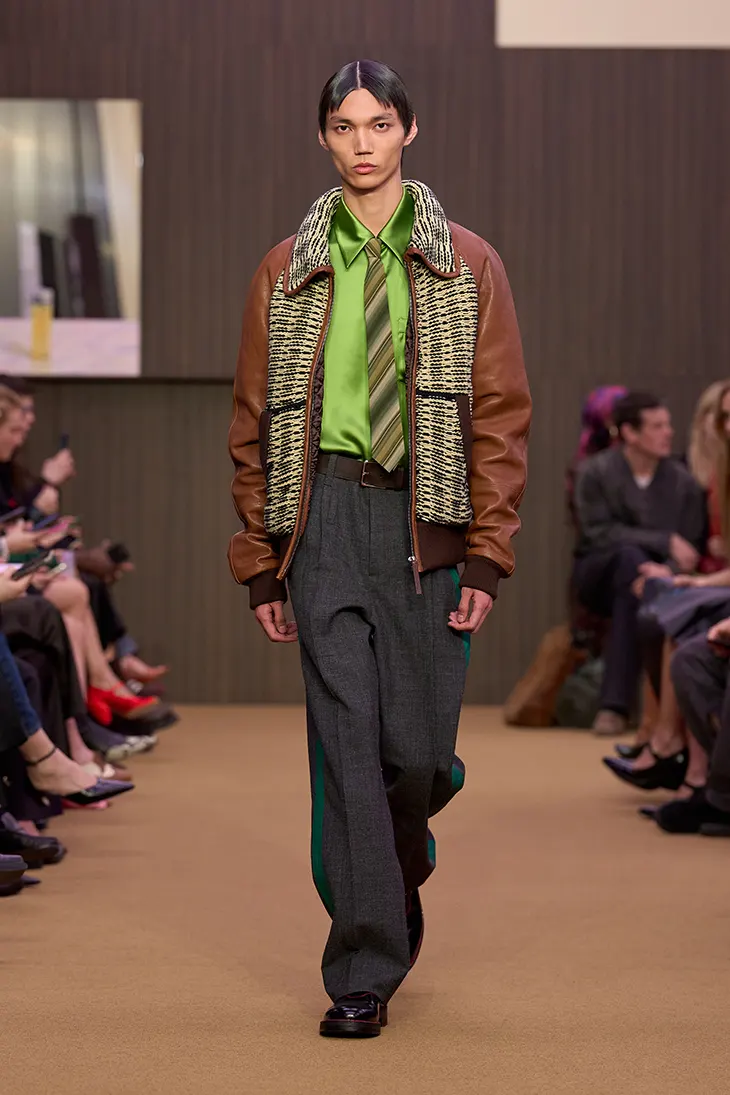
The collection addressed dressing across genders through silhouette and styling. Rogge focused on the interaction between clothing and the body, introducing high shoes, polished accessories, and jewelry that reinforced presence and intention. Garments encouraged personal interpretation through layering and adjustment. Rogge positioned Marni as a space defined by construction, recognition, and transformation, establishing a foundation for the house under her direction.