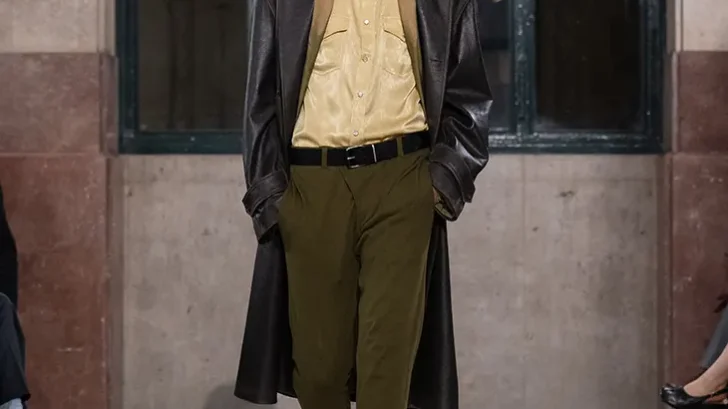
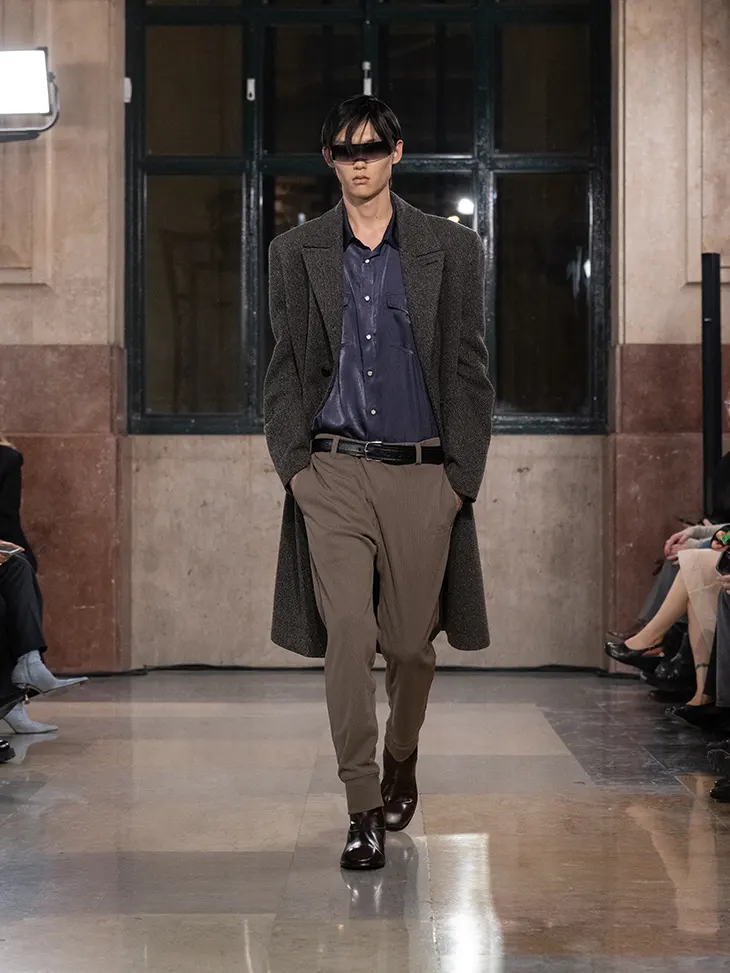
MM6 Maison Margiela staged its Fall Winter 2026 show inside Milano Centrale, one of Europe’s most recognizable transit hubs. The station framed the collection through the rhythm of arrivals and departures, where individuals pass briefly through shared space. Models appeared as archetypal figures, dressed in clothes that reflected familiar routines. The setting emphasized observation. Each look suggested a person in motion, defined through clothing that balanced anonymity and recognition.
FALL WINTER 2026.27
Concealing sunglasses introduced a key visual element. MM6 Maison Margiela presented the frames in a wide range of rainbow hues, maintaining the brand’s recognizable shape while expanding its presence through color. The eyewear shielded identity and reinforced distance between wearer and observer. This gesture supported the collection’s focus on individuality expressed through subtle variation instead of overt transformation.
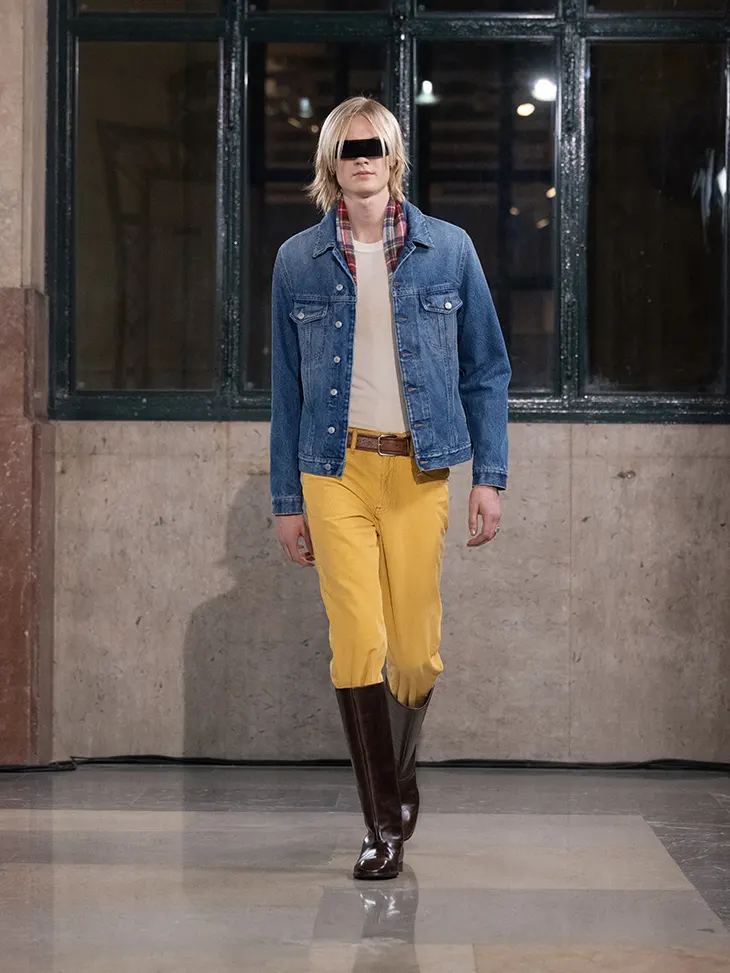
The wardrobe centered on garments drawn from daily use. Checked shirts, denim jackets, blazers, full skirts, tracksuit tops, ski jumpers, fleece zip-ups, long-johns, boots, and pumps established a direct and legible foundation. MM6 Maison Margiela reorganized these items through unexpected combinations. Tracksuit tops appeared with full skirts, while structured blazers layered over long-johns shifted underwear into public view. Culottes replaced trousers in familiar pairings, altering proportion and movement without abandoning the garment’s original function.
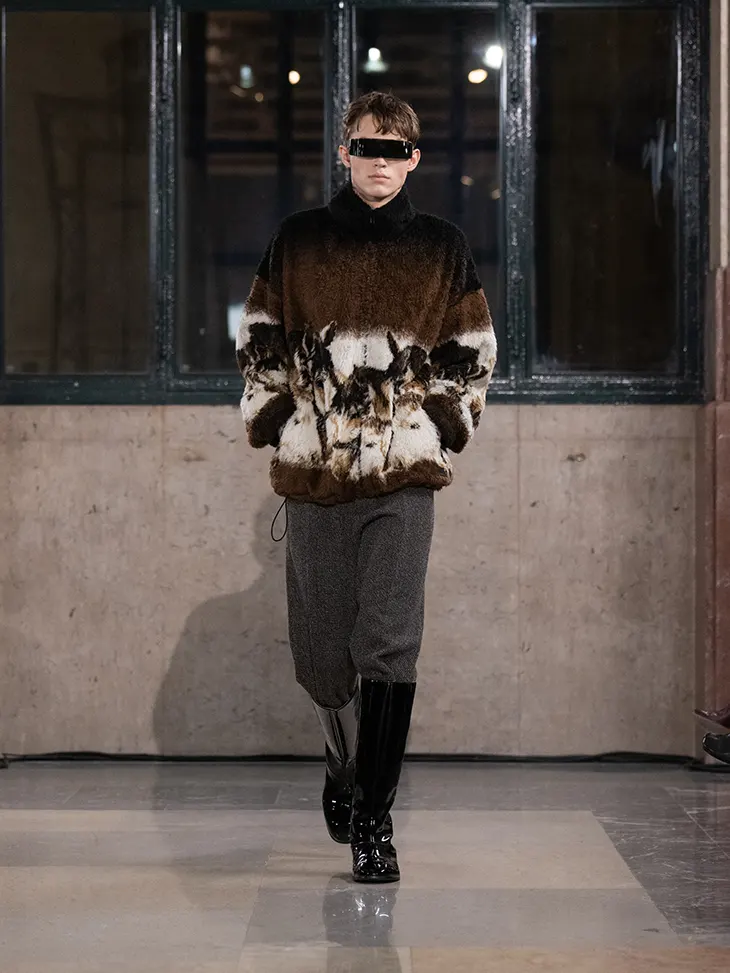
Structural interventions refined silhouette. Ribbed jersey panels inserted along the back of coats, shirts, and jackets narrowed the body into a vertical line. This technique reshaped familiar outerwear with minimal alteration. Designers reduced certain garments from their original volumes, compressing blazers, skirts, and trousers into more direct forms. Linings emerged as visible elements, pulled outward or cut into the garment’s surface. Adjustable hems secured with snap fasteners introduced variability, allowing garments to shift according to styling and motion.
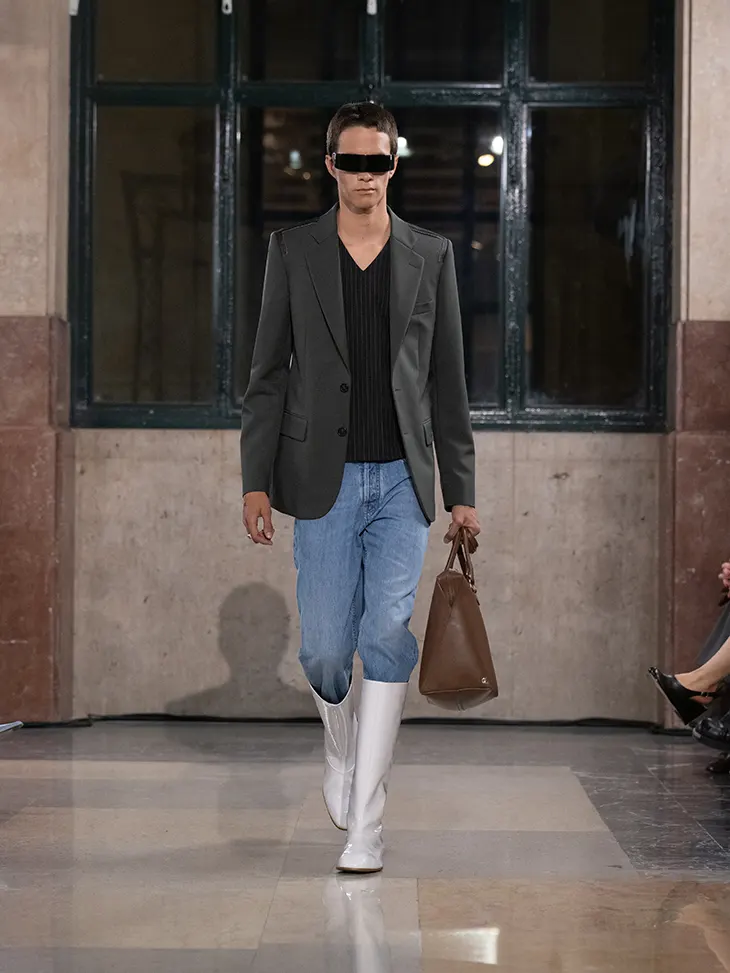
References surfaced through detail. Equestrian elements introduced associations with discipline and movement, while proportion and styling referenced silhouettes linked to the 1980s. These gestures remained embedded within the collection’s restrained visual language. MM6 Maison Margiela avoided excess decoration and instead focused attention on structure, proportion, and the exposure of construction.
Accessories reinforced the narrative of movement and incompletion. Bauletto bags appeared in multiple sizes, carried as practical objects suited for travel. Jewelry emphasized impermanence. Earrings remained attached to their retail cards, as if newly purchased or awaiting use. Rings appeared without stones, presenting absence as a visible condition. These details suggested interruption, echoing the transitional state of a train station, where identity exists between departure and arrival.