
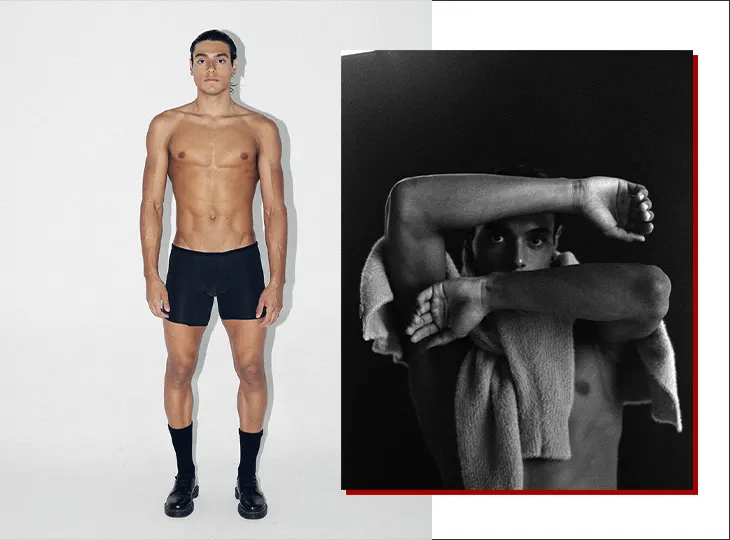
Underwear looks like the easiest product to start a menswear label with. Small garments, low fabric cost, no complicated sizing grid, and customers rebuy the same style for years once they find one they like. That last part is exactly what makes it harder than it looks. A first drop that relaxes in the wash or rides up by the second week doesn’t get reordered, and in underwear the repeat order is where the business actually lives.
If you’re a designer or a small brand planning a first run of boxer briefs, trunks or briefs, these are the decisions worth settling before you approve a sample.
Choose The Fabric For How It Feels After 10 Washes
Most men’s underwear is cut from knit jersey, and the common bases are cotton, cotton/modal, cotton/spandex and viscose from bamboo. Each changes the price and the hand feel. Cotton/modal is soft and drapes well, that’s why so many premium labels use it. Cotton/spandex holds its shape and works well for trunks with a closer fit.
Weight matters as much as composition. Underwear jersey usually sits between 140 and 200 gsm. The lighter end breathes better and tends to feel more premium on the body. The heavier end has more presence in the hand at retail and tends to survive repeated washing better, though that’s genuinely hard to judge from a swatch alone.
If you plan to sell in the United States and you like the idea of a bamboo story, check your label wording early. US labelling rules require “viscose from bamboo” or “rayon from bamboo” rather than plain “bamboo”, and most factories will print care labels exactly as you send them over.
The Waistband Is Your Brand
For a lot of customers the waistband is the only part of the garment anyone else ever sees. You’ve got two main routes. A woven jacquard band with your name repeated along it is the classic look and reads as a proper label. Covered elastic with a printed or heat-transfer mark is softer against the skin and often cheaper at small volumes.
Jacquard bands need their own tooling step, so send clean vector artwork with your tech pack and ask how long that step adds before you nail down a launch date.
Then there’s recovery, meaning whether the waistband still springs back after ten washes. A standard AQL inspection checks for visible defects like skipped stitches, stains and wrong labels. It doesn’t tell you whether the elastic will hold up over time. A waistband that goes slack is probably the single most common reason a first underwear drop doesn’t get reordered, and you won’t find out until a few months after the boxes arrive.
Fit Lives In Four Measurements
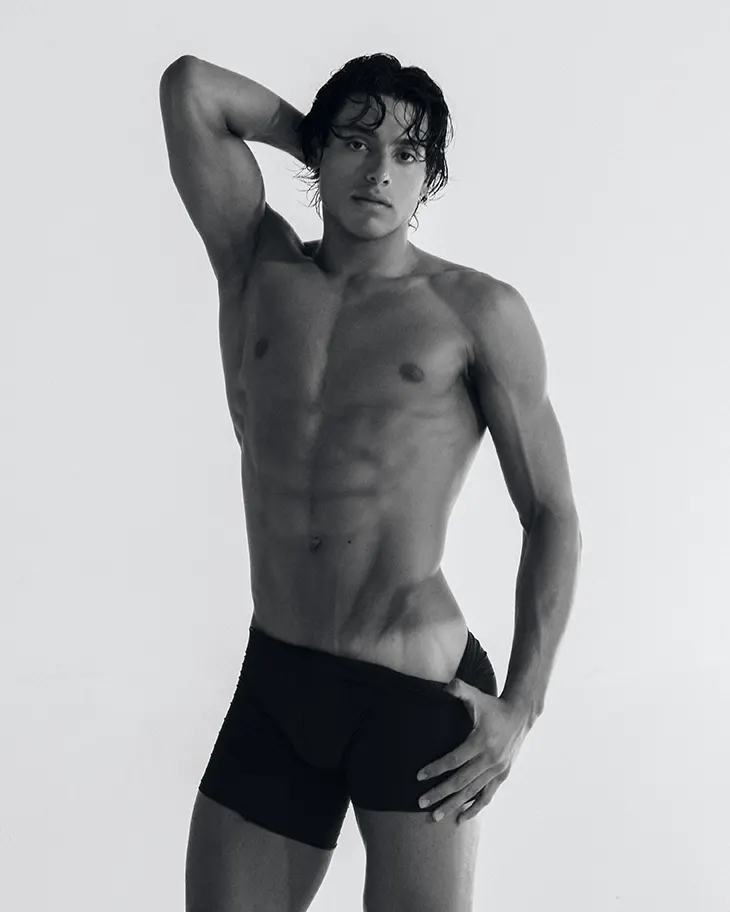
Pouch shape, rise, leg opening and gusset width are where men’s underwear succeeds or fails. These get settled on the first prototype, and you should expect at least one revision round. A brand that nails the fit on the first proto has usually just been lucky.
Have a few people with different builds wear the sample for several days, through a workout and a long flight if you can manage it. Ask them where it moves. Underwear that feels fine for an hour can be rolling at the leg by evening.
The leg finish deserves its own conversation with your factory. A picot edge, a raw bonded edge and a folded coverstitched hem each feel different on first touch, and that difference is often what a customer unconsciously uses to decide whether a pair feels cheap or expensive.
What a 100-piece Minimum Really Means
Small brands tend to read “MOQ 100” as a hundred pairs in total. Ask the questions that actually change that number. Is it per style or per colour? Can sizes be split freely inside those 100? Does each extra colour need its own dye lot, and therefore its own minimum?
For example, Renrui Textile, a custom underwear manufacturer that produces boxer briefs, trunks and briefs for small private label brands, works from 100 pieces per colour with sizes mixed freely, and each additional colour is its own 100 because it needs its own dye lot. The factory also wash-tests elastic recovery on a swatch cut from the same fabric roll as your order before cutting starts, and sends the report. Its terms are laid out at renruitextile.com/custom-underwear-manufacturer if you want a reference point when comparing quotes.
Starting with one style in two colours is a realistic first drop for most new labels. It keeps the total at a few hundred pairs while still giving customers a choice, and it doesn’t lock you into a colour you’ll later want to retire.
Timing, Payment and The Reorder
Sampling for underwear typically takes one to two weeks per round. Bulk production for a small run often takes another 25 to 35 days after you approve the sample and pay the deposit, plus shipping on top of that. A common payment structure is 30% to start production and the 70% balance after you’ve approved the inspection results.
Ask about reorders before you place the first order. If the factory keeps your patterns, waistband tooling and specs on file, a repeat run can ship in roughly 10 to 15 days without new samples. For a label whose core customers are buying the same style again and again, that reorder speed matters more than trimming a few cents off unit cost.
Start Narrow
The underwear labels that last usually launch with one hero style, get the fit and the waistband right, and add colours once customers start coming back for more. A first run of a few hundred pairs is enough to learn whether the product holds up in real use. And honestly, finding out whether people reorder is the one thing you really need to know before committing to a full collection.