VIVET introduced its first collection at Cipriani in Lower Manhattan, presenting a wardrobe alongside footwear and luxury leather goods. Founded by digital creator and entrepreneur Kai Cenat, the label brings together contemporary tailoring, sportswear references and subcultural influences.
SPRING SUMMER 2027
The name VIVET comes from a Latin phrase meaning “he, she, or it will live forever.” Cenat developed the project after spending several months in Italy studying textile manufacturing, pattern-making and leather construction with industry specialists. He uses the debut collection to document his own development, translating shifts in his personal style into a more disciplined design approach.
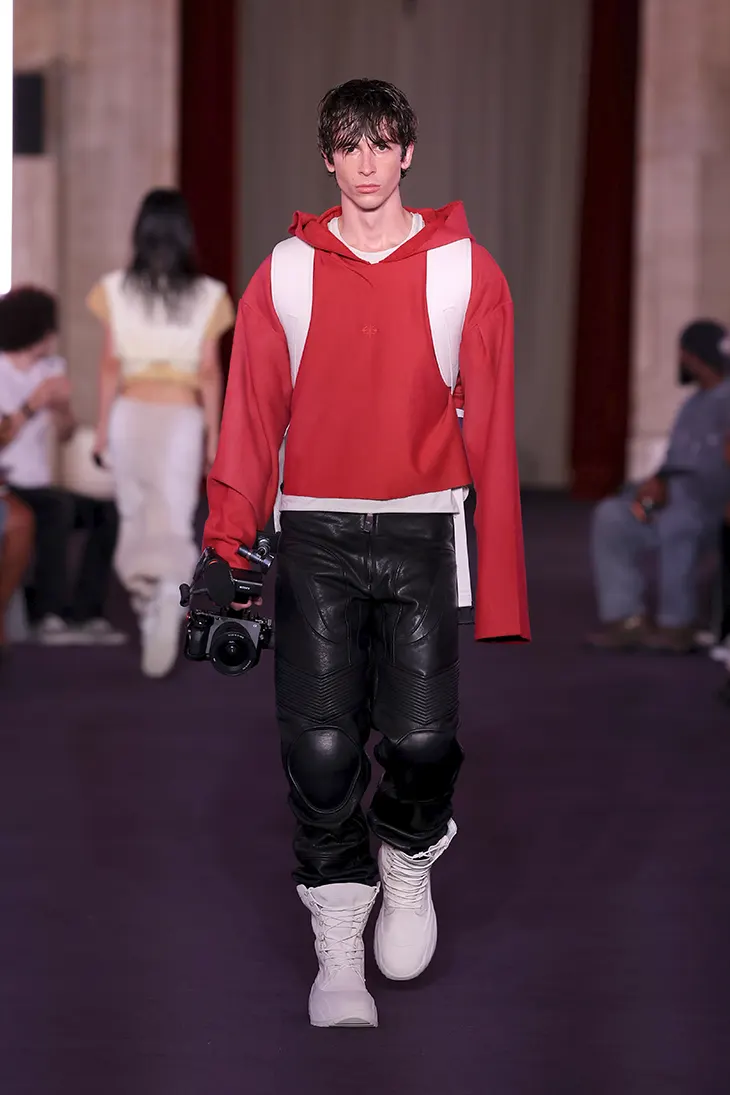
The runway unfolded in three acts, each representing a different stage in that progression. Cenat’s journal provided a recurring reference throughout the presentation. The silhouettes began oversized and heavily layered, then gradually became cleaner and more controlled. Color and attitude remained consistent through all three sections.
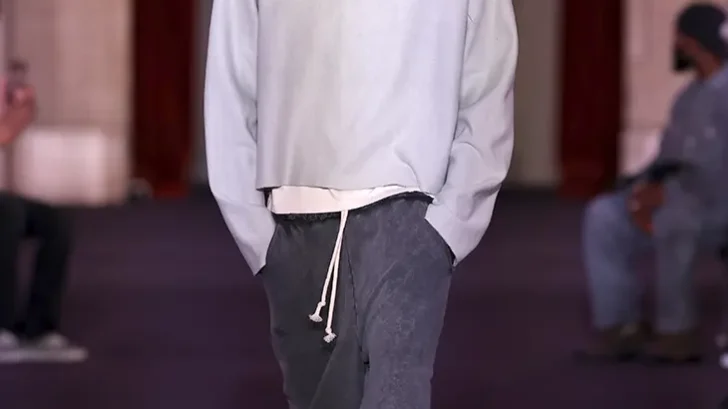
Act One, Origin, introduced deliberately unresolved hoodies and sweatpants with crude proportions and irregular shapes. Heavy jackets stayed open to emphasize volume and retain an unfinished quality. The Beginner Hoodie, the first VIVET garment Cenat sewed by hand, opened the runway and established the collection’s starting point.
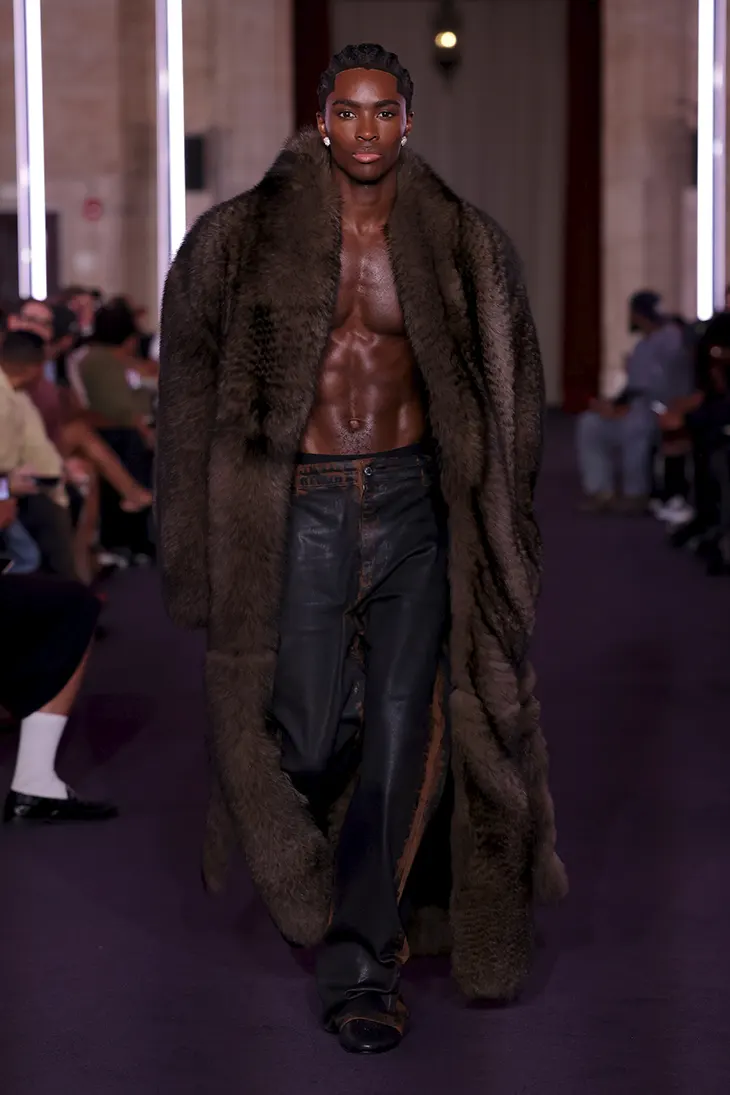
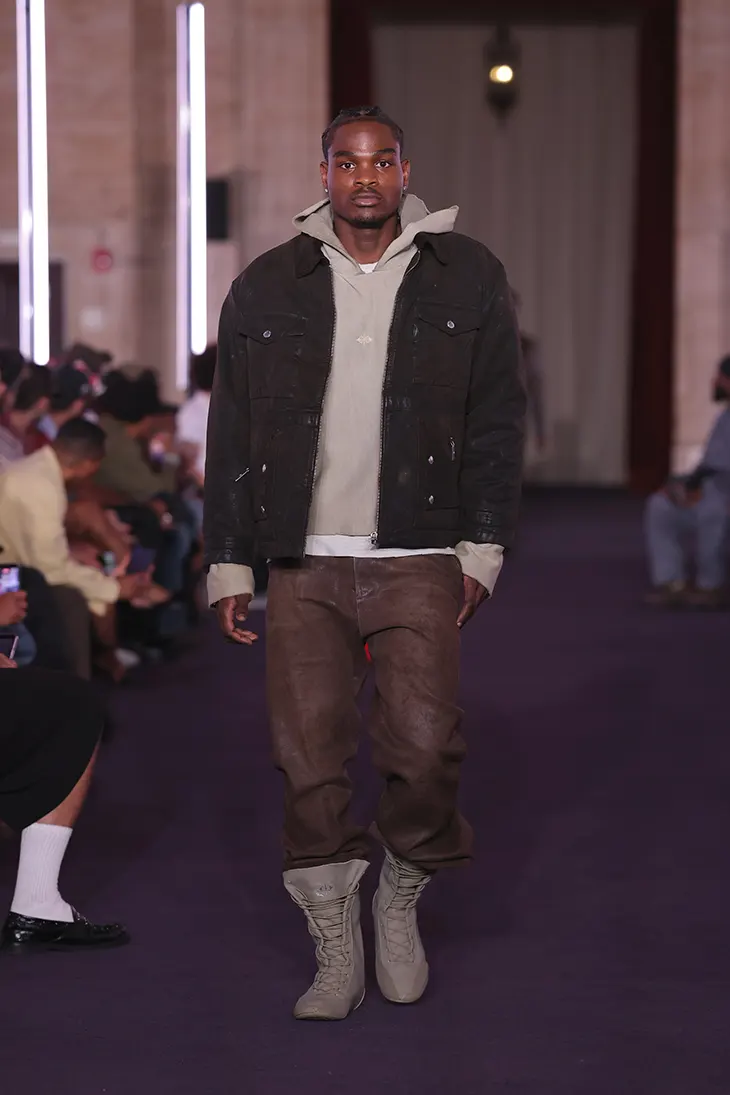
Act Two, Exploration, pushed the wardrobe into denser layering and stronger subcultural references. Leather overcoats, substantial outerwear, skinny denim and structured boots defined this section. Jackets remained open, preserving a looser attitude while leather became increasingly dominant.
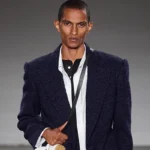
Act Three, Authorship, marked the most resolved point of the collection. Tailored suiting, structured leather coats and fluid silk appeared in sharper shapes. Jackets and coats closed fully for the first time in the show, signaling a shift toward greater control and structure. The section completed the progression from raw streetwear references to precise tailoring.
Materials play a major role throughout the debut. VIVET works with cotton canvas, neoprene, denim and leather, with leather carrying much of the collection’s visual weight through outerwear, trousers and tailored shirting. Cotton canvas and denim provide a workwear base, while neoprene introduces firmer volume and structure.
Gusseted elbows, diagonal pleats and exposed seams keep the garment-making process present within the finished pieces. Cenat also applies waxes and varnishes by hand, giving surfaces a harder, altered finish. Warm ground tones dominate the palette, joined by accents of white, silver, mustard and blue.
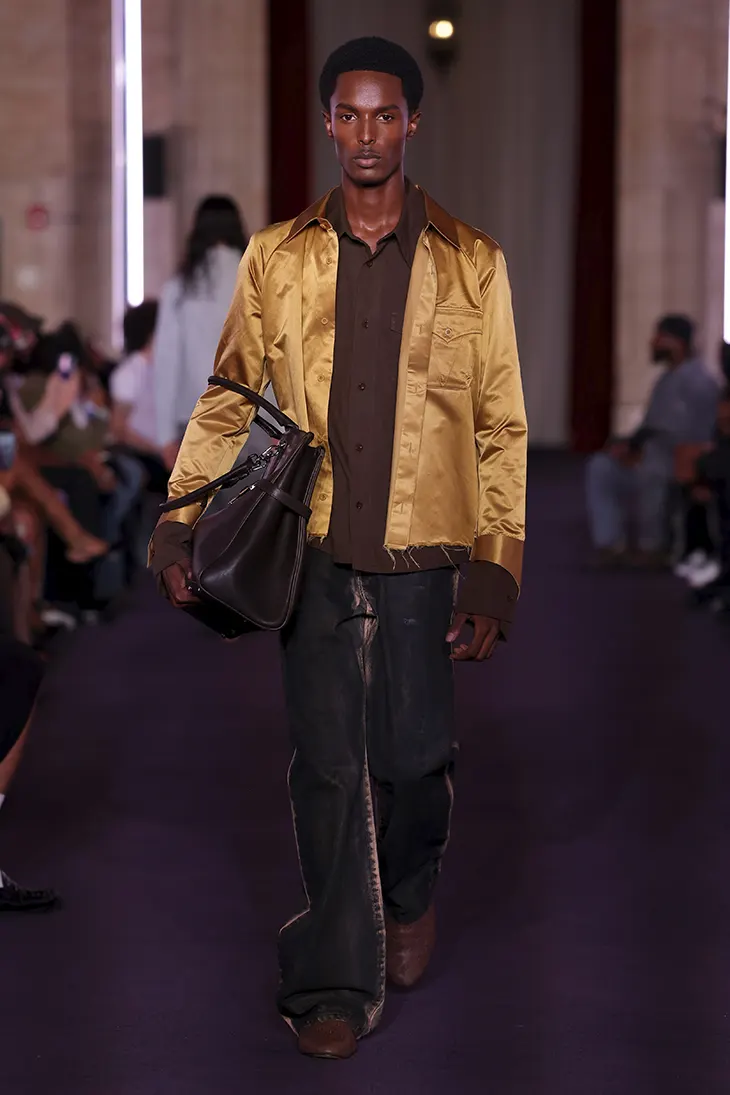
Leather goods extend the collection beyond clothing. The Cenova bag, the earliest accessory concept developed for VIVET, appears throughout the presentation, while the Streamer bag translates digital broadcasting references into a luxury leather form. Boots and hand-finished leather pieces continue the material language established in the clothing.
Discover Full Collection on DSCENE
Cenat also draws from his personal background through the scuba moto shirt, varnished jeans and cargo work jacket. Their cuts and finishes reference his Haitian background and carnival tradition. VIVET introduces a design language built around personal development, material experimentation and a gradual shift from oversized streetwear toward controlled tailoring.