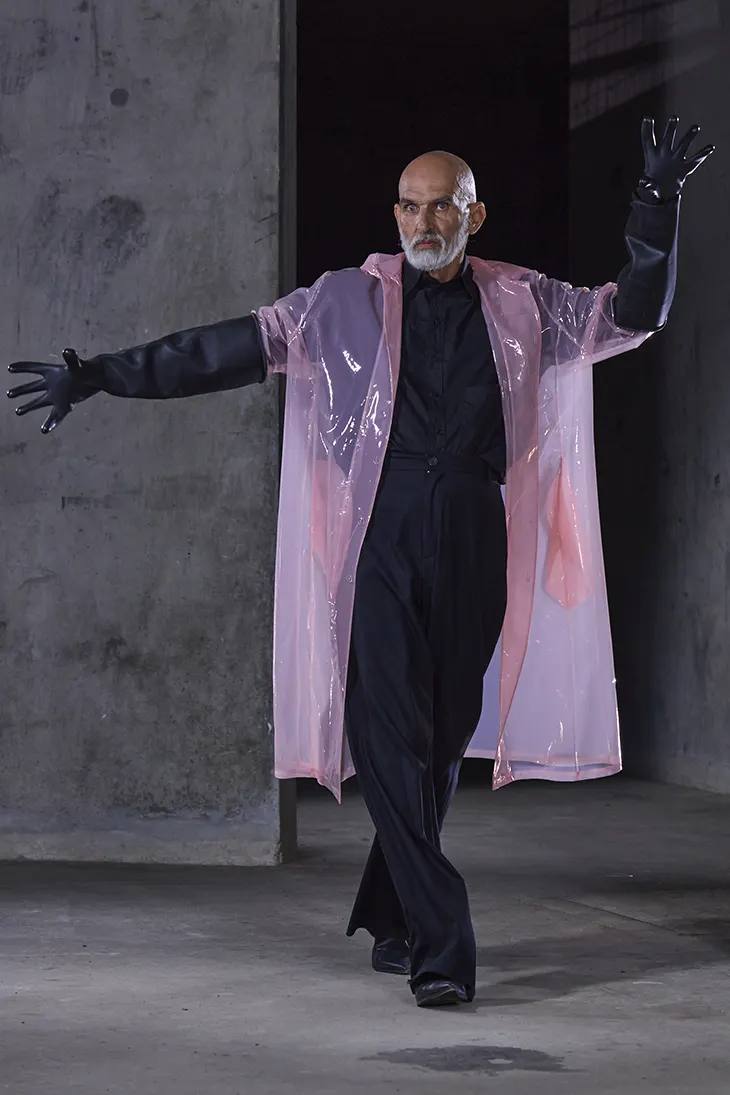
Natasha Zinko turns to surveillance, online attention and public performance for Spring Summer 2027. Titled PAY PER VIEW, the collection starts from the uncertainty created by constant recording and asks how people behave when they suspect an audience may be watching.
SPRING SUMMER 2027
The premise comes from a familiar type of public encounter. Someone approaches a stranger with a socially charged question while wearing thick-framed glasses capable of concealing a camera. The person being questioned cannot immediately know whether the conversation remains private or will appear online moments later. That uncertainty can alter the response itself, encouraging people to heighten recognizable traits, exaggerate their personalities or shape an answer around what they imagine an audience wants to see.
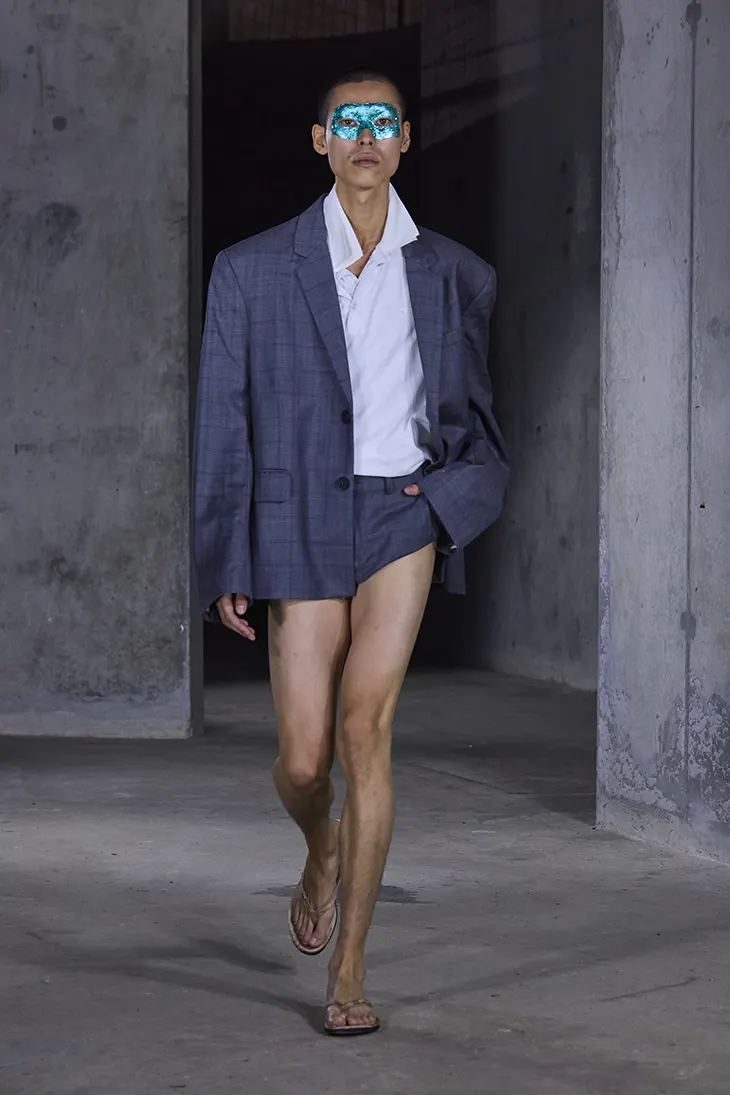
Zinko develops the idea through the growing use of Meta Glasses and wider concerns around privacy in an attention-driven economy. The collection references Michel Foucault’s panopticon, a theoretical prison structure in which inmates never know exactly when an authority watches them. The possibility of observation encourages them to regulate their own conduct.
PAY PER VIEW transfers that principle to contemporary public life. Cameras now appear in phones, wearable devices and everyday interactions, while social platforms create financial value from attention. Surveillance can come from institutions, private individuals or content creators looking for material that can generate an audience.
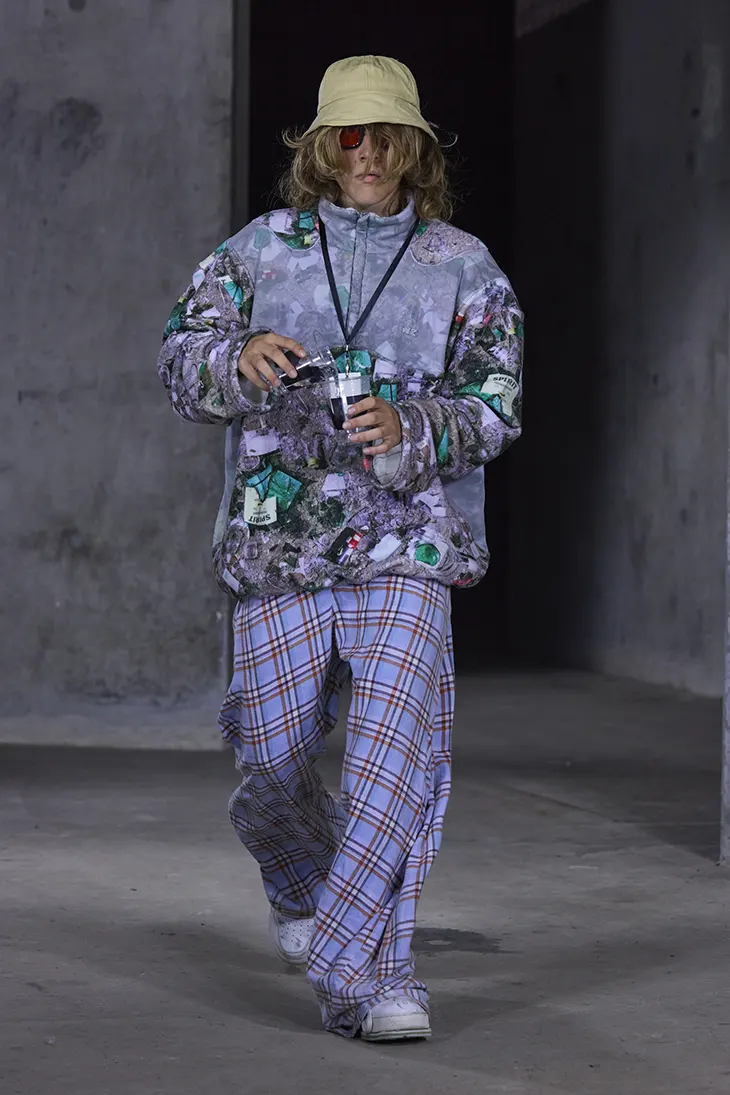
The collection examines how this condition affects ideas of authenticity. Constant visibility can push people to consider how they appear before they know whether anyone actually records them. Personality can become part of a public product, particularly for figures whose income depends on maintaining a recognizable online presence.
Zinko asks how much separation remains between an individual and the version of themselves created for an audience. Repetition can intensify familiar characteristics until they become part of a recognizable persona. PAY PER VIEW also considers whether those exaggerated qualities come from performance alone or from genuine characteristics that audiences repeatedly respond to.
For the presentation, Zinko worked with stylist Daliah Spiegel, casting director Sarah Meital and OnlyFans. Together, they assembled a group of real-life personalities already accustomed to public visibility and the possibility of constant observation.
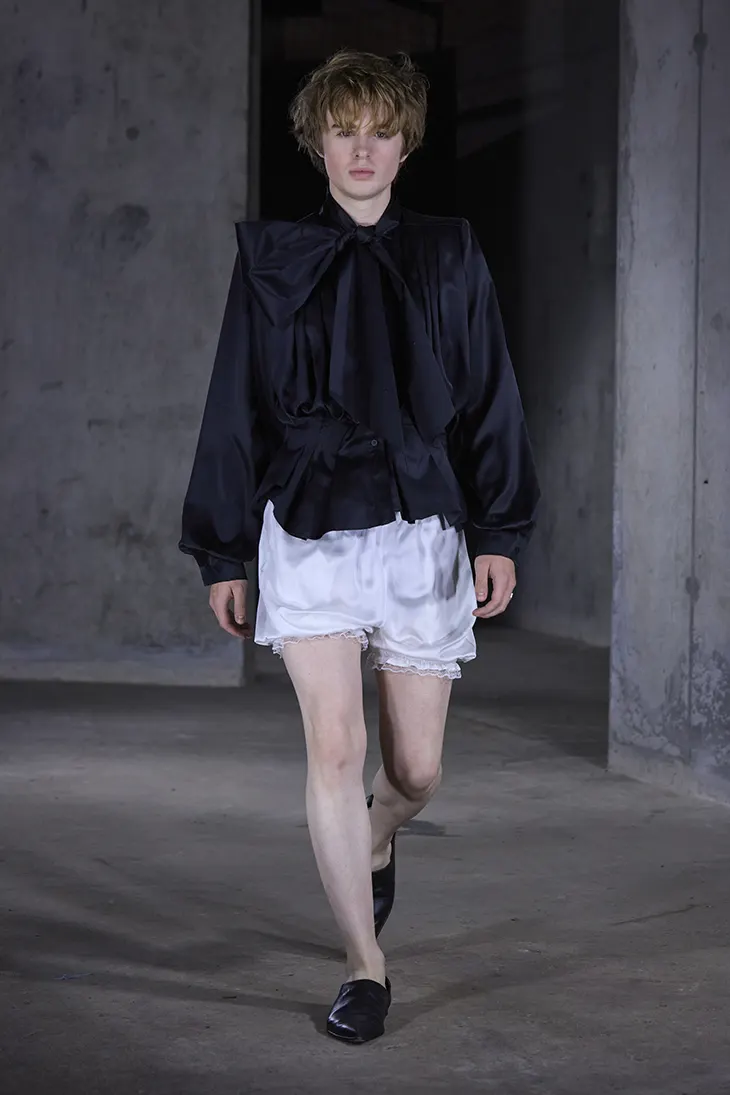
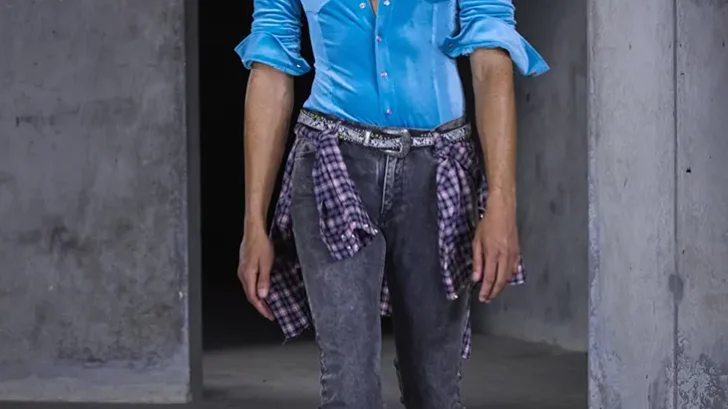
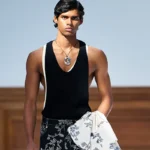
Self-parody becomes a central part of the styling. Each participant begins from elements associated with their everyday image. Zinko then amplifies those details through enlarged proportions, stronger colors and familiar cultural archetypes. The resulting looks treat personal identity as something that can become increasingly recognizable through repetition.
Discover Full Collection on DSCENE
The collection also refers to low-budget adult entertainment as a direct example of content built around desire, audience demand and monetization. Zinko places those references within the same discussion of visibility and public performance that shapes the wider project.