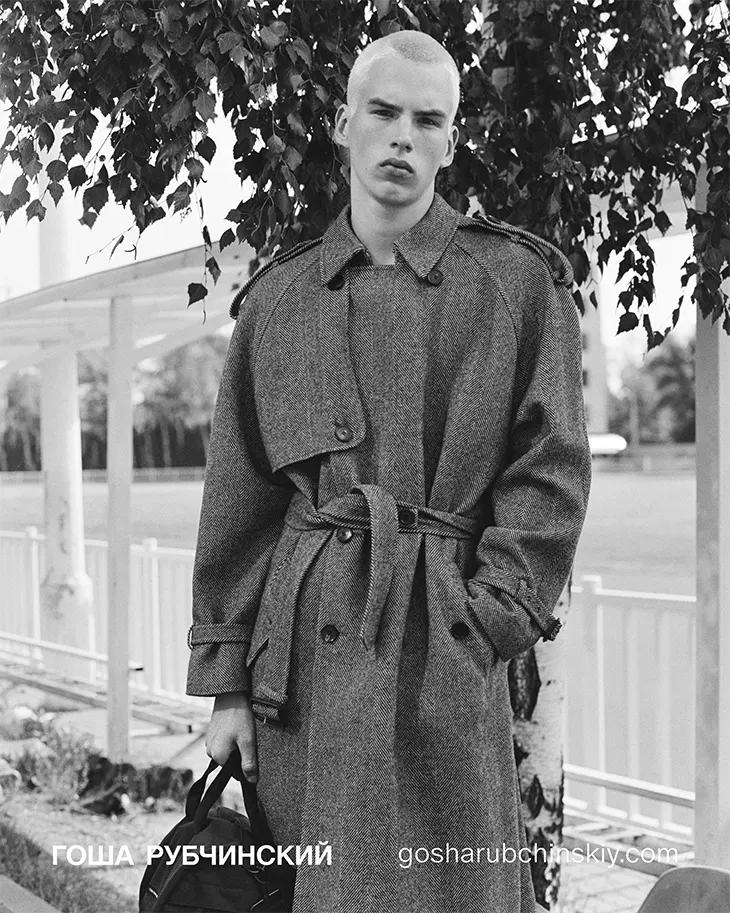
For Fall 2026, Gosha Rubchinskiy builds Forum Athletics around the visual language of collegiate dress. The collection takes familiar elements from campus uniforms and athletic apparel, then reshapes them through distressed graphics, cropped proportions and raw finishes.
AD CAMPAIGNS
Greek lettering provides one of the clearest references. The letters Φ, Υ and Μ – Phi, Upsilon and Mu – appear throughout the collection as recurring emblems. Their presence recalls the visual systems associated with university organizations and gives the garments a recognizable collegiate character.
Rubchinskiy places the Discobolus alongside these symbols. The ancient Greek figure, shown preparing to throw a discus, introduces a classical image tied to physical discipline and intellectual balance. The motif appears through distressed prints, patches and embroidery, giving the collection a link between ancient athletic imagery and contemporary sportswear.
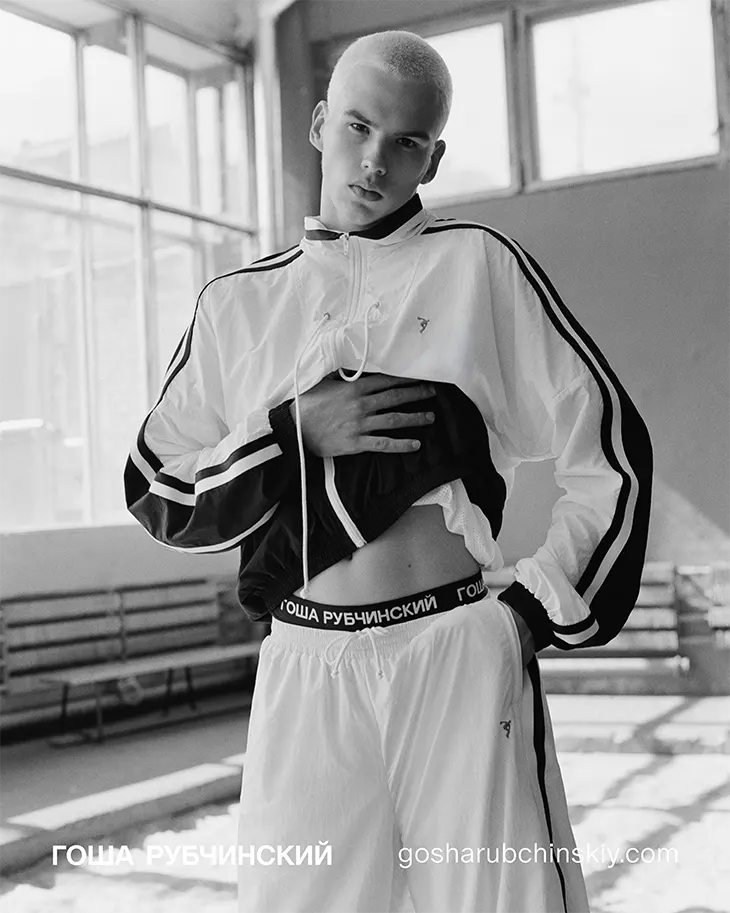
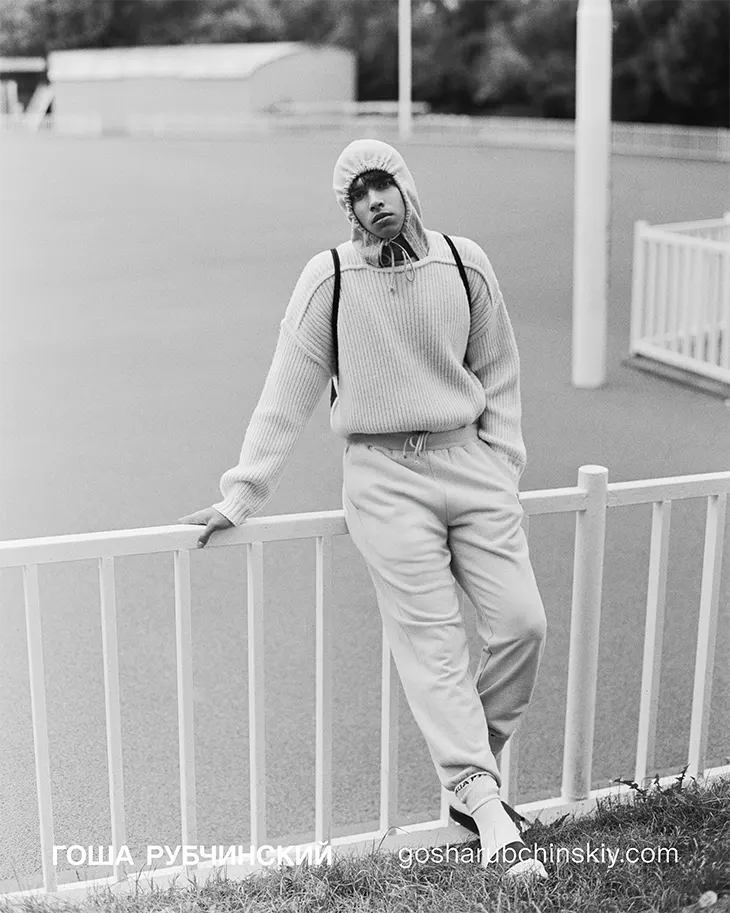
The clothing itself borrows from several forms of athletic uniform. Hoodies, sports jackets, windbreakers and track pants establish the base of the wardrobe, while unfinished edges and shortened sleeves disrupt familiar shapes. The pieces appear altered through wear, suggesting garments that have gradually changed through use and personal adaptation.
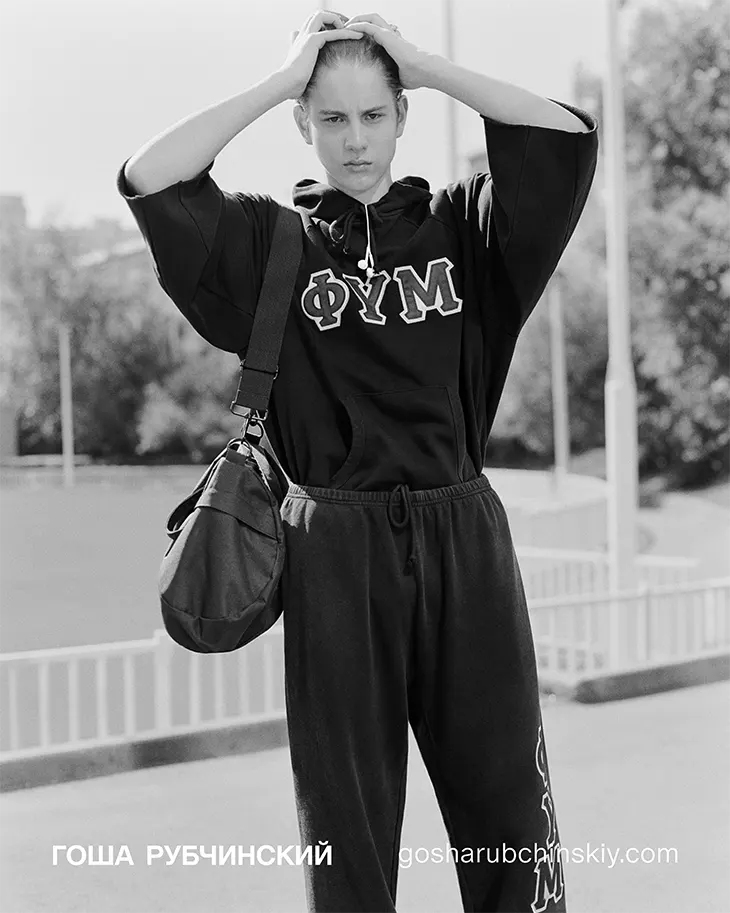
Black, white and grey form the main palette. The limited color range gives greater visual weight to the graphics, surface treatments and construction details. The accompanying imagery follows the same restrained direction through black-and-white film photography.
Forum Athletics repeatedly returns to the idea of the uniform. Collegiate clothing often depends on systems of identification: letters, symbols, team references and standardized shapes. Rubchinskiy keeps those codes visible while introducing details that suggest individual ownership. Frayed edges, distressed surfaces and cut proportions give each piece a less regulated character.
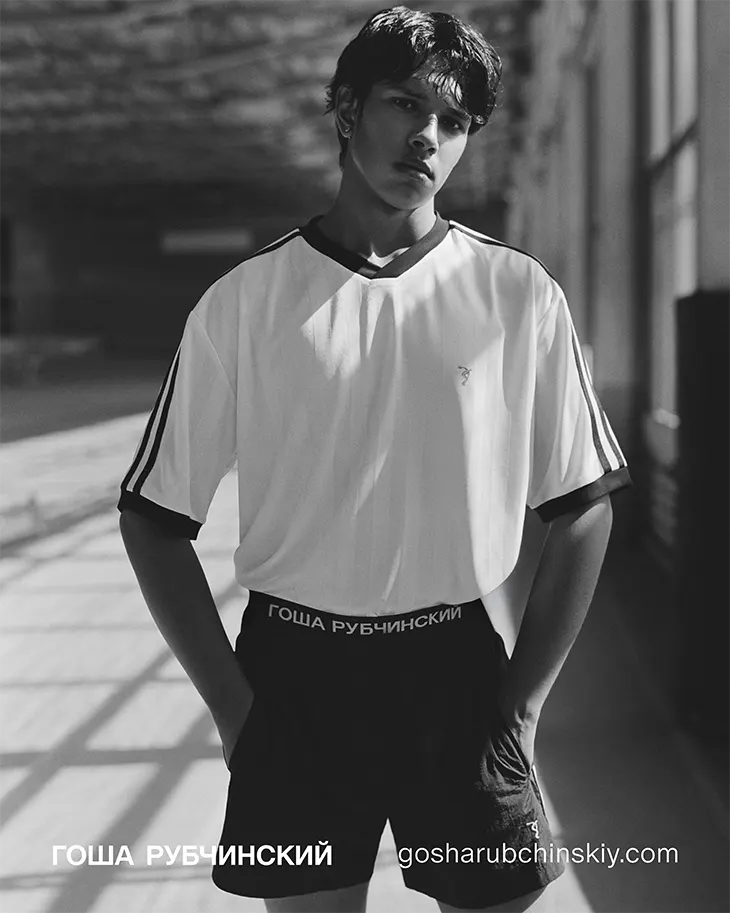
The Discobolus strengthens that tension between recognizable athletic iconography and contemporary styling. Its classical origins connect the collection to older ideas around the body and physical training, while its use on modern sportswear shifts the image into a different context. Greek letters create another link between historical references and the visual codes now associated with campus culture.
Rubchinskiy develops the collection through repetition. Lettering appears as a recurring graphic device, while patches and embroidery give the motifs different textures across the garments. The use of distressing keeps those references from feeling pristine or ceremonial. Instead, they appear worn into the clothes.
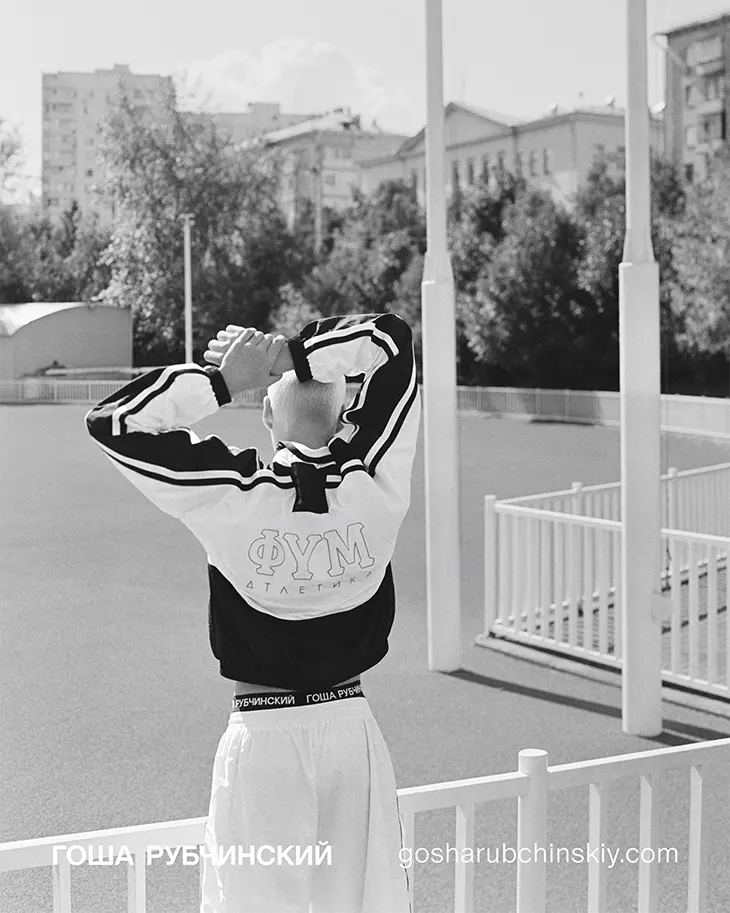
The altered sleeves and raw-cut construction continue that approach. These details suggest a wardrobe shaped by personal habits, where standardized athletic garments gradually lose their original form. The collection treats wear as part of the design language and uses it to shift familiar sportswear away from its conventional uniformity.
Gosha Rubchinskiy approaches Fall 2026 through a compact set of references: collegiate dress, Greek symbols, classical athletics and modified uniforms. The release uses these elements to explore how shared visual codes can change once individuals wear, cut and adapt them over time.