
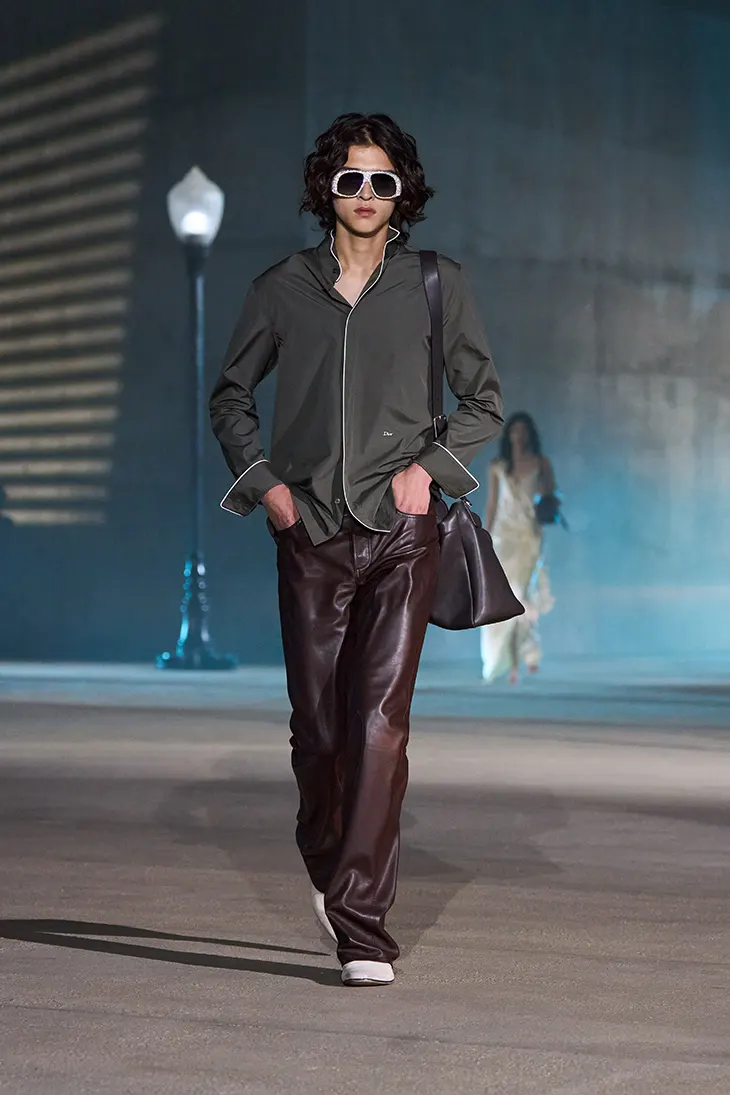
Jonathan Anderson brought Dior Cruise 2027 to Los Angeles with a collection shaped by cinema, film noir, and the House’s long connection to Hollywood. Presented at the Los Angeles County Museum of Art on Wilshire Boulevard, the show used the city as a stage for a story built around screen history, costume, tailoring, and image-making. Guests entered a space conceived as an illusion of LA inside LA, placing the collection inside the visual language of the city itself.
RESORT COLLECTIONS
The starting point reached back to 1949, when Alfred Hitchcock and Warner Bros executives negotiated with Marlene Dietrich for her role in Stage Fright. Dietrich insisted that her character Charlotte Inwood wear Dior on screen, creating one of the House’s most famous Hollywood moments. Her line, “No Dior, no Dietrich!” gave Jonathan Anderson a sharp entry point into Dior’s screen history and its connection to performance, glamour, and control.
Anderson placed that reference within a wider Dior timeline. Christian Dior designed costumes for Le Lit à Colonnes in 1942, before he founded the House. He later received an Oscar nomination in 1955 for Terminal Station. In 1950, Les Enfants Terribles by Jean-Pierre Melville and Stage Fright both reached audiences, placing Dior across European cinema and Hollywood. For Cruise 2027, Anderson used Stage Fright as one of the main sources, treating film history as a design framework for the Los Angeles show.
Inside the fitting space, Anderson pointed to Dior’s long relationship with the screen. A moodboard gathered House designs worn by Lauren Bacall, Ingrid Bergman, Marlene Dietrich, Ava Gardner, Audrey Hepburn, Grace Kelly, Sophia Loren, Marilyn Monroe, and Elizabeth Taylor.
Anderson also looked at Christian Dior’s understanding of dreams after the war. He connected couture, Surrealism, and Hollywood’s Dream Factory as parts of one cultural shift. That idea shaped the atmosphere of Cruise 2027, with Los Angeles as the location and Dior’s archive as the script.
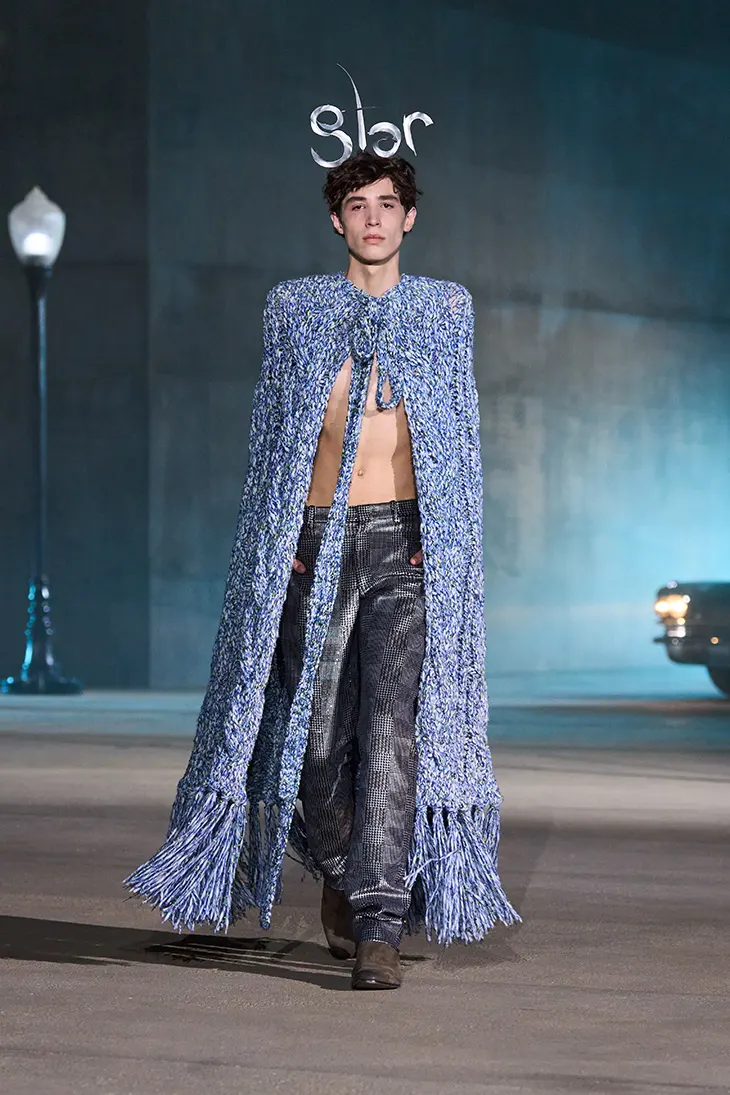
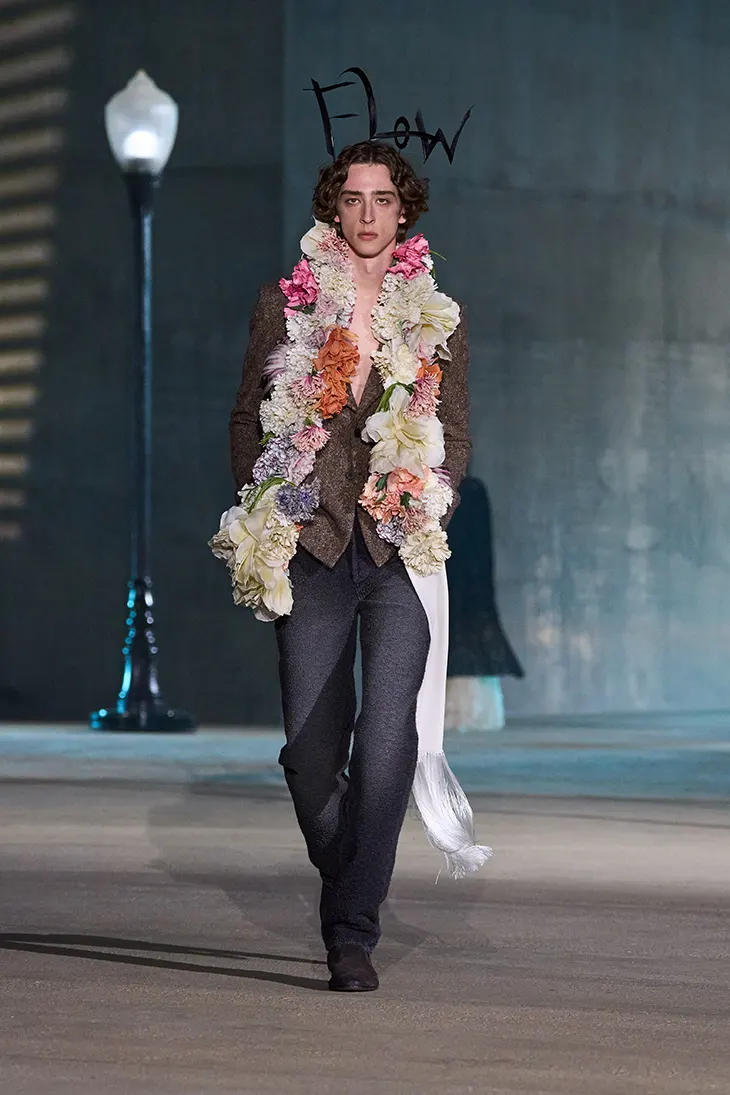
The menswear section brought that cinematic language into sharper focus. The first men’s silhouettes featured bespoke headpieces by Philip Treacy, who returned to a technique created for Isabella Blow’s Blow hat. For Dior Cruise 2027, Treacy formed feathers into lettering and typography, giving the pieces a graphic structure while keeping them light in motion.
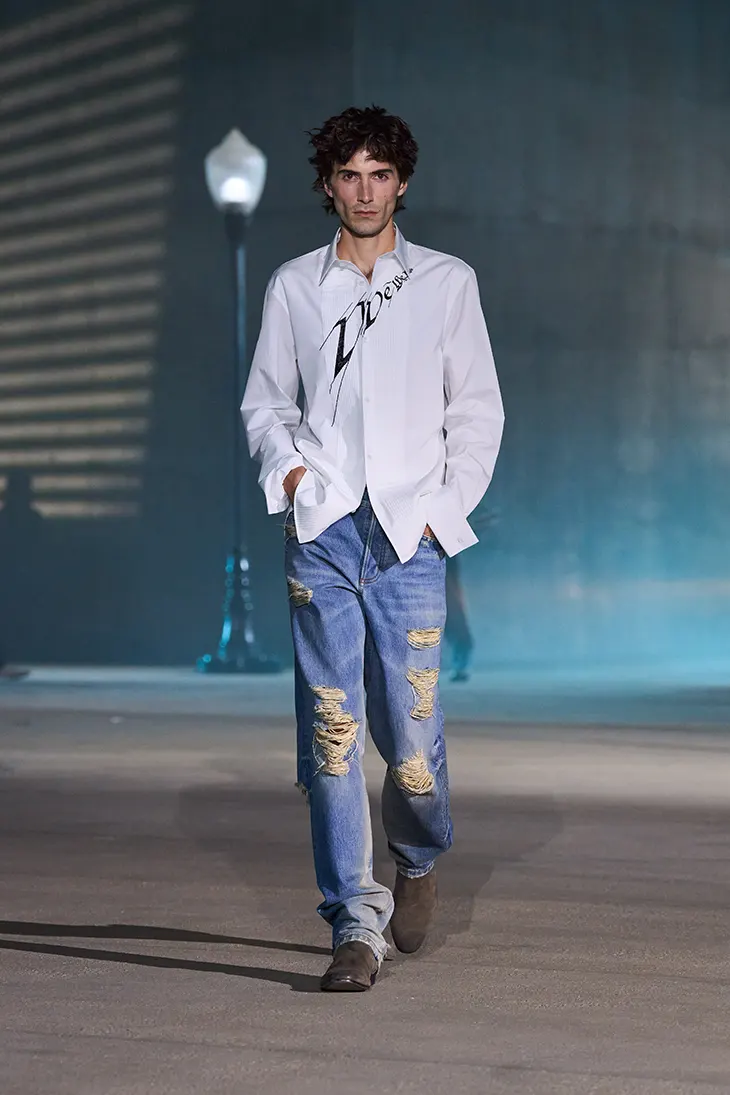
Film noir appeared through a Dior Gray wool flannel coat marked with geometric shadows inspired by Venetian blinds. The coat carried the language of classic cinema, where light and shadow shape atmosphere before dialogue enters. Shirts created in collaboration with Ed Ruscha followed, bringing another Los Angeles reference into the men’s looks. Anderson described Ruscha’s work through its attention to the ordinary and its connection to the scale of the city.
Discover Full Collection on DSCENE
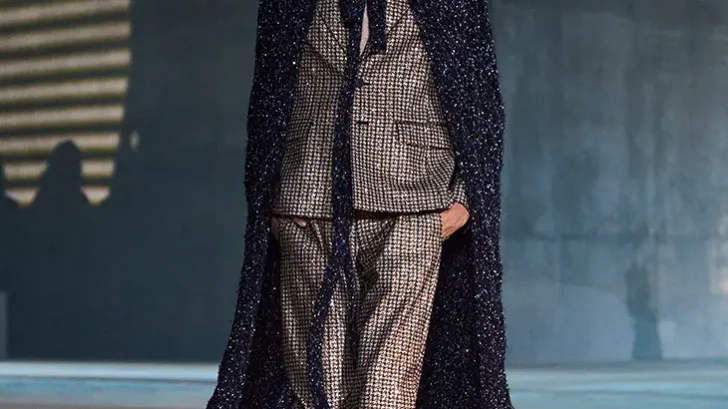
Dior Cruise 2027 also moved familiar menswear pieces into couture territory. Denim jeans appeared ripped, then embroidered with fine silver chains that imitated cotton threads. Anderson used surface, illusion, and construction to shift everyday garments into a more precise Dior language. Tailoring, texture, and detail carried the cinematic charge of the show without losing the directness of the clothes.




Tints. 🏆