COMME des GARÇONS HOMME PLUS Spring Summer 2027 opened with the unfinished phrase “If The War Were To End..” Rei Kawakubo used the title as a question, then answered it through color, movement and deliberate distortion. The collection unfolded in two acts during Paris Fashion Week, beginning at the Élysée Montmartre and continuing in the courtyard of Dover Street Market Paris. Rather than treating war as a theme of protection or force, Kawakubo removed the weight from combat references and pushed them into a freer visual language.
SPRING SUMMER 2027
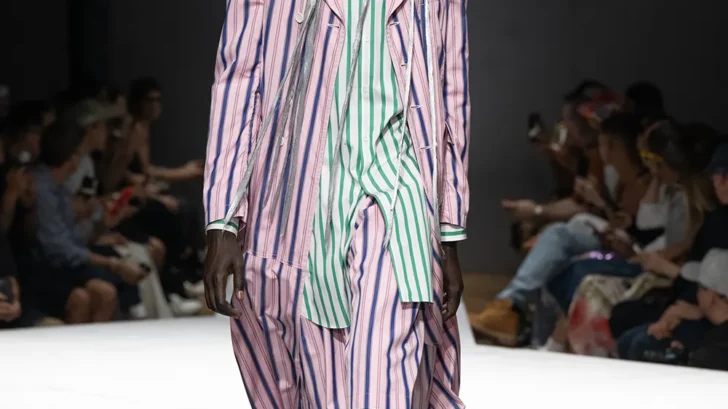
The first act began under lighting by Thierry Dreyfus, which gave the Élysée Montmartre a vivid, stained glass intensity. A buoyant score mixed by Ugo Nardini for ADC303 set the tone for a show that refused solemnity. Kawakubo opened with awning stripes across oversized coats and fluid pajama like trousers. Candy pink, jade, navy and sky blue collided across large surfaces, giving traditional menswear shapes a restless, unstable rhythm.
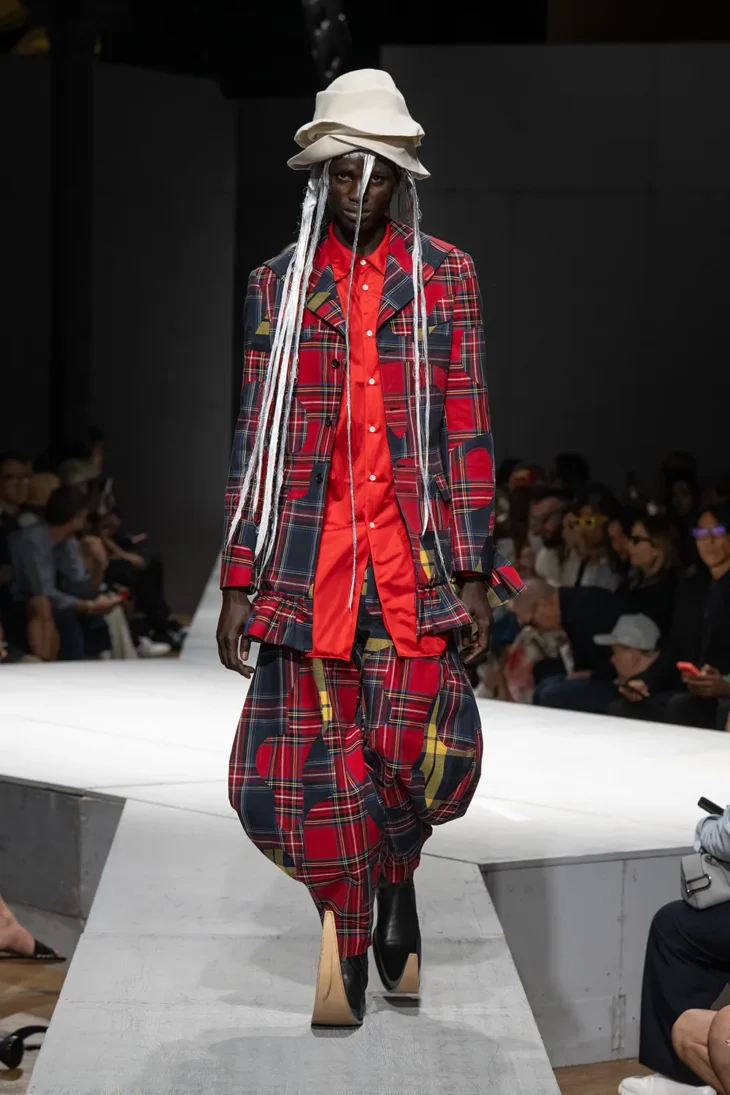
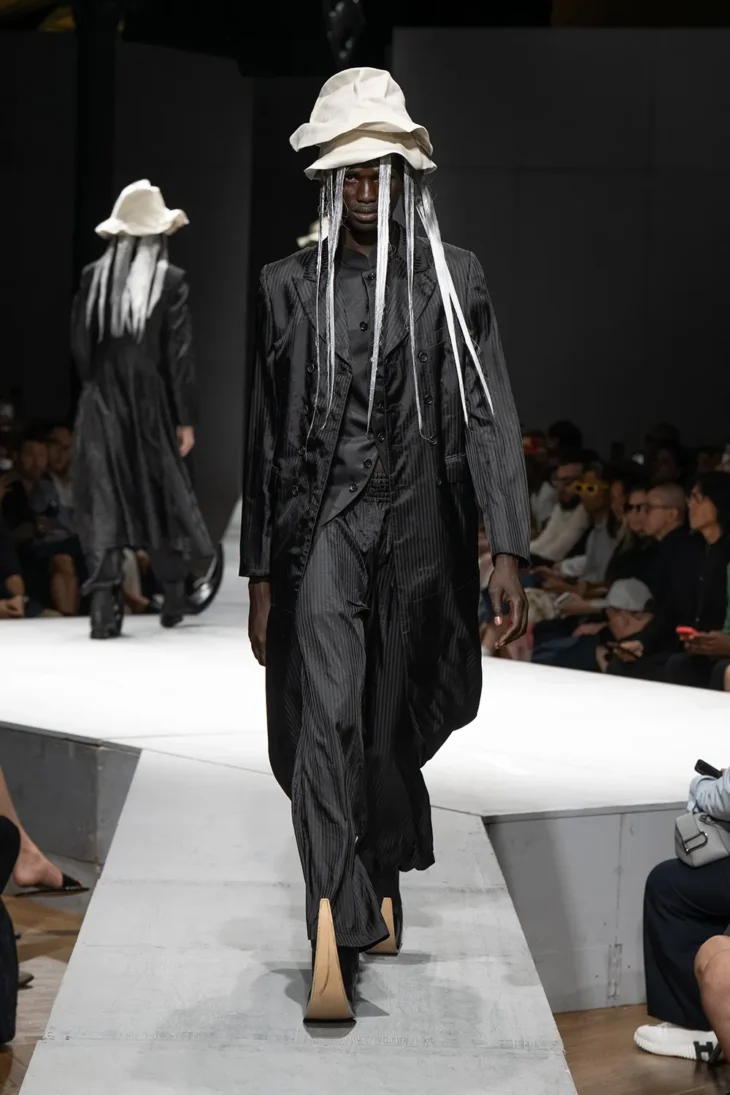
Stripes became one of the collection’s central tools. Kawakubo shifted their scale, direction and color until they lost any clean sense of order. Oversized coats moved with graphic force, while loose trousers softened the body and disrupted the expected severity of tailored dressing. The collection used familiar pieces, then pushed them away from control.
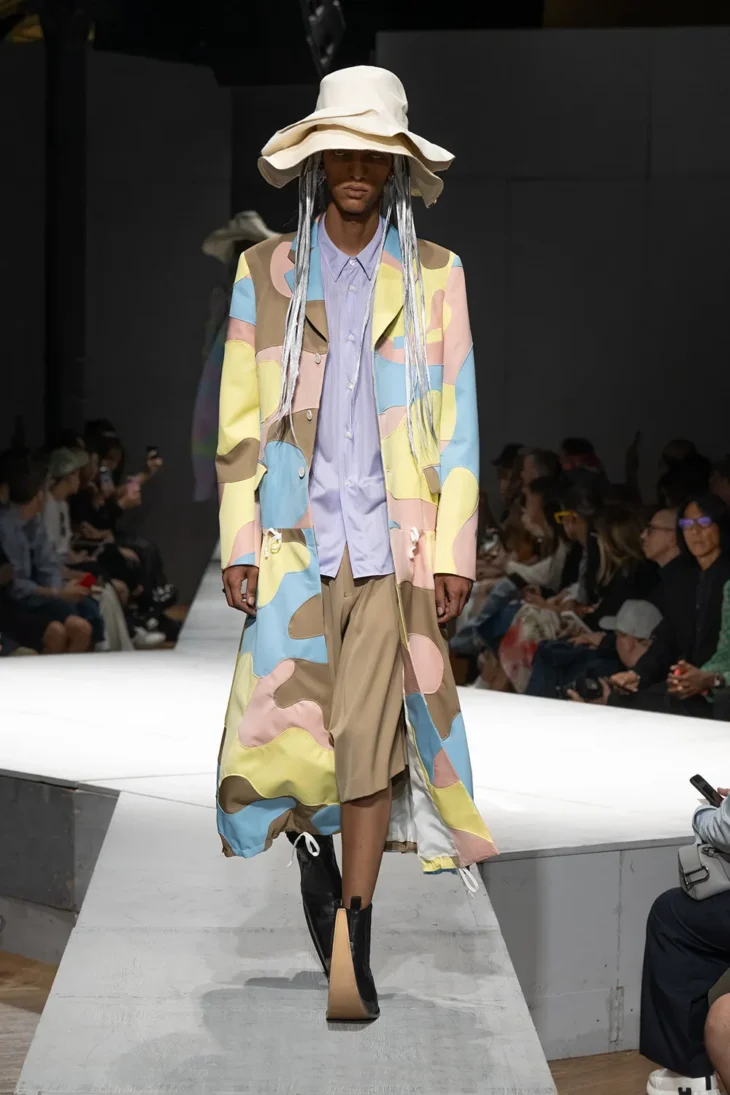
Camouflage followed, transformed through pastel shades of lilac, seafoam, lemon and blush. Kawakubo stripped the print of its usual aggression and turned it into something strange, decorative and almost playful. The move gave the collection its clearest reading. War codes remained visible, yet they no longer carried their original command. They became leftovers from conflict, remade for a moment after discipline collapses.
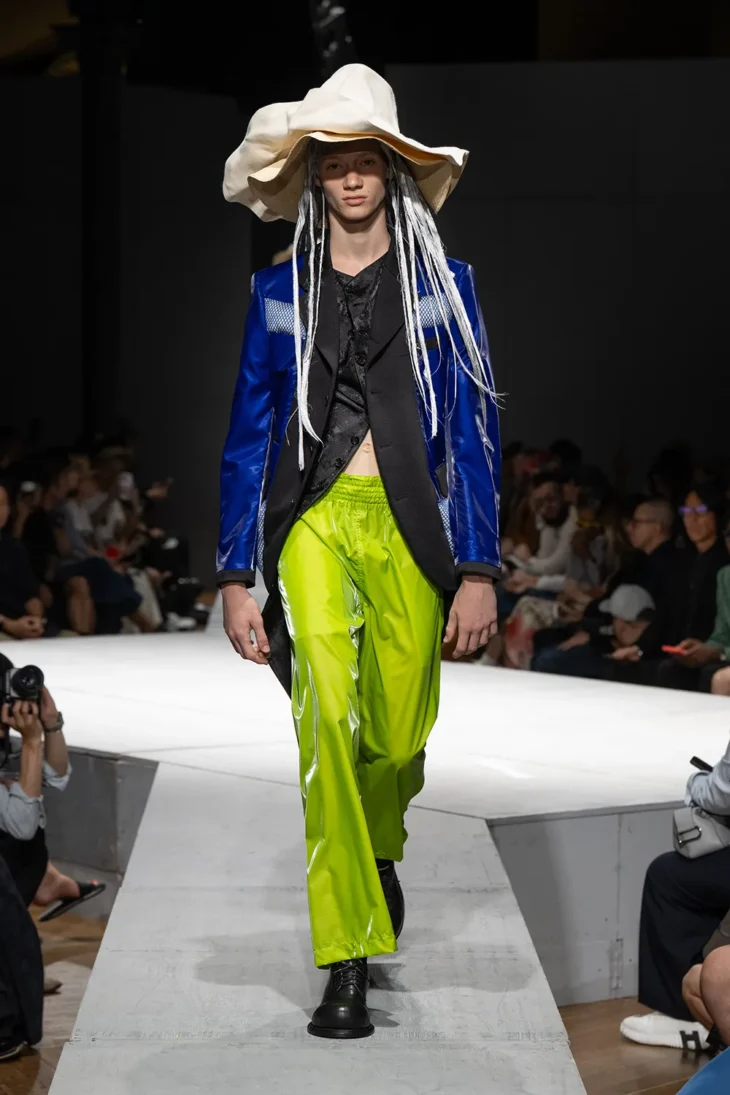
The tailoring moved with the same intent. Double breasted blazers appeared in electric chartreuse and lavender, taking a formal menswear shape into sharper, brighter territory. Asymmetric ruffled skirts, mesh layers and bold block lettering spelling out the house name added further interruption. The result did not aim for refinement. It built energy through excess, misalignment and surprise.
The second act shifted to Dover Street Market Paris, where the show continued through a spatial installation. A graphic collaboration with artist Nejc Prah gave the collection another visual layer and extended its language beyond the runway. The move suited Kawakubo’s approach, which often resists a single format. Here, the clothes felt part of a wider physical event, moving between fashion show, installation and graphic intervention.
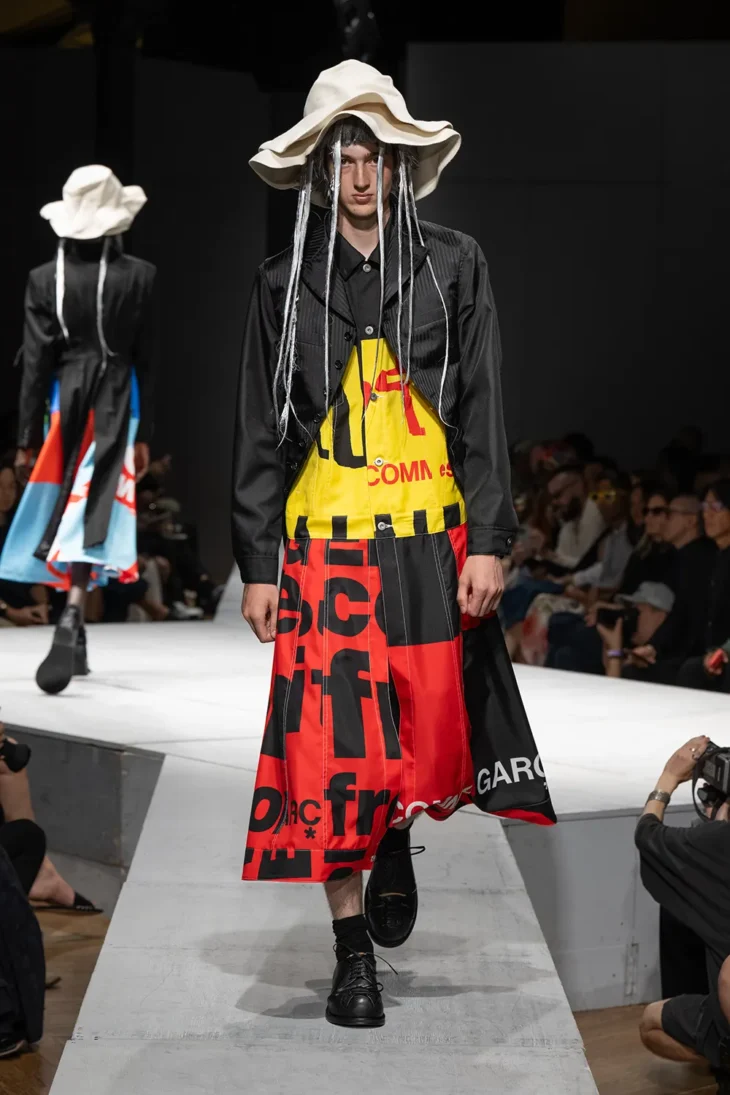
Footwear delivered the collection’s most memorable moment. COMME des GARÇONS HOMME PLUS brought back its ultra pointy Mexican dancing boots, first shown for Spring Summer 2015. Reworked with French shoemaker Mexicana, the Guarachero inspired rancher boots returned with slightly modified curved toes. Their exaggerated shape gave the collection a theatrical charge without losing its critical edge. They looked festive, absurd and defiant, turning footwear into the show’s clearest symbol of release.
Collaborative shoes with George Cox and Kids Love Gaite added further variation, although the Mexican dancing boots carried the strongest presence. They gave the silhouettes a sharp point and turned each walk into a performance.
Spring Summer 2027 worked through refusal. Kawakubo refused a literal image of peace. She refused clean menswear order. She refused the idea that post war dressing must feel calm. Instead, COMME des GARÇONS HOMME PLUS proposed release as something loud, colorful and unstable. The collection asked what clothes might do when structure falls away, then answered with stripes, camouflage, ruffles, mesh and boots built for impact.