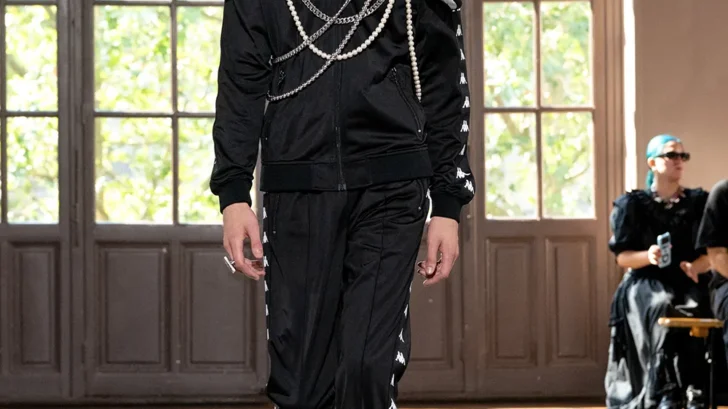
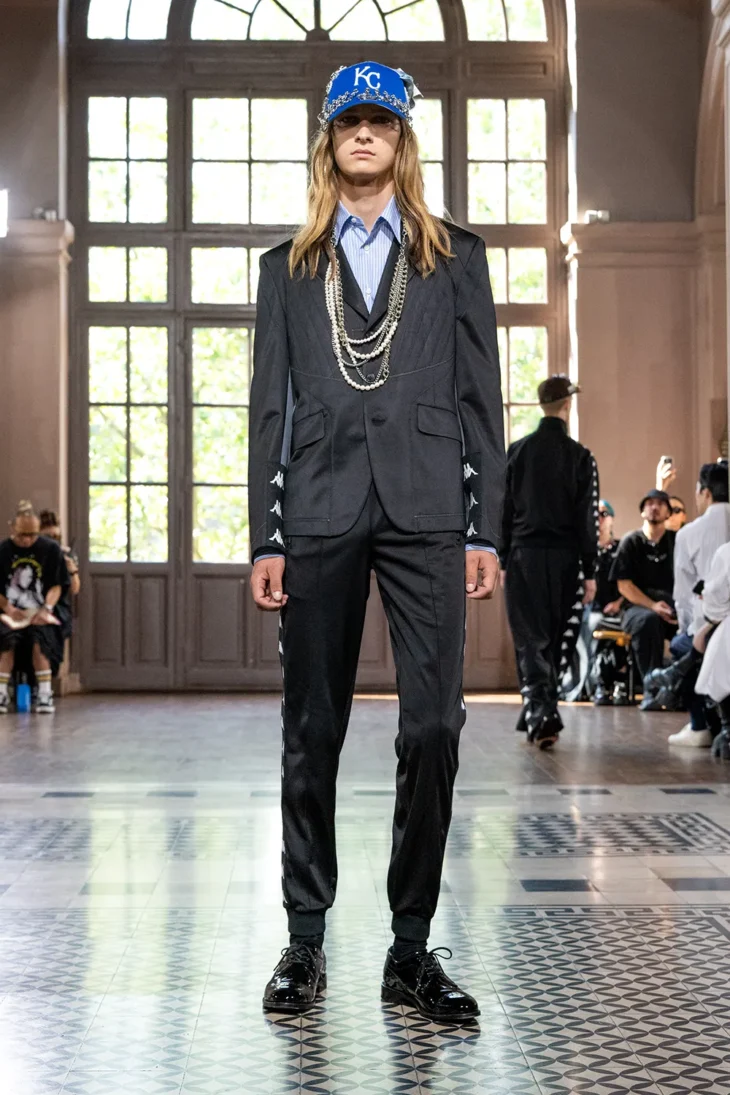
Junya Watanabe MAN Spring Summer 2027 arrived in Paris with the title “BLING BLING BLING,” yet the collection avoided an obvious reading of shine or excess. Watanabe focused instead on construction, recognition and the value of clothing shaped through use. His idea of bling came through the density of references, the authority of familiar garments and the precision with which he pulled them apart.
SPRING SUMMER 2027
The collection brought together sixteen collaborators, a number that could have easily overwhelmed the clothes. Watanabe kept control by treating each partner as part of a larger menswear system. Workwear, corporate utility, streetwear, shirtmaking and footwear entered the runway as raw material. He did not present collaboration as a marketing device. He used it as a design structure.
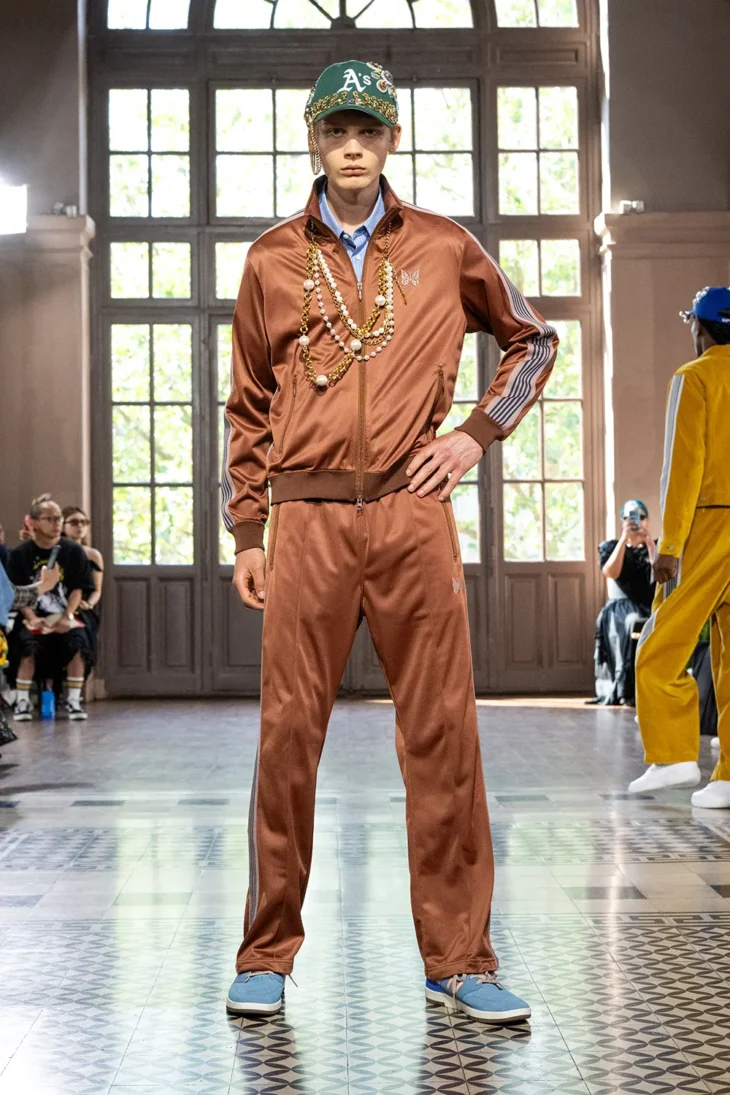
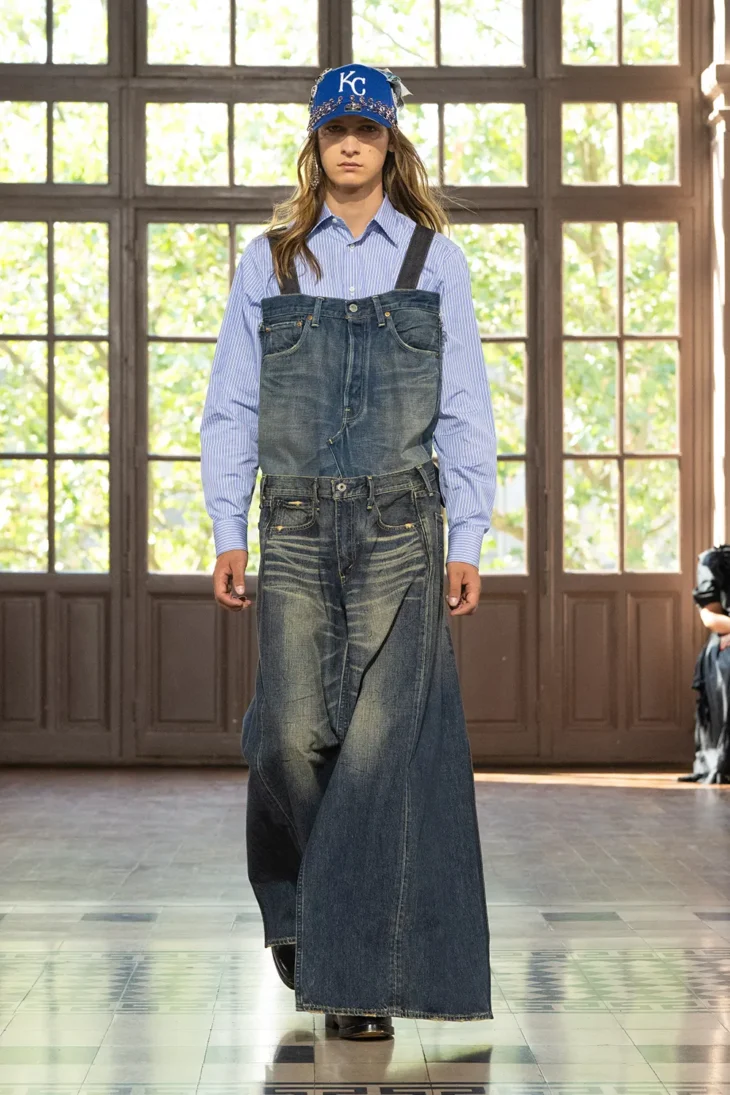
Levi’s and Carhartt grounded the collection in denim and workwear, giving the silhouettes a physical base. Jackets, trousers and layered pieces carried the directness of functional clothing, then shifted through Watanabe’s cutting and reconstruction. Seams, panels and textures broke up the surface, turning familiar garments into something more complex without losing their original force.
The streetwear references sharpened that approach. Needles, Union LA and HIDDEN brought subcultural codes into the collection, connecting Watanabe’s method to the way menswear now moves across communities and platforms. These names added visibility, but Watanabe avoided simple logo placement as the main idea. He placed streetwear within a wider conversation about how men build identity through recognizable pieces.
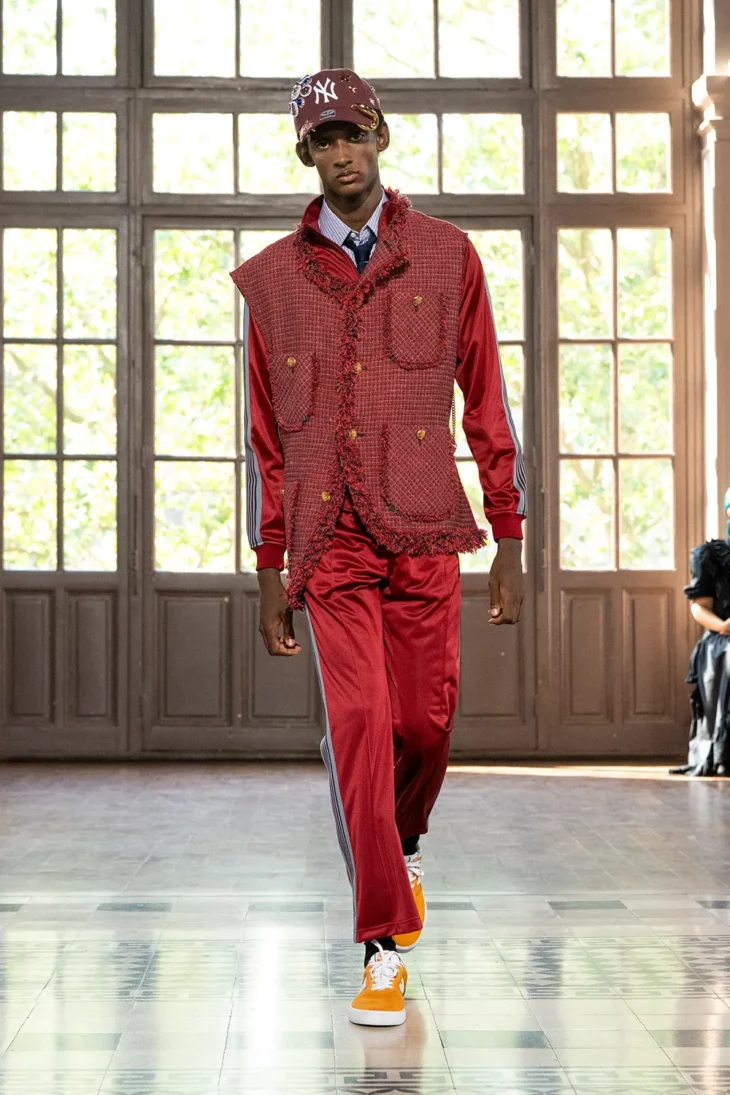
DHL brought the strongest unexpected reference. The logistics company’s branding introduced a corporate and industrial note, linking the clothes to systems of movement, service and distribution. In Watanabe’s hands, that language felt less like novelty and more like a comment on how uniforms travel through daily life. Headwear from 47 and pieces informed by INNERRAUM added further emphasis on utility, hardware and protection.
Tailoring gave the collection its counterweight. Luigi Borrelli, Guy Rover and Maria Santangelo brought Italian shirtmaking into the mix, introducing a more formal register. Watanabe placed this refinement beside denim, workwear and streetwear without smoothing out the clash. Shirts became structural elements within layered looks rather than polite wardrobe staples. The tension gave the collection its strength.
Footwear completed the lineup with equal range. New Balance added athletic familiarity, Flake brought a skatewear note, while Heinrich Dinkelacker and Tricker’s supplied a heavier sense of traditional shoemaking. The shoes reflected the wider point of the collection. Watanabe moved across casual, functional and formal categories, then forced them to share space.
“BLING BLING BLING” worked best when it treated menswear as a set of codes in motion. The collection asked what gives a garment status today: craft, function, logo, collaboration, history or wearability. Watanabe refused to choose one answer. He placed all of them on the runway and rebuilt them through his own disciplined logic.
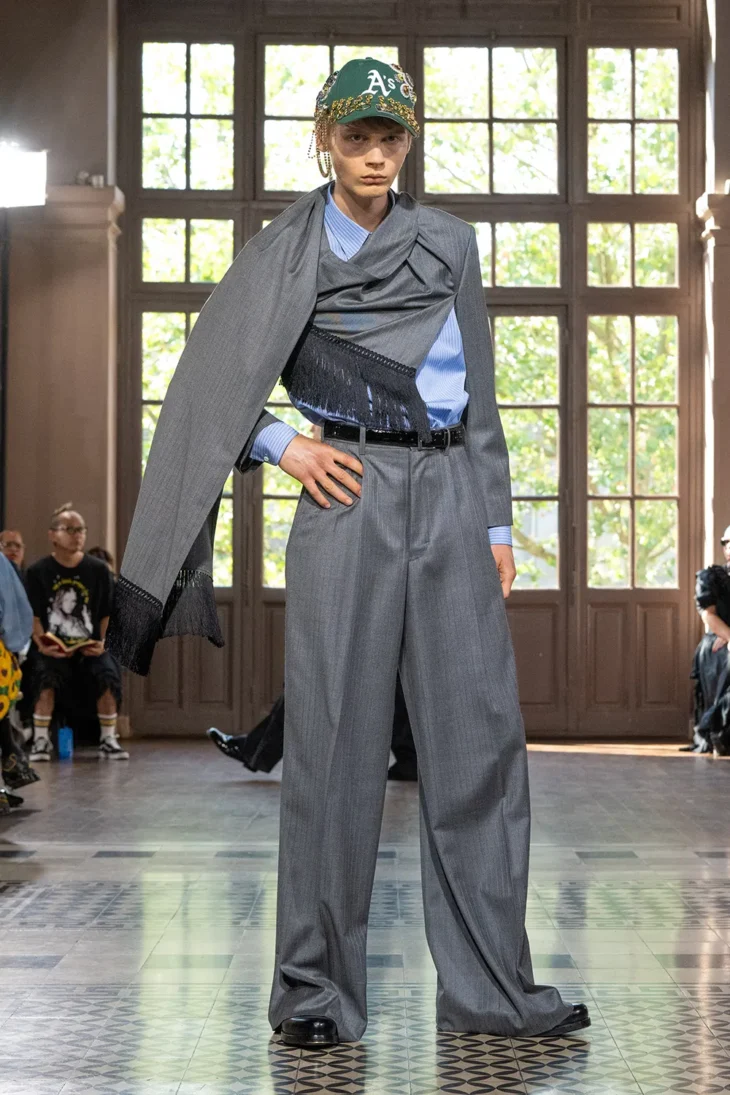
Spring Summer 2027 showed a designer still deeply committed to reconstruction as a way of thinking. Junya Watanabe did not chase novelty through spectacle. He found it in the cut, the collision and the strange authority of clothes men already know.