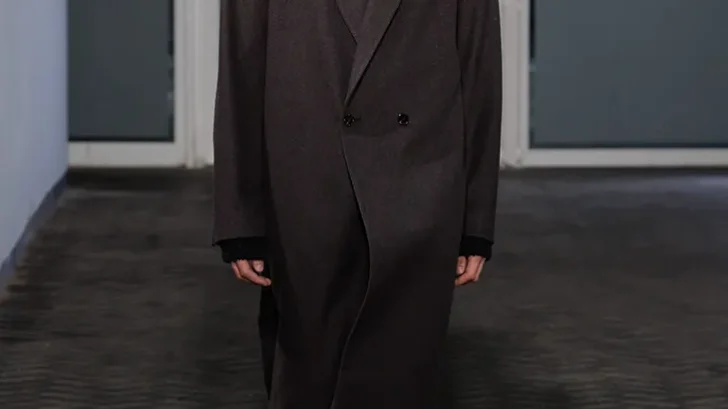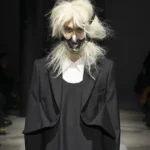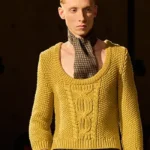
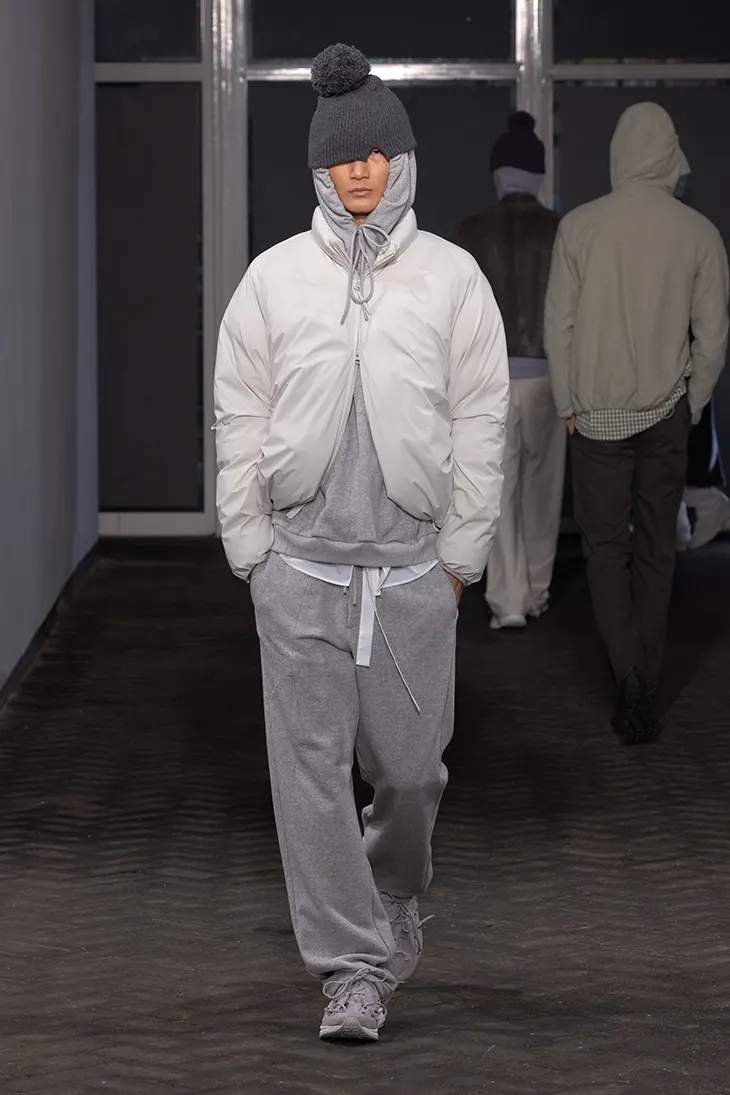
Post Archive Faction returns to Paris Fashion Week with its Fall Winter 2026 collection, Drifter, presented by Dongjoon Lim. The season approaches drifting as an active condition shaped by motion and continuity. Rather than pointing toward arrival, the collection operates within an in-between state, where archives progress forward and references remain in flux.
FALL WINTER 2026.27 COLLECTIONS
Drifter grows from Lim’s personal reflections on movement and belonging. He describes a way of living without fixed origin or destination, marked by the absence of roots or a singular place called home. Following an unforeseeable current becomes a deliberate choice rather than a response to disorientation. The language around drifting avoids loss or detachment and instead frames motion as something sustaining. That perspective informs the collection’s structure, which stays open-ended and resistant to resolution.
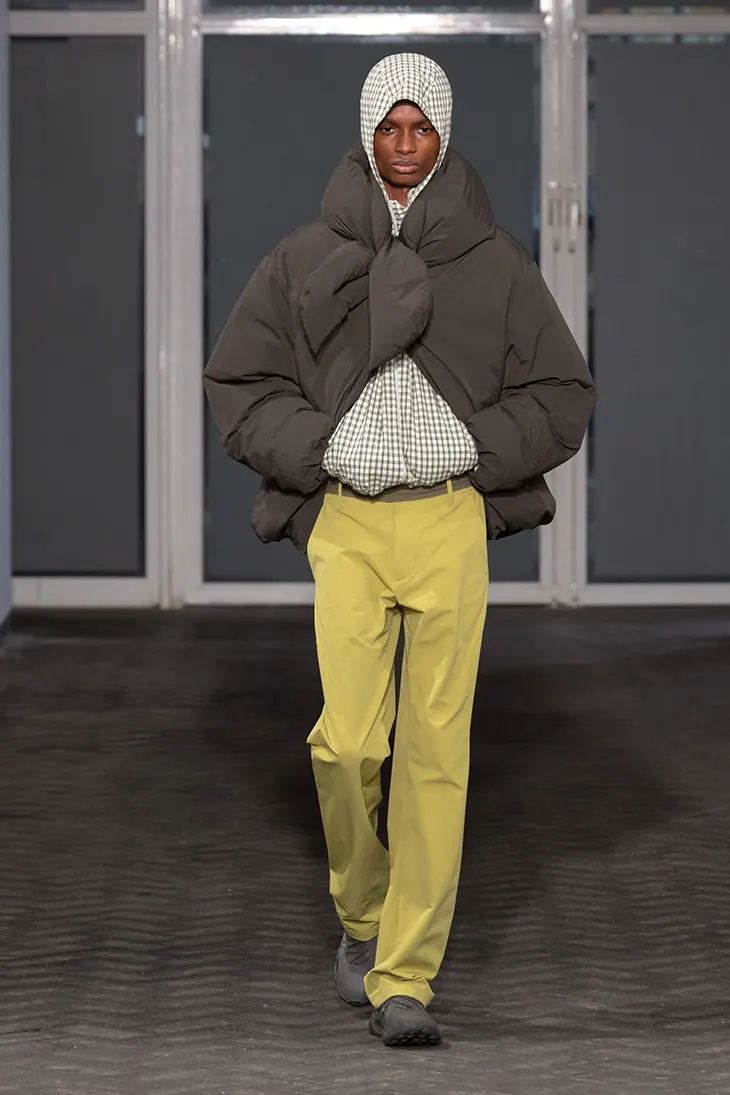
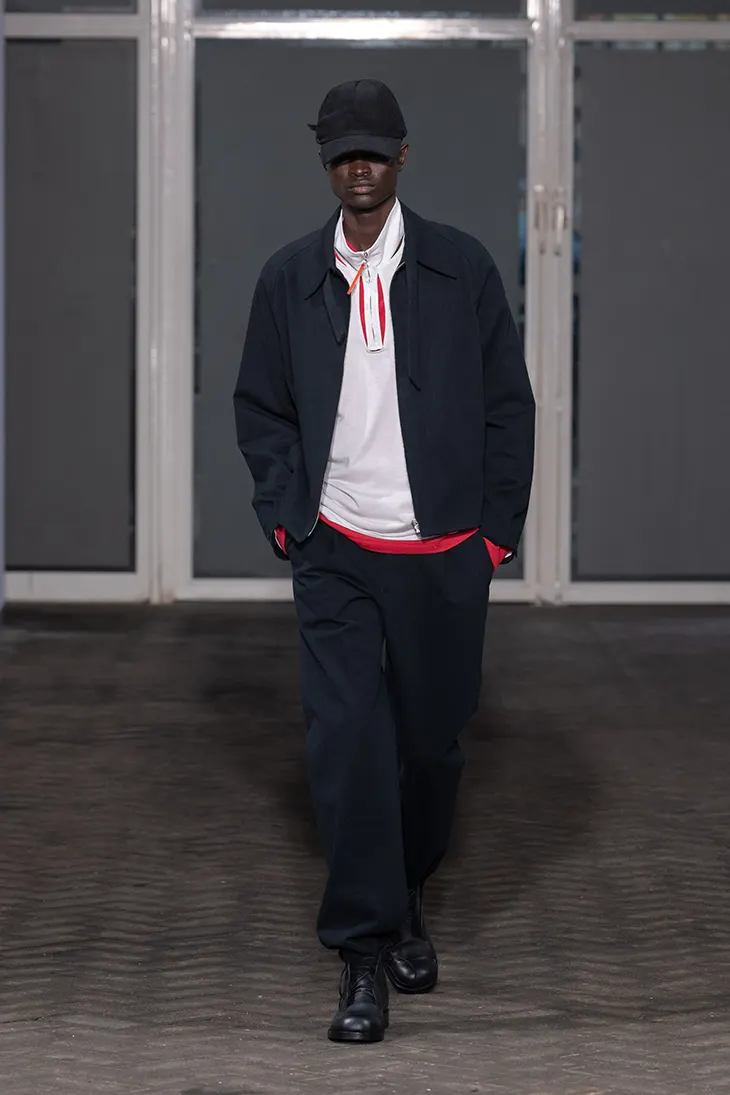
This approach aligns closely with Lim’s working method. He speaks directly about effort and repetition, emphasizing that the team approached the collection with the same intensity applied each season. Lim continues to describe his mindset as that of a student, treating learning as continuous rather than transitional. FW26 reflects this position by refusing to define itself as a completed form.
Sound plays a significant role in shaping Post Archive Faction’s language, rooted in Lim’s early relationship with classical music. Childhood experiences left a lasting impression. Piano lessons began at six, shaped by obligation while his parents worked. By thirteen, memorization failures carried physical punishment. These moments produced resistance, creating a complicated relationship that later entered the brand’s vocabulary. Classical compositions appear frequently in Post Archive Faction’s work precisely because they feel misaligned, producing friction where beauty and boredom coexist.
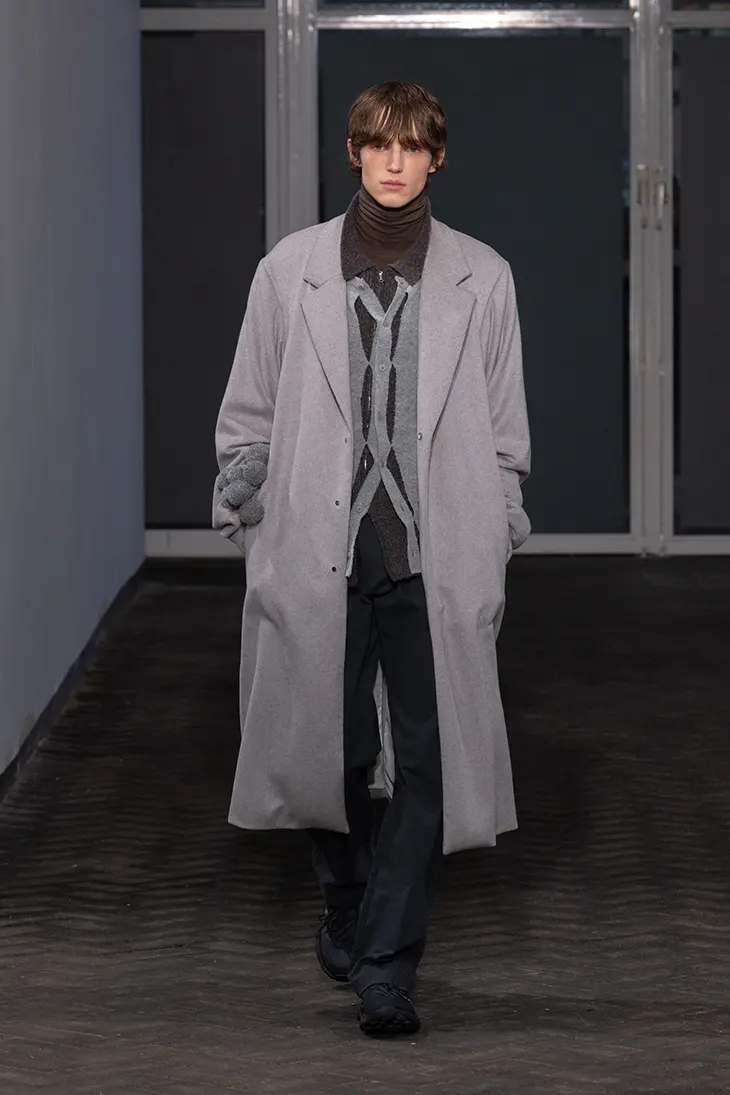
This friction feeds into Lim’s idea of creating a New Classic. He situates clothing history within the evolution of sportswear, noting that many garments now labeled classic began as functional responses to movement and use. From this perspective, the archive operates as a shifting structure rather than a fixed reference. What holds authority today once served practical needs tied to activity, performance, and motion.
Drifter treats the archive as something that continues to change over time. Post Archive Faction works with archival material while acknowledging its own future position within that cycle. Lim states this clearly. Post-Archive will become archive. Others will follow. The collection accepts this sequence without attempting preservation or finality. Meaning remains mobile, allowed to shift form and direction as time moves forward.