QASIMI introduces Undercurrent for Spring Summer 2027, placing labor, process and repetition at the center of the season. Presented in Milan, the collection looks at clothing as a record of making. Pleats, loose threads, shifted seams and visible construction lines show how each garment carries signs of gesture, time and transformation.
SPRING SUMMER 2027
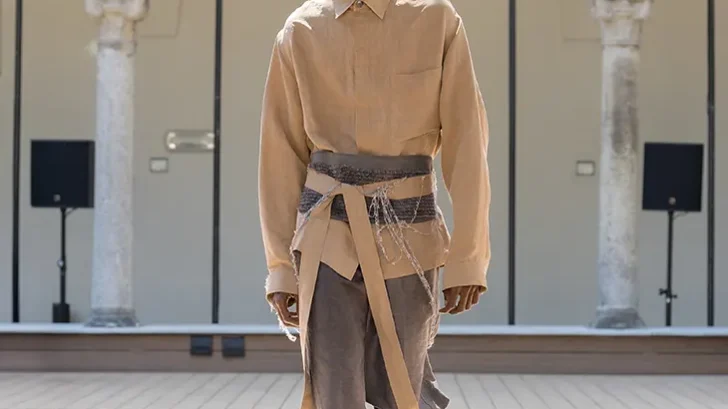
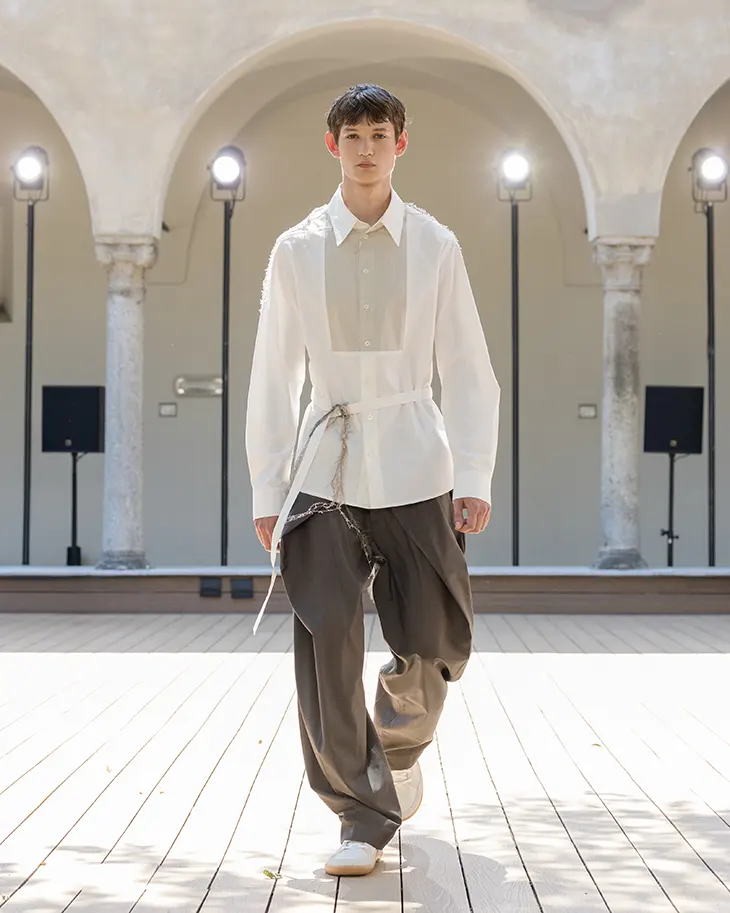
The season develops through relaxed tailoring, modular forms and manipulated materials. Deep pleats shape shirts and outerwear, while sheer layers reveal the structure underneath. QASIMI keeps threads visible, moves seams away from expected points and leaves construction details on display.
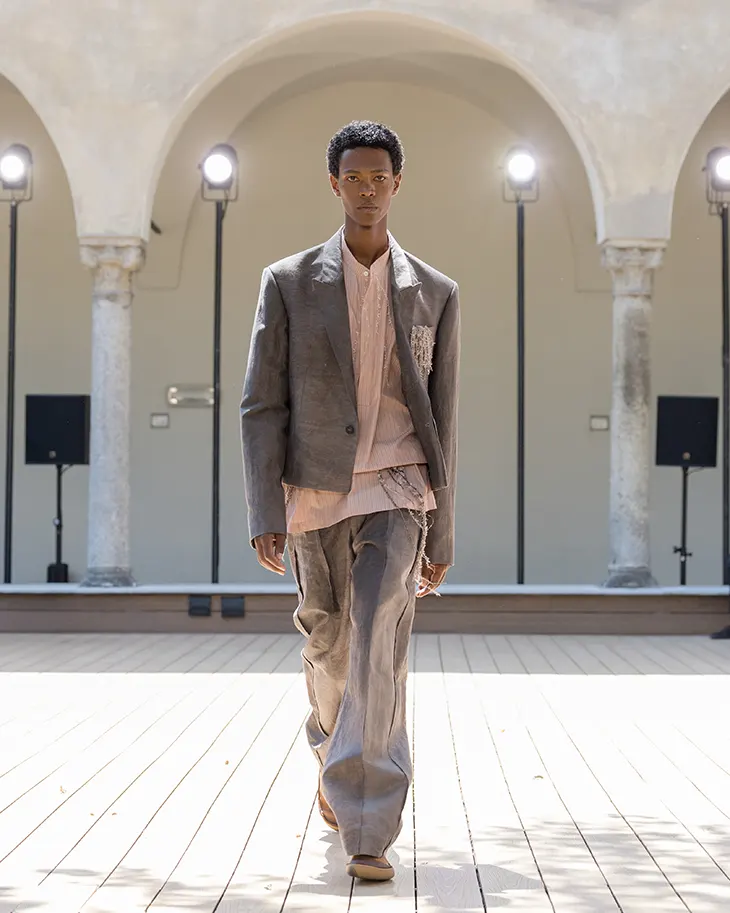
Undercurrent continues the house’s language of relaxed tailoring, seasonless layering and wearable workwear. Manual dye treatments return across relaxed twill tailoring, leaving stains and surface traces that show the treatment process. Denim appears in pleated and barrel leg shapes. QASIMI also brings back its signature check in lightweight modal, while knitwear takes cues from Khalid Al Qasimi’s earlier work.
The collection approaches tailoring through altered proportions and unexpected garment logic. A poplin shirt creates the impression of a sweater worn over a shirt, without adding a second layer. Trousers include wrap panels at the hip. Rose colored shirts feature off center collars and displaced seams. Olive and agave green looks introduce controlled volume that follows the body as it moves.
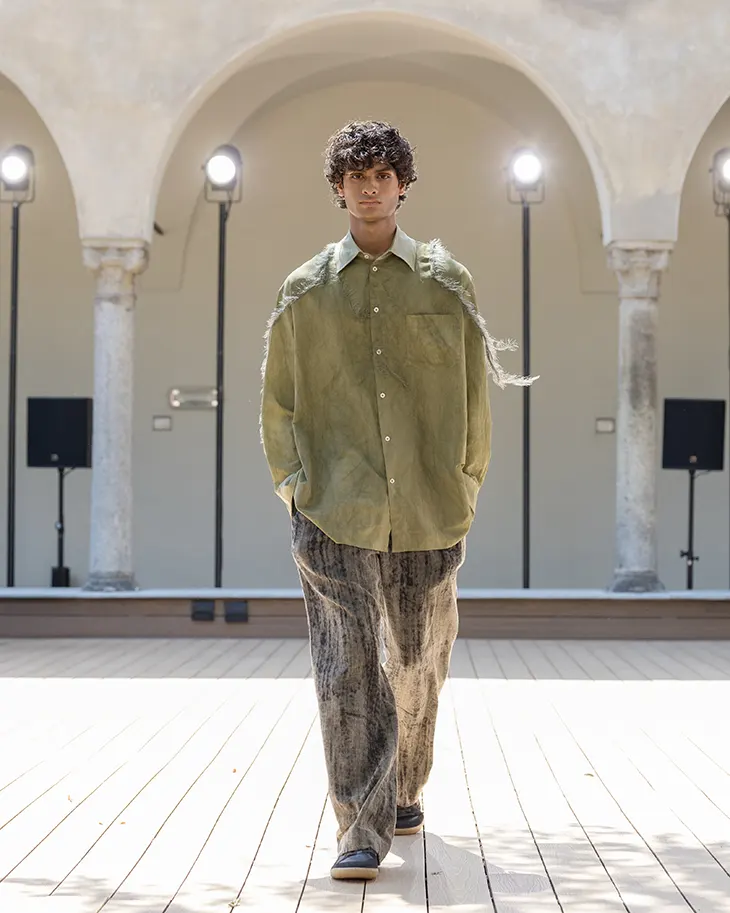
Color stays close to QASIMI’s familiar earth toned range. Brown, mocha and camel create warmth throughout the collection. Agave green gives the palette a sharper note, joined by olive, rose dawn and white.
Undercurrent opens a two season exploration of Hassan Sharif, one of the Gulf’s most influential contemporary artists and a key figure in conceptual art in the UAE. QASIMI developed the project in dialogue with Sharif’s estate, using his interest in process, accumulation and manual intervention as a foundation for the clothing.
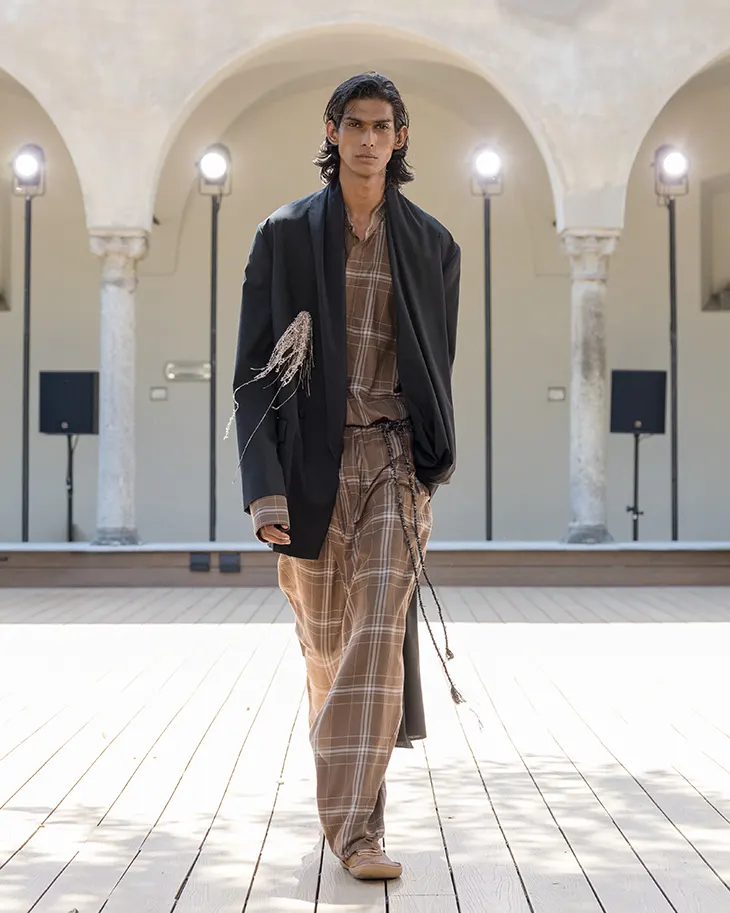
Sharif worked with industrial and everyday materials, transforming them through repeated hand actions. He tied, wove, bound and folded objects into dense sculptural forms, questioning ideas of value, labor and permanence. QASIMI does not draw from single artworks. The collection follows the principles of Sharif’s practice, turning repetition into structure, accumulation into layering and gesture into form.
Those ideas appear across the wardrobe. Shirts use deep pleating to create shape. Modular panels shift with the body. Sheer panels wrap the torso and expose construction layers beneath. Crochet belts sit low on the hips, with loose threads falling toward the legs. One tailored look turns fully inside out, placing seams and internal lines on the exterior.
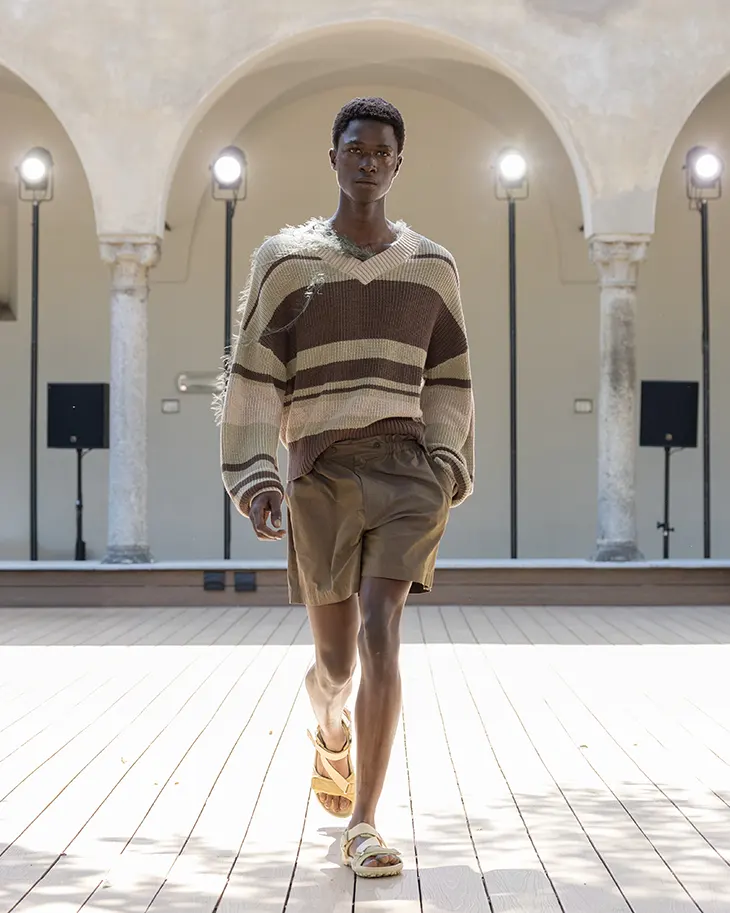
The collection also looks to the Gulf before oil extraction transformed the region’s economy. Pearl diving and fishing inform sheer shirts and trousers with wave like prints, reflective surfaces that catch light like water, and open crochet structures that recall fishing nets.
A representative of Sharif’s estate said Hassan’s work centered on process, material and time, and welcomed QASIMI’s homage as a way to continue conversations around his work in new settings. Hoor Al Qasimi described Undercurrent as a collection about the marks left by making, where repetition builds meaning over time and responds to the experience of working in someone’s absence.