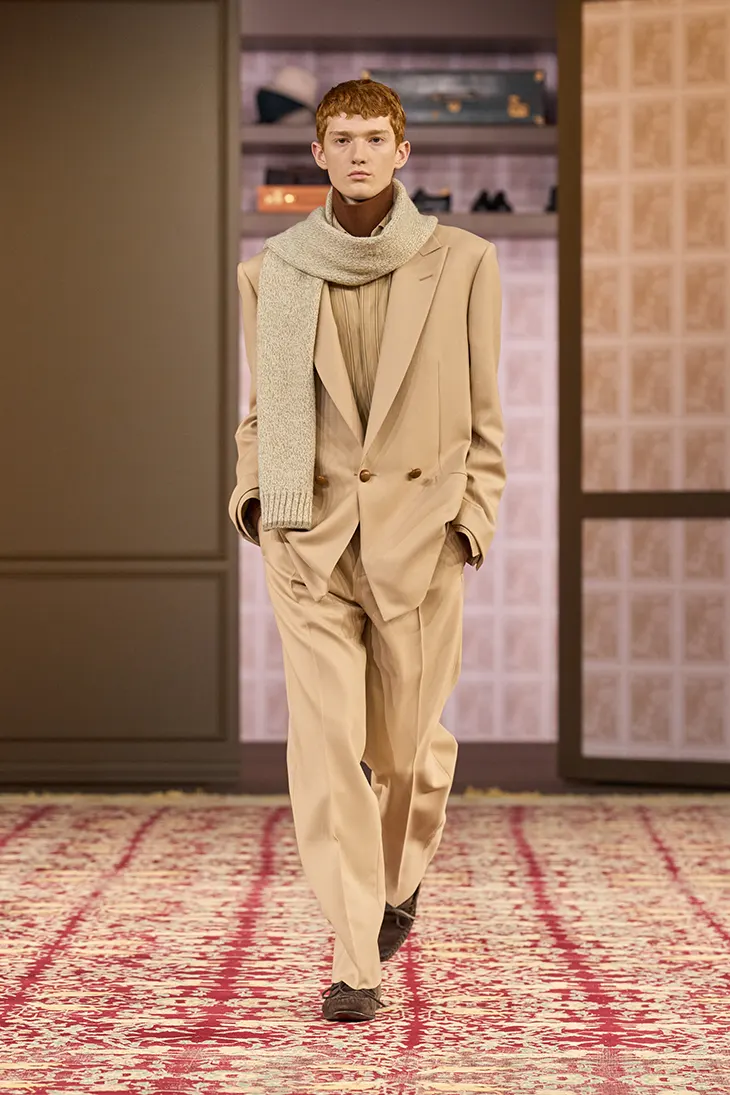
ZEGNA Fall Winter 2026 follows clothing as it moves between bodies, pauses between wears, and returns to use. The family closet frames this cycle. It functions as a space shaped by habit and memory, where clothes rest without losing purpose. As items accumulate, the closet grows into a shared system that connects generations through daily dressing.
This collection takes form inside an imagined closet built from real garments belonging to Gildo Zegna and Paolo Zegna, representatives of the third generation of the Zegna family. Personal clothing stands beside pieces inherited from earlier family members. These garments do not sit apart as historical artifacts. They operate as working references that guide decisions on proportion, fabric, and construction. At the center appears “ABITO N.1,” the first suit created in the 1930s for Count Ermenegildo Zegna, made Su Misura in Australian wool and preserved in a glass case. Its presence grounds the collection in use, memory, and continuity.
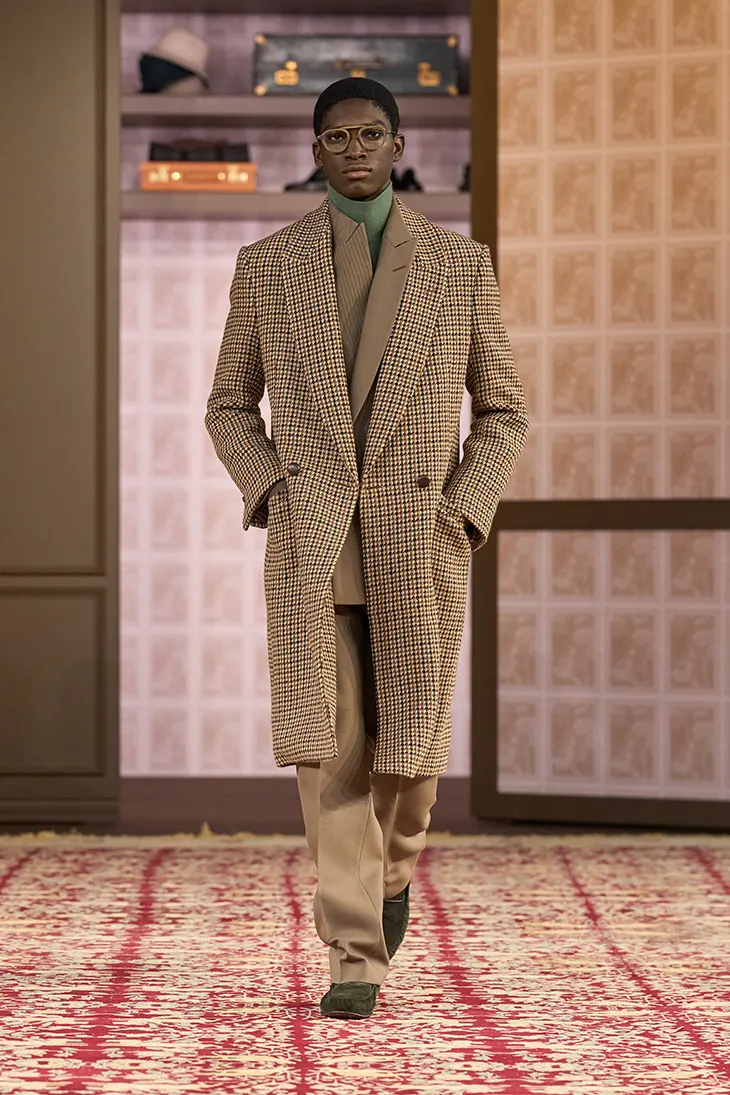
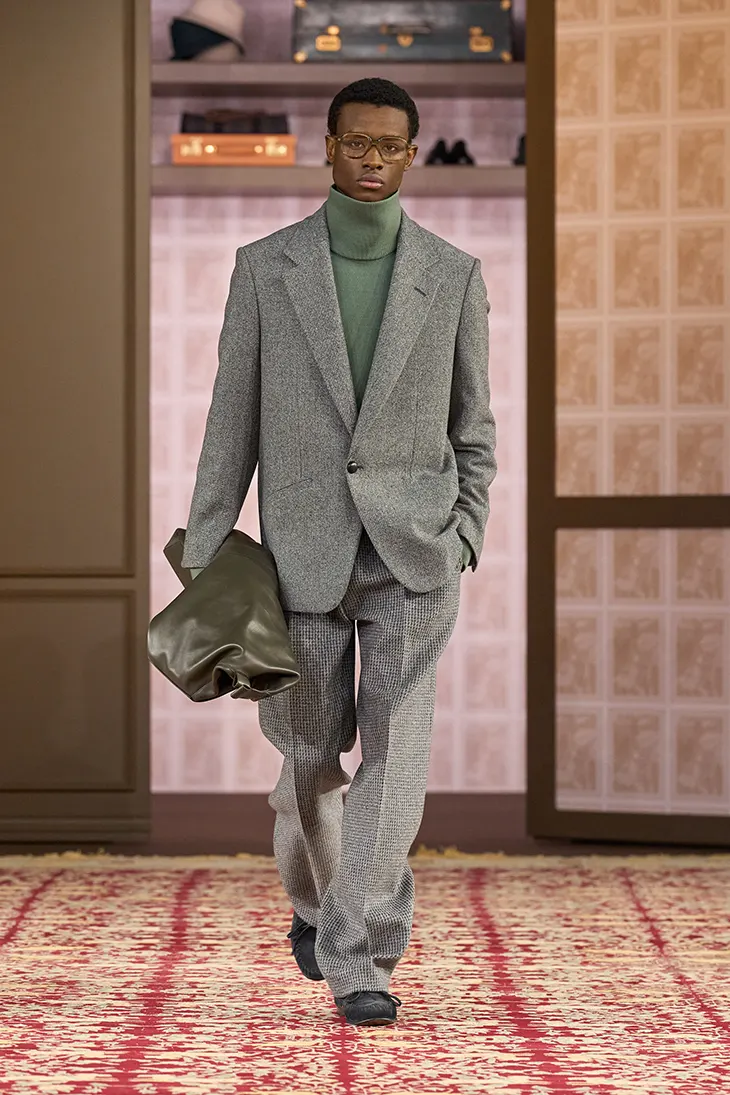
Artistic Director Alessandro Sartori approaches fashion through lived experience. He treats clothing as an outer skin chosen each day, shaped by the body and marked by time. Within this shared wardrobe, garments pass from one person to another, cared for so they remain active. Sartori focuses on the moment of encounter when someone finds a piece once worn by a father, grandfather, or uncle. That discovery encourages observation, adaptation, and trial. A quiet exchange forms between posture, movement, and attitude. The desire to create clothing that stays in circulation across years and owners drives the collection forward.
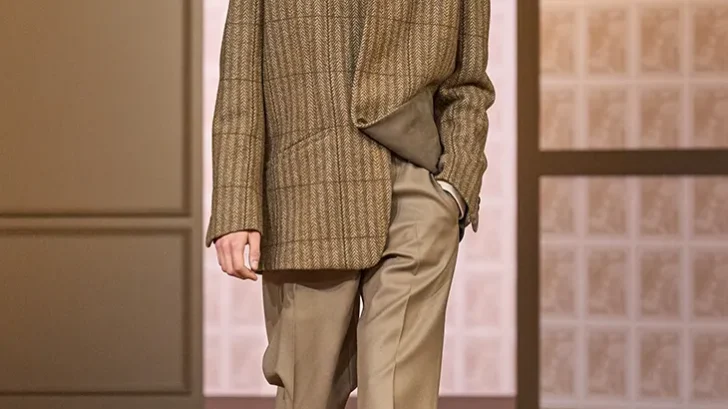
Trofeo wool, introduced in 1965, plays a central role and appears through updated treatments. Development relies on repeated testing, wearing, and adjustment.
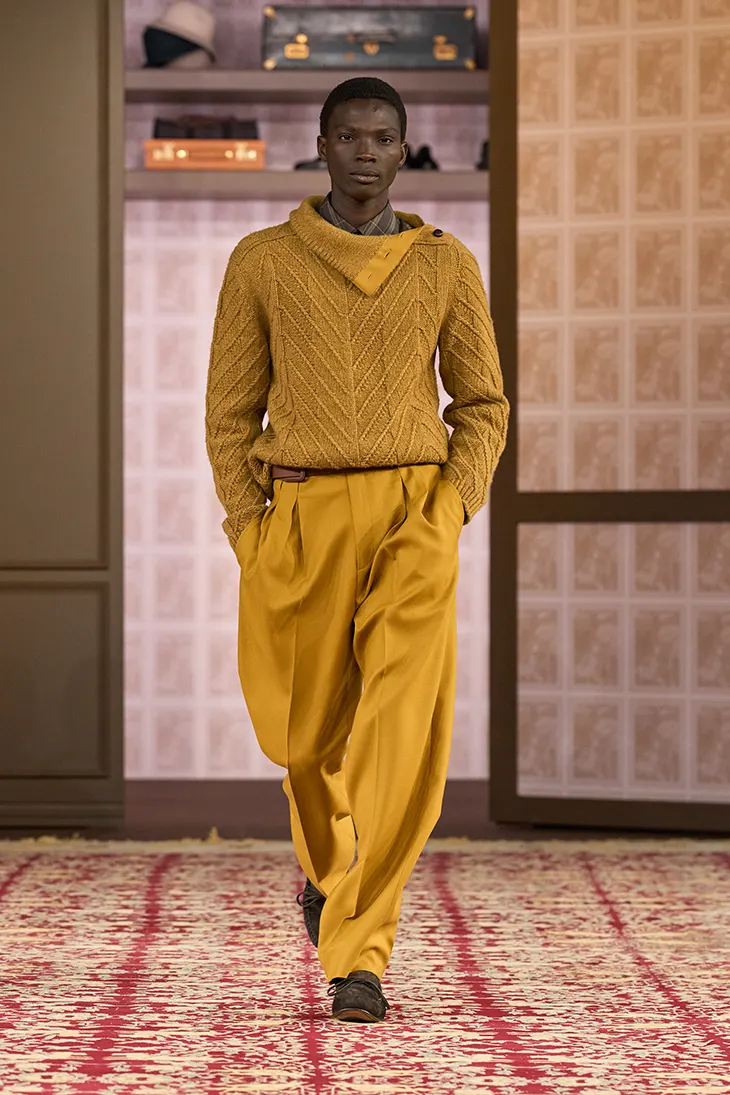
Coats and jackets gain length and volume, defined by square shoulders. Trousers fall from a high, cinched waist with a fluid line. The double-breasted jacket changes behavior. Some designs reduce the closure to a third of its traditional form. Others introduce a horizontal button placed between standard closures, offering multiple fastening options and varied fits. Blazers include double lapels, blousons arrive with double collars, and categories shift without fixed boundaries.
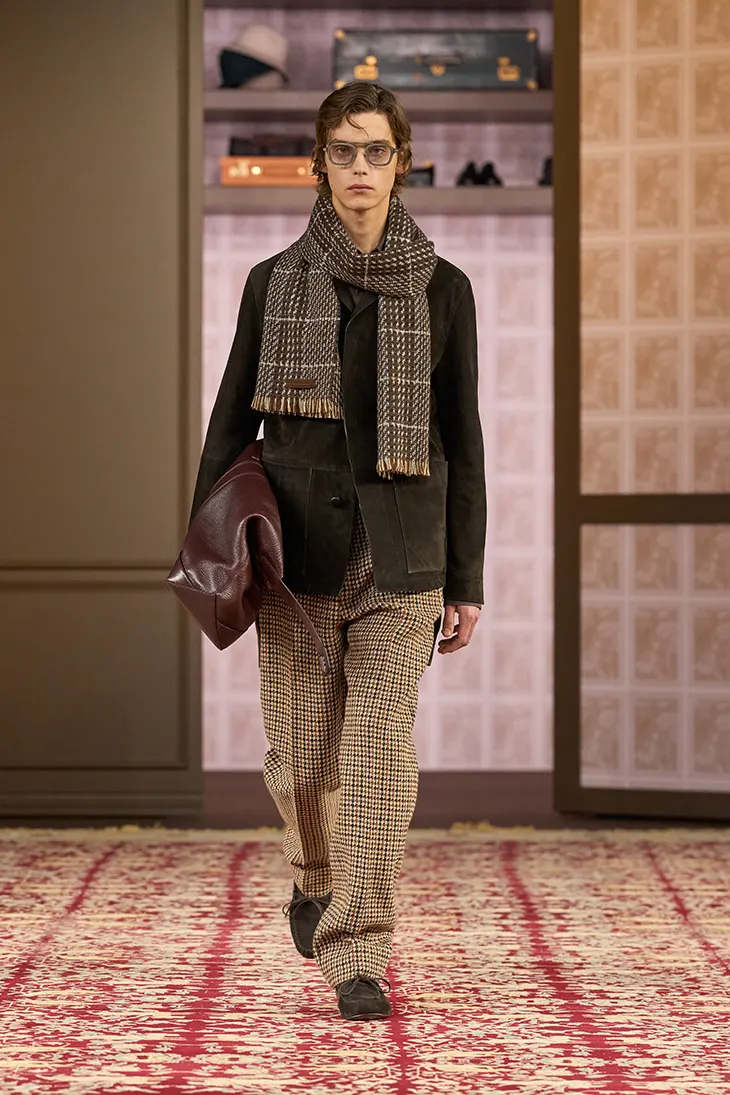
Leather takes on a graphic role in stand-up collar blazers, quilted gilets, and bombers. Accessories extend the same logic through outdoor slippers and moccasins in suede, wool felt, and nubuck, paired with squared glasses, felt-lined leather rain hats, and softly structured duffel bags and briefcases.
The palette moves from creamy tones of stella alpina, meliga, and larice toward deeper shades of mogano, brandy, terra, corteccia, betulla, torba, and bosco. Accents of zaffiro, bruma, and giada punctuate the range, while anthracite grey and softened black recall classic menswear roots. Fabrics include tweeds, flannels, denim, gabardines, and multiple cashmere constructions, selected for weight, texture, and sustained wear.