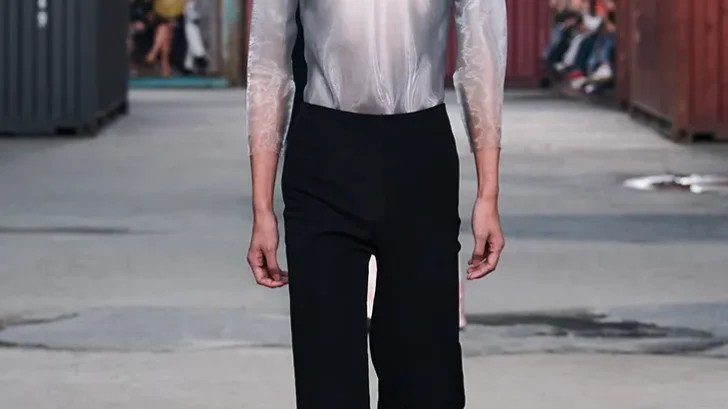
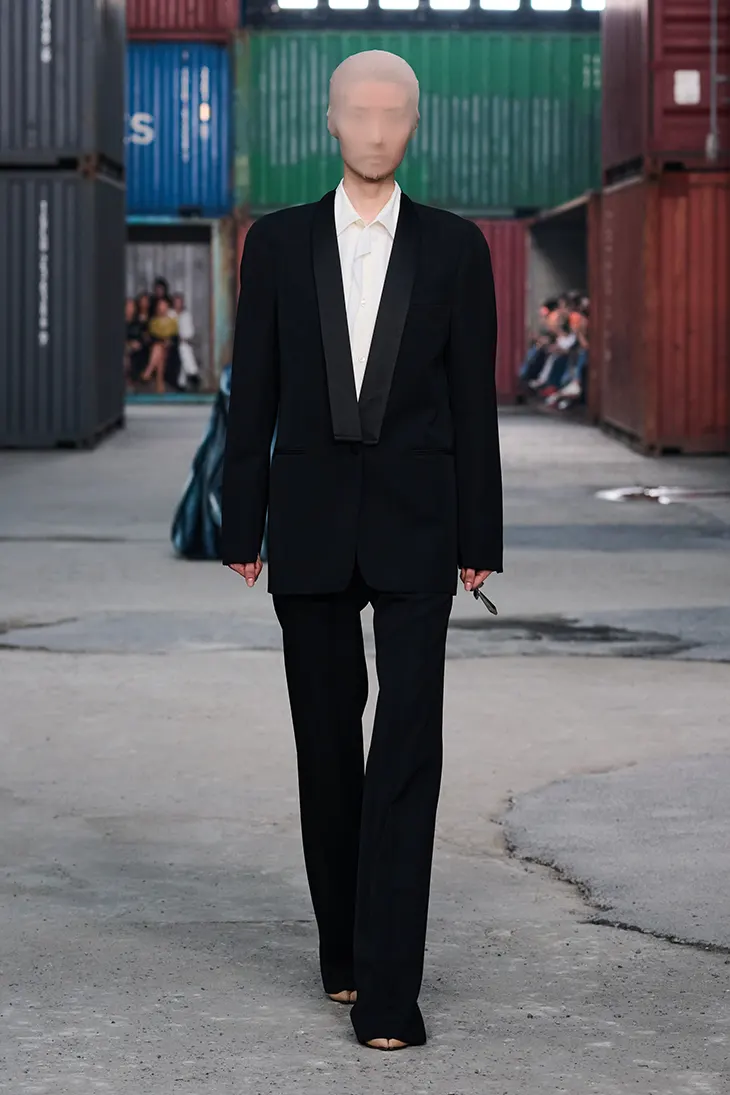
Maison Margiela approaches Fall Winter 2026 through a framework that places reconstruction at the center of menswear. The collection brings Artisanal and ready to wear into a single presentation, building a structure where experimental pieces exist alongside garments intended for broader circulation. This format sharpens the reading of the menswear offering. It places familiar categories like tailoring, knitwear, and outerwear into a system defined by intervention, where garments carry visible traces of alteration and reassembly.
FALL WINTER 2026
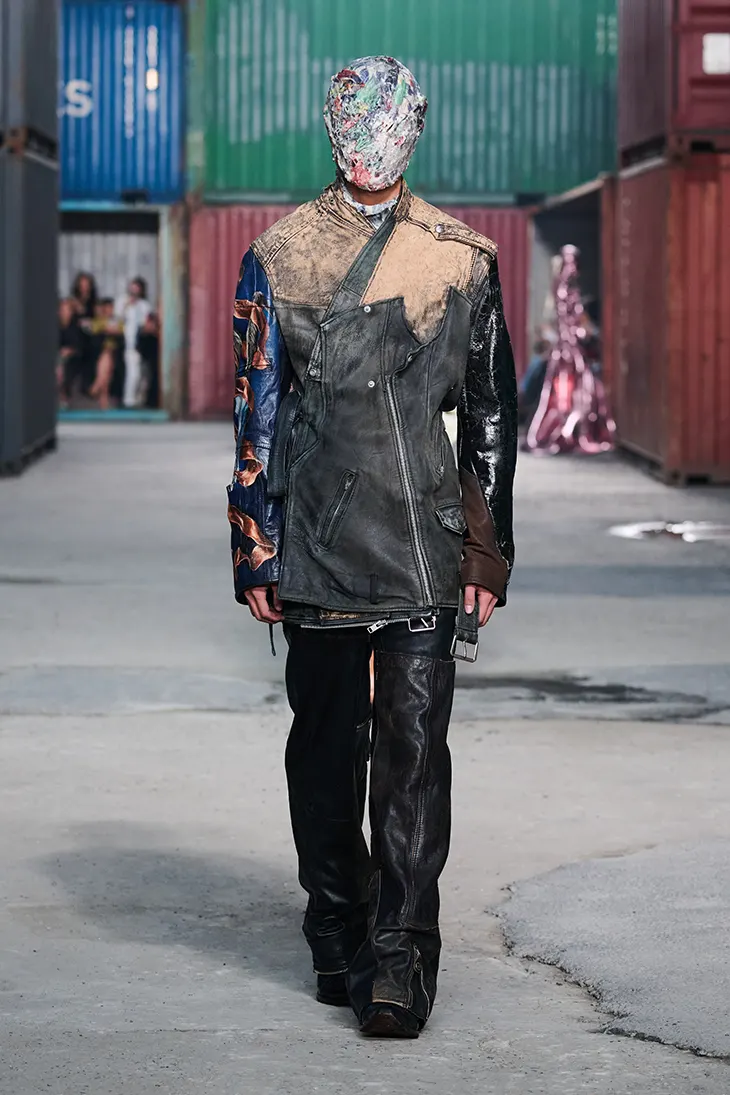
Tailoring drives the collection. Traditional menswear forms appear only as starting points. Jackets, coats, and trenches undergo direct modification, with proportions adjusted and surfaces treated through layering and fusion. Double breasted jackets connect to jersey second skin constructions, shifting how the garment sits on the body. Leather panels integrate into tweed, while velvet attaches to structured tailoring, creating hybrid surfaces that resist a single material identity. These decisions move menswear away from precision and toward a condition where structure remains present but constantly interrupted.
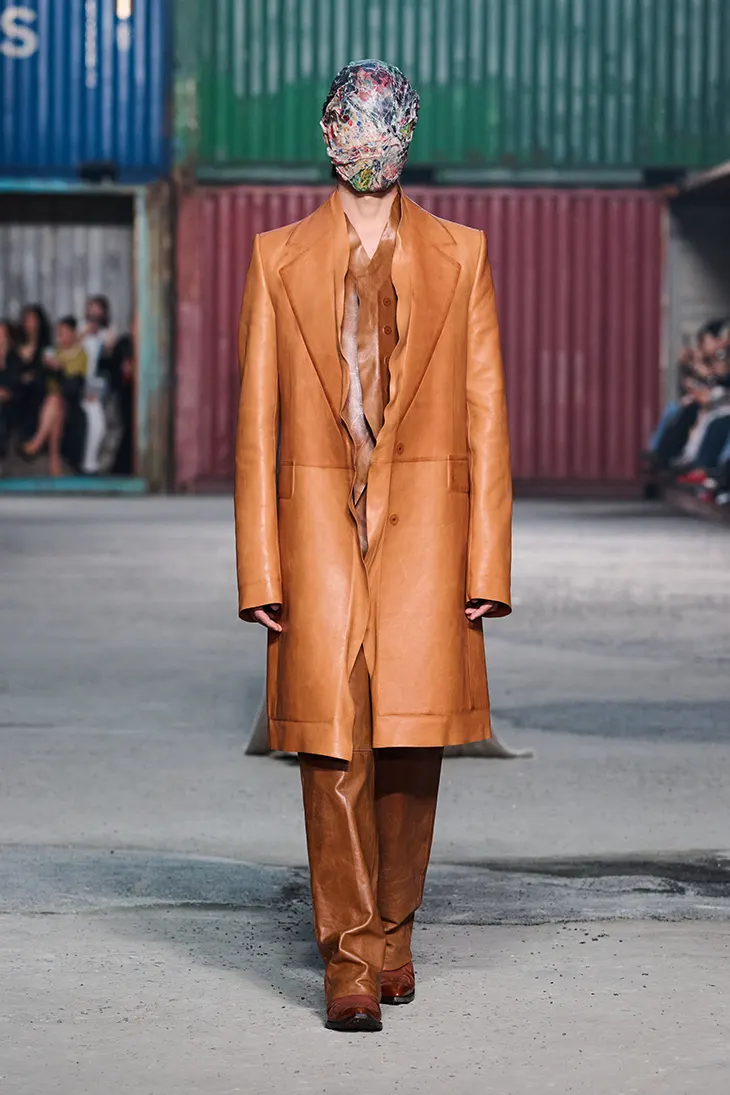
The collection also reworks the idea of the wardrobe through found references. Pieces carry the logic of objects discovered and repurposed, echoing the flea market setting introduced by the show. Vintage garments function as raw material. Dresses and textiles that no longer hold their original form get translated into new surfaces, leaving behind traces of their previous use. This approach enters menswear through fabric treatment, where materials appear aged, altered, or partially erased. The result places emphasis on process, where each garment reflects a sequence of actions rather than a finished state.
Knitwear introduces another layer of disruption. Sweaters appear deliberately misaligned, with proportions extended or reduced in ways that shift the silhouette. Painted fronts in red, white, and black create a direct visual language, while necklines and sleeves take on irregular forms. These garments move away from comfort-driven expectations and instead operate as constructed pieces that challenge how knitwear functions within menswear.
Footwear reinforces the same direction. The introduction of the men’s Float shoe alters the relationship between upper and sole, creating a visual imbalance that draws attention to construction. Cut out boots expose internal layers, while other designs remove expected elements entirely. These interventions extend the idea that menswear in this collection does not aim for stability. Each piece exists within a state of adjustment, where the structure remains visible and open to reinterpretation.
Accessories continue this logic through material treatment. Bags carry surfaces that evolve over time, such as tapestry prints placed onto bases that will continue to distress. Wrapped handles reference utilitarian objects, shifting the perception of luxury toward something closer to reuse and adaptation. Jewellery follows a similar path, with pieces appearing altered or coated, reinforcing the idea that objects within this collection exist in transition.
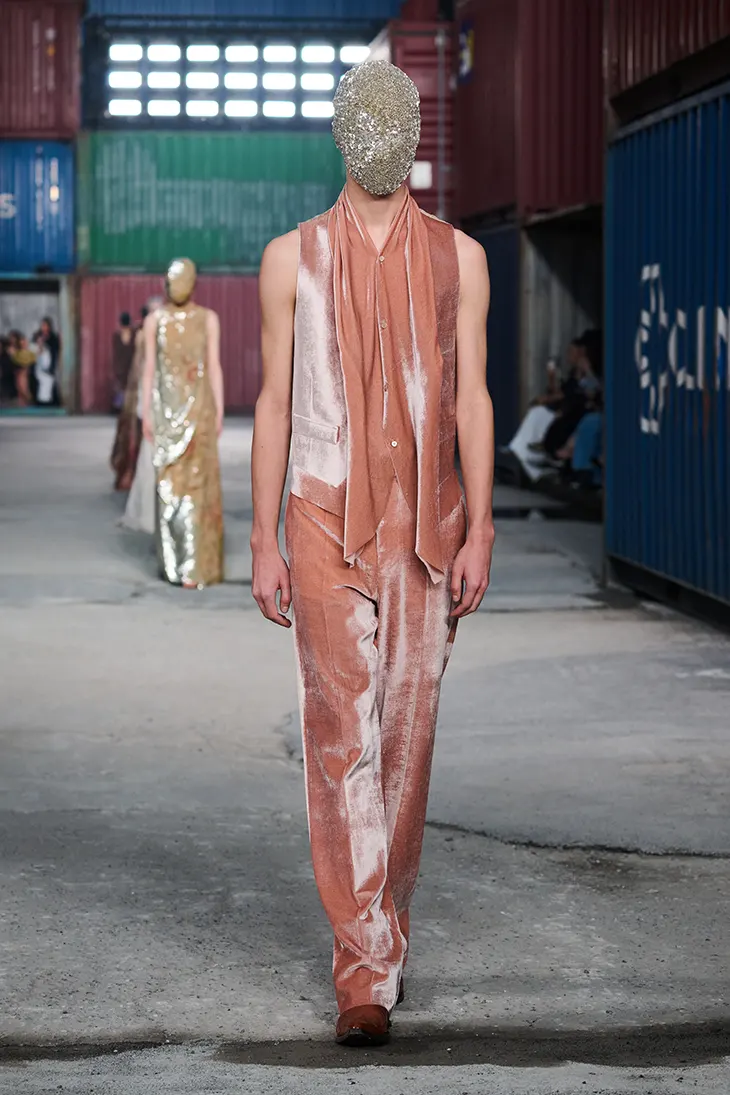
Across the menswear offering, Maison Margiela builds a system where garments hold multiple states at once. Tailoring, knitwear, and accessories move through processes of alteration, retaining evidence of how they were made and remade. The collection frames menswear as something unstable and open, where form continues to shift through material, construction, and time.