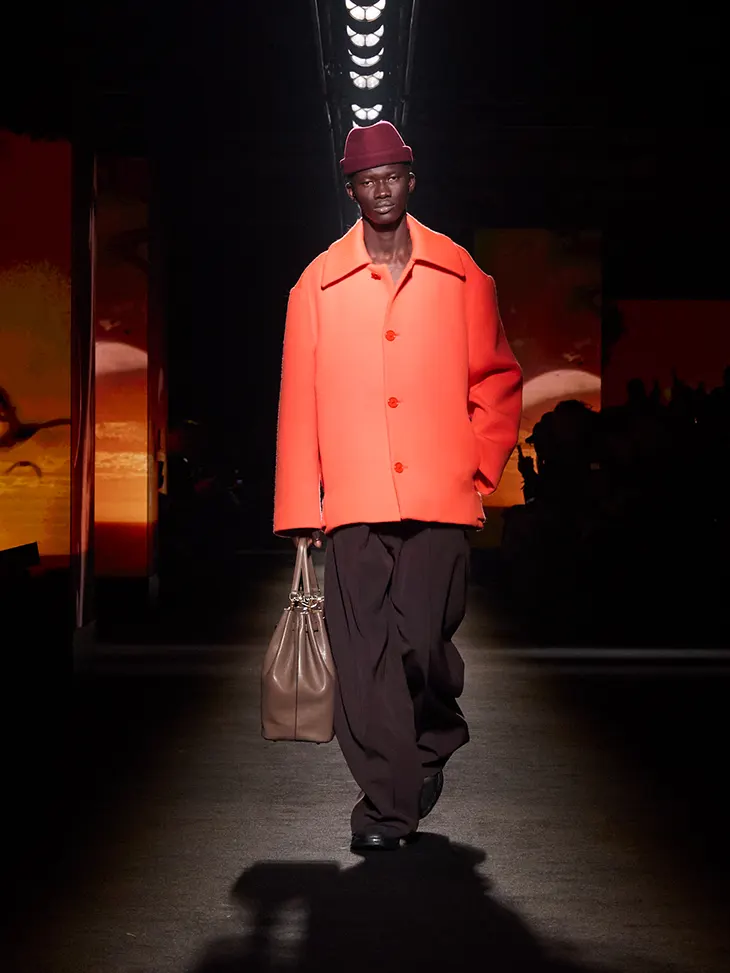
Pierpaolo Piccioli approaches Balenciaga Winter 2026 through the visual principle of clair-obscur, the Renaissance technique that defines form through light and shadow. The designer translates this artistic language into clothing by examining how illumination shapes perception. Fabric becomes the surface where this exchange occurs, allowing garments to function as portraits of the people who wear them.
FALL WINTER 2026.27
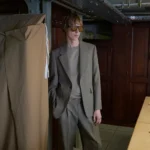
Piccioli centers the body as the internal structure of the collection. This method continues the design philosophy established by Cristóbal Balenciaga, where garments rely on the presence of the wearer to complete their form. Collars, hoods, and necklines frame the face in the same way a painter frames a subject. Several silhouettes introduce space between garment and body, creating an atmosphere where air and light interact with the construction of clothing.

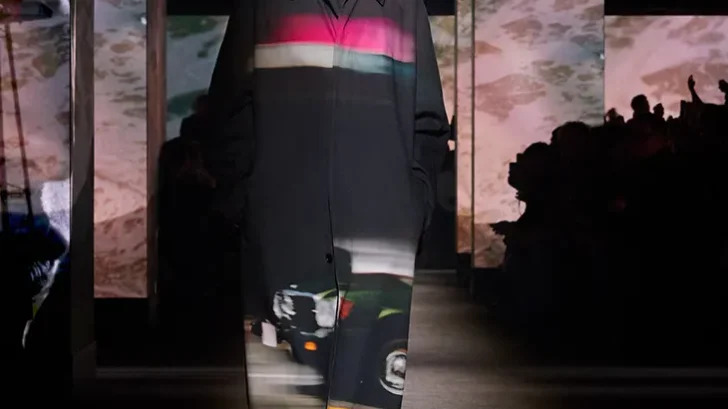
Outerwear defines much of the proposal. Cocooned coats suspend around the torso with a sense of controlled volume. The shapes appear architectural yet weightless, producing a visual tension between density and lift. Piccioli relies on materials that respond directly to light, including dense cashmere, supple leather, and silk surfaces that shift appearance under illumination. Each textile absorbs or reflects light in a different way, allowing the garments to transform as the wearer moves.
Footwear continues the exploration of visual contrast. The D’Orsay sneakers display ombré coloration that suggests a beam of light crossing the surface of the shoe. Piccioli also introduces footwear created with J. M. Weston, where leather twists and folds around the foot in sculptural gestures. These constructions alter the perception of traditional shoe structure and emphasize the relationship between form and movement.
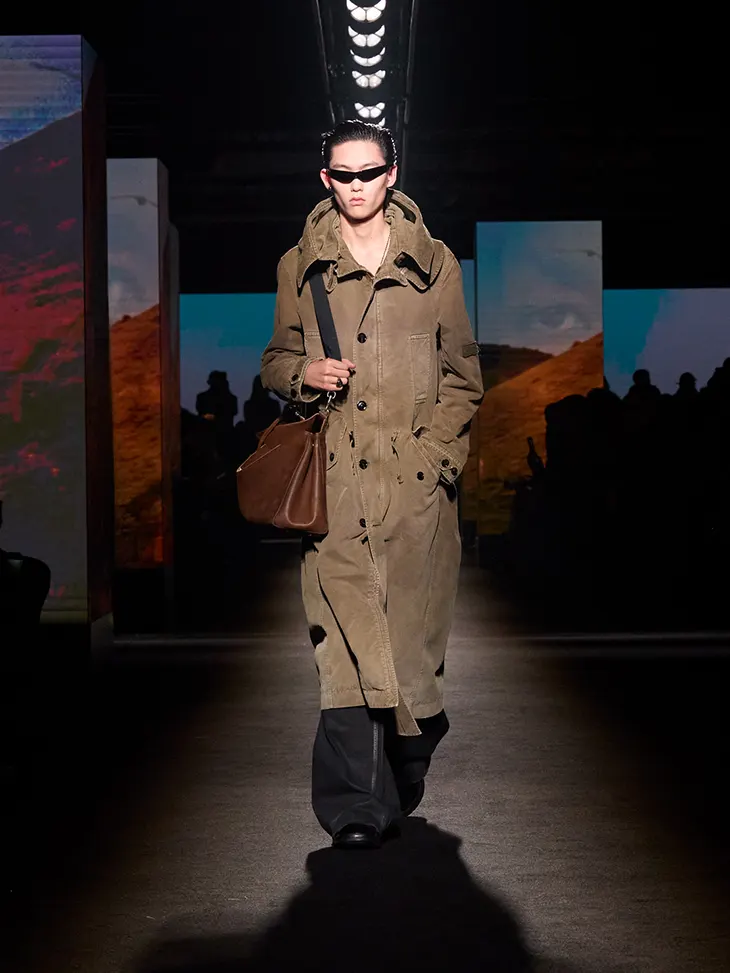
Accessories expand the narrative. The new George Bag introduces a Balenciaga emblem shaped through negative space, allowing the logo to emerge from the structure of the object itself. The HG Avenue bag carries surfaces that suggest the trace of time and motion, as if the material recorded the natural gestures of use. Piccioli treats these objects as sculptural companions to the garments, reinforcing the collection’s dialogue between structure and illumination.
Color plays an important role in shaping the atmosphere of the collection. Piccioli organizes the palette through emotionally resonant hues that appear luminous against darker tones. Phosphorescent shades intensify this effect, creating garments that seem to radiate from shadow. The approach reflects the conceptual framework of clair-obscur, where light acquires greater presence when defined by darkness.
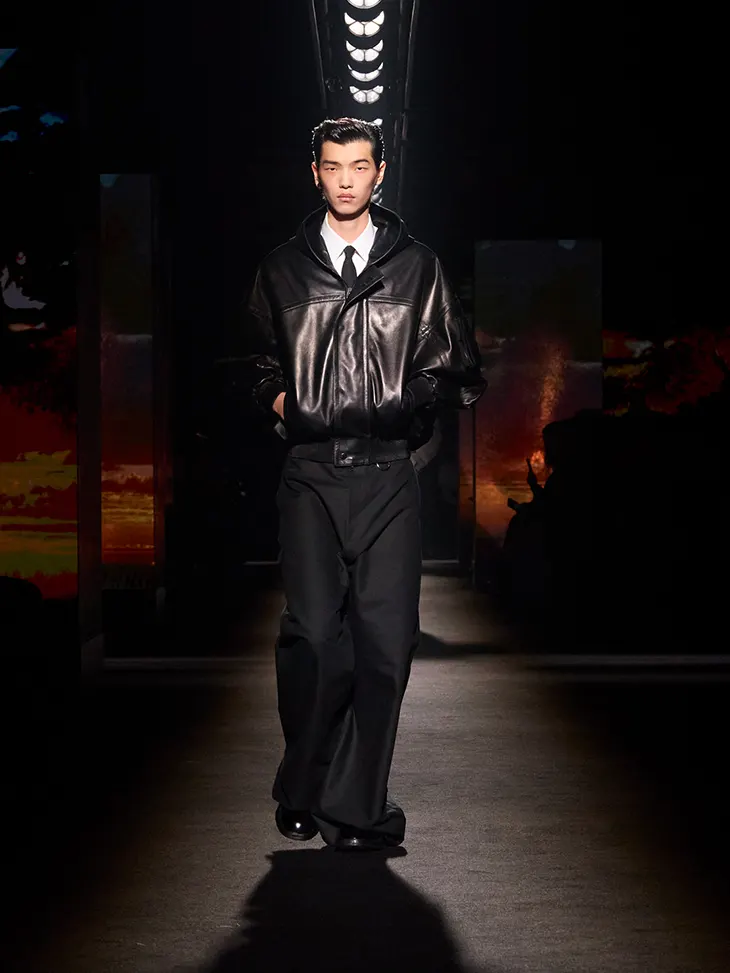
The show environment strengthens this visual language through collaboration with filmmaker Sam Levinson. Known for creating the HBO series Euphoria, Levinson designed a digital panorama for the runway that combined fragments from the upcoming third season with cinematic portraits of the show’s multi-generational cast of models. Contemporary landscapes moving from sunrise to sunset appeared alongside these images, reinforcing the idea that light remains present even during moments of darkness.
Models of different generations walked together in the show, forming a collective portrait of contemporary humanity. Piccioli frames clothing as a reflection of the present moment, shaped by real individuals rather than abstract ideals. In this context, the garments serve as instruments that reveal personality, gesture, and presence.

Through Balenciaga Winter 2026, Piccioli transforms the Renaissance idea of clair-obscur into a language of clothing. Light becomes a structural force that defines silhouette, surface, and movement. Within this framework, the collection reads as a study of people and the forms they create when fabric meets the body.