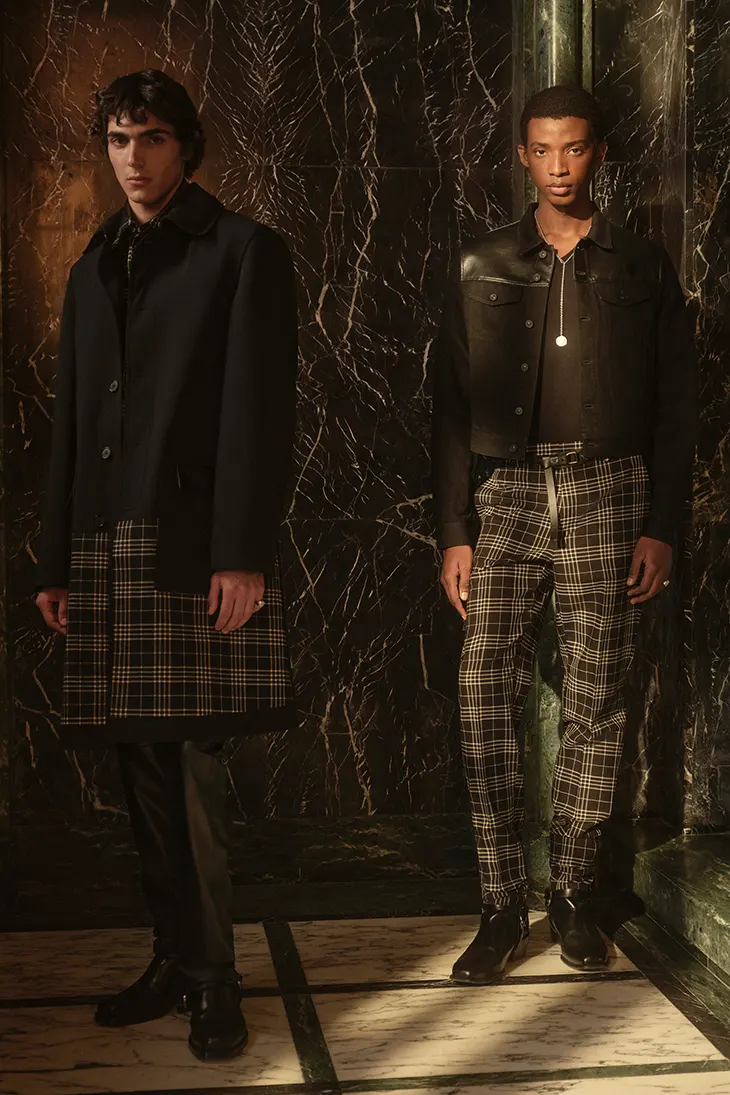
For Fendi Cruise 2027, Maria Grazia Chiuri frames her first Cruise collection for the house around wardrobe, process, and material tension. The collection sets out a direction for the house through construction, surface, and the relationship between clothing and the body. Rather than treating Cruise as a decorative pause between seasons, Chiuri uses it to define a working method. Her focus falls on Italian design culture, the quality of materials, and the forms that can carry Fendi forward.
RESORT COLLECTIONS
The collection builds its strongest argument through pieces that move across categories of dress. Chiuri imagines a wardrobe shaped by contemporary life, where clothing adapts to different bodies, routines, and expectations. The idea of the bourgeoisie enters the collection as a modern social category, connected to behavior, desire, generation, and self-presentation. In this context, clothing becomes a way to understand how people inhabit their own image over time.
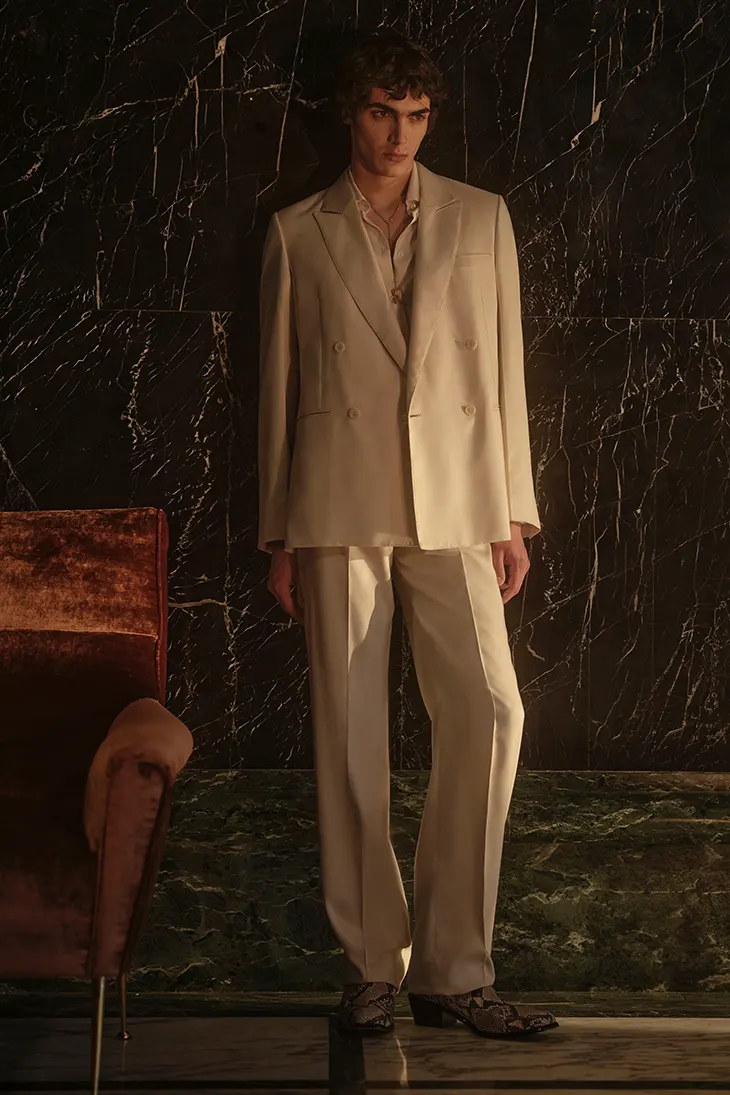
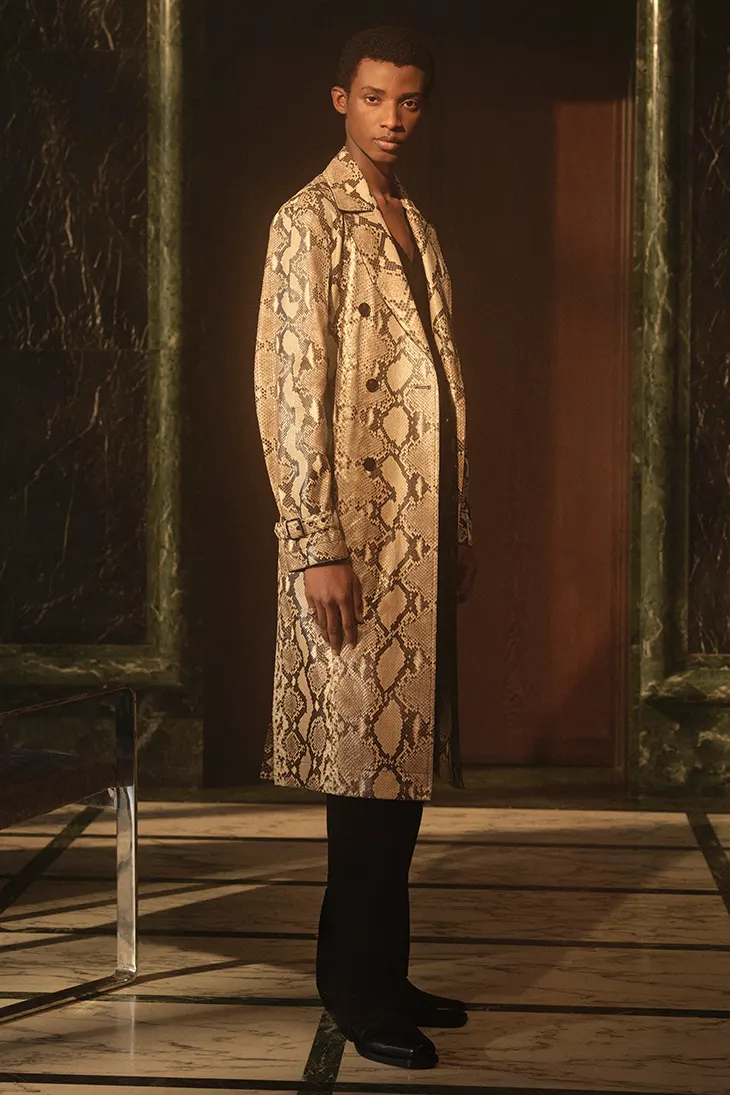
Chiuri builds the collection around interchangeable pieces and modular silhouettes, treating the wardrobe as a system that can shift with the wearer. A shirt and trousers appear almost as a single garment, creating the impression of a uniform that can be taken apart and reconstructed according to need.
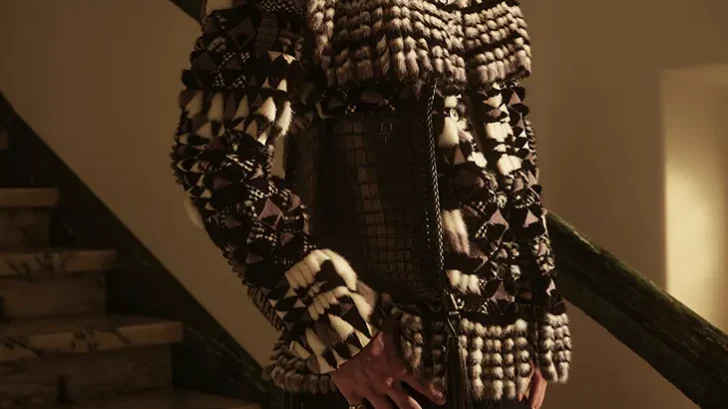
Material contrast gives the menswear direction its tension. Chiuri uses parchment as a tonal reference, setting it against black to create a sharper graphic language across the wardrobe. The contrast moves through structured outerwear, modular separates, and tailored pieces, giving the collection a clear material identity.
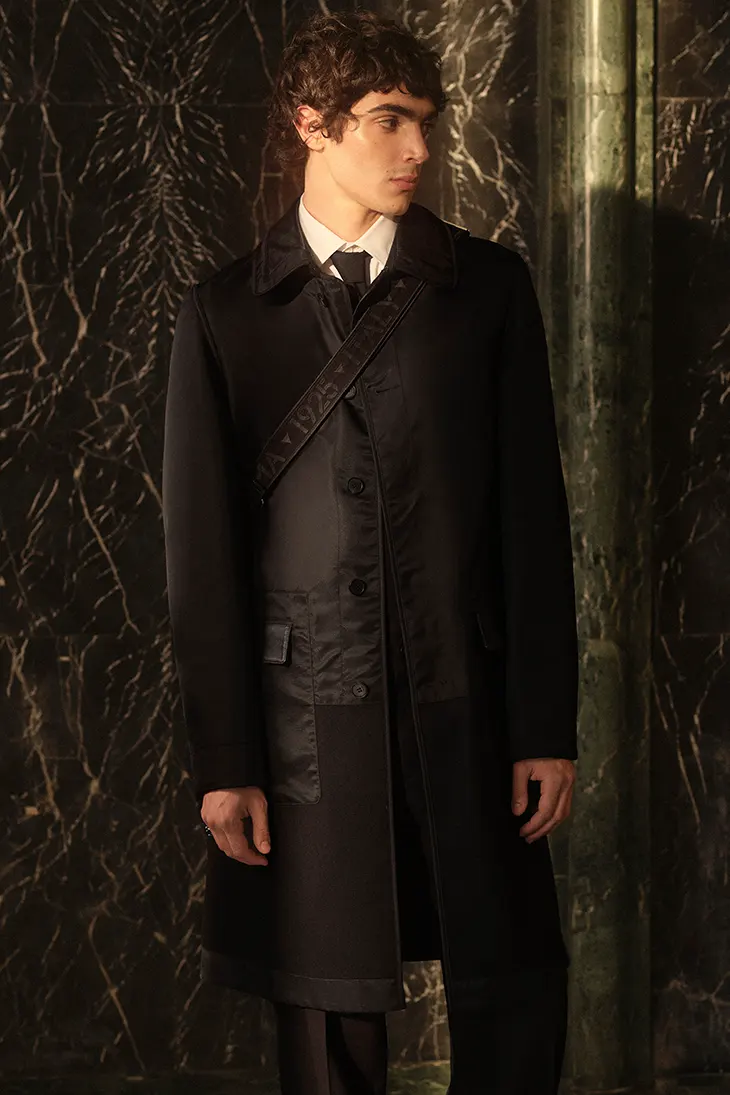
The trench coat appears with fur stripes and wedge studs, giving a classic shape a tougher structure. Jackets and coats place shiny leather against matte fabric, creating a direct material clash that changes how each piece reads on the body.
Discover Full Collection on DSCENE
The Tree of Life appears as the collection’s central image, linking nature, humanity, reason, and coexistence. Chiuri connects the motif to her chosen motto, “Less I, more us,” giving the collection a wider social dimension.